
UPDATED FOR 2026 | New FMCSA final rule (effective March 16, 2026) | Fresh salary numbers | Latest ELDT enforcement news
The Ultimate Career Guide, 2026 Edition
How to Get Your CDL Class A & Class B, the Full 2026 Picture
Requirements, new FMCSA rules, training, tests, endorsements, and real salary numbers, laid out so you can start your commercial driving career without guesswork.
What a CDL Actually Is
A Commercial Driver’s License (CDL) is a federally regulated license required in the United States to operate large or heavy commercial vehicles, or specialized ones. You need one for any vehicle with a gross vehicle weight rating (GVWR) of 26,001 lb or more, or to transport hazardous materials or more than 16 passengers.
The Federal Motor Carrier Safety Administration (FMCSA) sets and enforces standards for CDL testing and licensing across all 50 states. There are three classes, Class A, Class B, and Class C, each defined by the vehicle’s GVWR and intended use. CDLs have been required for commercial motor vehicles (CMVs) since April 1, 1992.
ℹ2026 note: FMCSA keeps adjusting trucking regulations in 2026, touching safety standards, driver qualifications, and equipment compliance. Section 2 covers the changes that matter.
What’s New in 2026, Changes to Know
This section covers only verified changes that took effect in 2026. If you got your CDL before 2026, some of these still affect you.
FMCSA Final Rule, More Room for American CDL Drivers (Effective March 16, 2026)
Starting March 16, 2026, FMCSA enacted a rule change that tightens eligibility for non-domiciled commercial driving licenses. Put plainly, the pool of eligible commercial drivers in the U.S. has narrowed considerably, and that directly benefits American CDL holders.
With the new restrictions in place, industry analysts estimate that fewer than 6,000 non-domiciled CDLs will be issued annually, against the roughly 194,000 holders who previously operated under looser rules. That shift in driver supply has one clear outcome for American drivers: more open positions and upward pressure on wages.
Fewer competing drivers on the market
Higher pay as demand outpaces supply
More carrier contracts open for U.S. drivers
If you are an American driver thinking about getting your CDL, 2026 is one of the better years to do it. The rule change opened a real supply gap, and carriers are actively looking for qualified domestic drivers to fill it.
Medical Certification, Fully Electronic Since January 10, 2026
The move to electronic medical certification is complete now. Paper is done. The Medical Examiner’s Certificate (MEC) grace period for CDL drivers expired on January 10, 2026.
Your medical certification status is now verified only through your electronic Motor Vehicle Record (MVR). After your DOT physical, confirm your certificate status shows correctly in the MVR. Miss that step and your CDL gets downgraded.
ELD Decertifications, April 14, 2026 Deadline
On February 12, 2026, FMCSA pulled 9 Electronic Logging Devices (ELDs) from its registered list. Carriers running decertified devices had to replace them by April 14, 2026, or face out-of-service orders. If you drive under a CDL, check that your fleet’s ELD is still on the FMCSA approved ELD list.
Autonomous Trucks & Clearinghouse, Proposed Rules (May 2026)
FMCSA is targeting May 2026 for a proposed rule that would set a regulatory framework for the safe rollout of autonomous trucks. Proposed changes to the Drug and Alcohol Clearinghouse and a second broker transparency rule are scheduled for the same period. None of this is in effect yet, but every CDL driver should keep an eye on FMCSA announcements.
Class A CDL, Overview
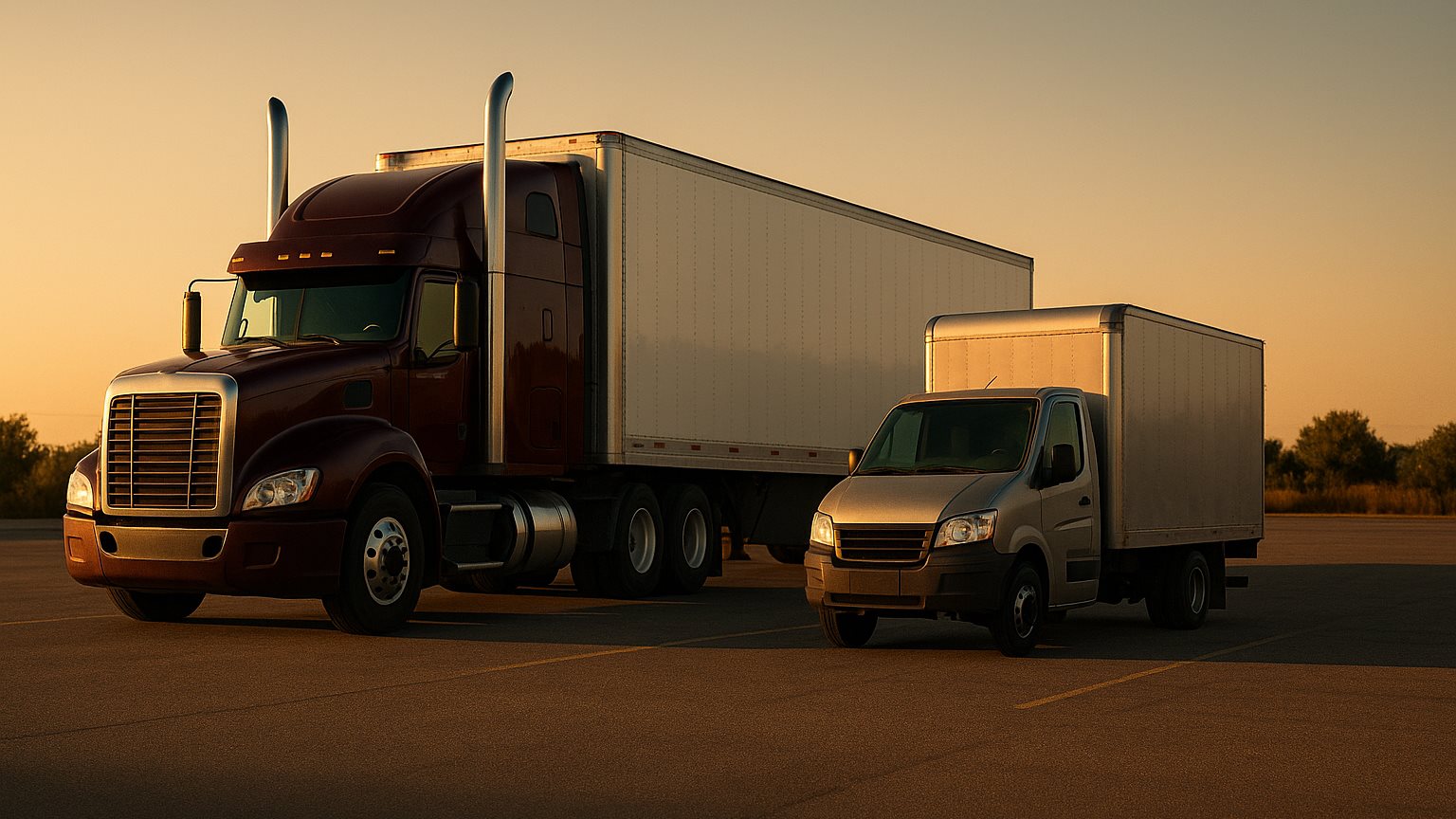
A Class A CDL authorizes drivers to operate combination vehicles, such as a tractor attached to a trailer, with a combined GVWR of 26,001 pounds or more, where the towed vehicle exceeds 10,000 pounds. It’s the most versatile commercial license out there, often called the “universal” CDL because it also covers Class B and Class C vehicles.
Many drivers get a Class A CDL first. It opens the widest range of career paths, from long-haul OTR routes to regional dedicated lanes and local driving, and it lets you legally drive Class B and Class C vehicles too, so you keep maximum flexibility across the industry.
Vehicles You Can Drive with a Class A CDL
Tractor-Trailers / 18-Wheelers
Flatbed Trucks
Tanker Vehicles
Double / Triple Trailers
Livestock Carriers
HazMat Vehicles (with endorsement)
Class B CDL, Overview
A Class B CDL authorizes drivers to operate a single vehicle with a GVWR of 26,001 pounds or more, as long as any towed trailer stays under 10,000 pounds. It opens careers in local delivery, bus operations, construction, and sanitation, usually routes that get you home every night.
Training can wrap up in as little as four weeks. Class B is often the fastest way into commercial driving, with strong local demand and steady work from municipalities, school districts, and delivery companies.
Vehicles You Can Drive with a Class B CDL
Box & Delivery Trucks
School Buses
City / Transit Buses
Dump Trucks
Cement Mixers
Garbage / Sanitation Trucks
Class A vs Class B, the Key Differences
| Feature | Class A | Class B |
|---|---|---|
| Vehicle Type | Combination (tractor + trailer) | Single-unit vehicles |
| Max Trailer Weight | Over 10,000 lbs | Max 10,000 lbs |
| Can also drive Class A vehicles? | Yes | No |
| Training Duration | 4–8 weeks (intensive) | ~4 weeks (shorter) |
| Avg. Salary | $78,000–$120,000+ | $48,000–$65,000 |
| Work Schedule | OTR / Regional / Local | Local, home nightly |
| Career Flexibility | Very High | Moderate |
Salary ranges reflect national data from Glassdoor, ZipRecruiter, and Salary.com. Actual earnings vary by state, employer, experience, endorsements held, and route type. Experienced company drivers and owner-operators often earn above these ranges.
Basic Requirements to Get a CDL
Before you start the CDL process, you need to meet several baseline federal and state requirements. These make sure commercial drivers are medically qualified, legally authorized, and trained to run large vehicles safely.
Age Requirements
Minimum age is 18 for intrastate driving, within one state. For interstate commerce, crossing state lines, drivers must be at least 21 years old. Requirements vary by state.
Valid Driver’s License
A standard non-commercial driver’s license is required before you apply for a CDL. You cannot hold CDLs from multiple states at the same time.
DOT Medical Exam (Updated 2026)
A DOT physical exam is required. As of January 10, 2026, your medical certification must show up in your electronic MVR; paper certificates are no longer accepted at any stage.
Clean Driving Record
Your driving record is checked for the last 10 years, across all 50 states and DC. A clean record helps. It strengthens your application and widens your hiring options.
Education
Requirements vary by state. Many jurisdictions ask for at least a high school diploma or GED equivalent.
Social Security Number
A valid Social Security Number (SSN) is required, and your identity and legal work authorization get verified as part of the CDL application.
Step by Step, How to Get Your CDL in 2026
Most drivers earn a CDL in 4–8 weeks, depending on training type and testing availability. Here are the 7 steps.
Get Your State’s CDL Manual
Download or pick up your state’s official Commercial Driver’s Licensing (CDL) Manual at your local DMV or on the state DMV website. This document is the foundation for all written knowledge tests. Study it closely. Pay extra attention to the air brakes and combination vehicles sections.
Choose Your CDL Class & Endorsements
Decide which license class, A or B, fits your career goals. Class A gives more earning power and flexibility across all route types; Class B gets you in faster with stable local work. Think early about which endorsements (H, N, P, S, T) you might want down the line, since they expand job options and pay by a wide margin.
Enroll in FMCSA-Approved ELDT Training
Entry-Level Driver Training (ELDT) is mandatory for all first-time Class A or Class B CDL applicants. You have to complete ELDT with a registered training provider before you can take the CDL skills test.
2026 update: FMCSA has removed thousands of CDL schools from the national ELDT provider registry for non-compliance. Always check that your chosen school is currently listed on the FMCSA Training Provider Registry before you enroll.
Pass the Knowledge Tests & Get Your CLP
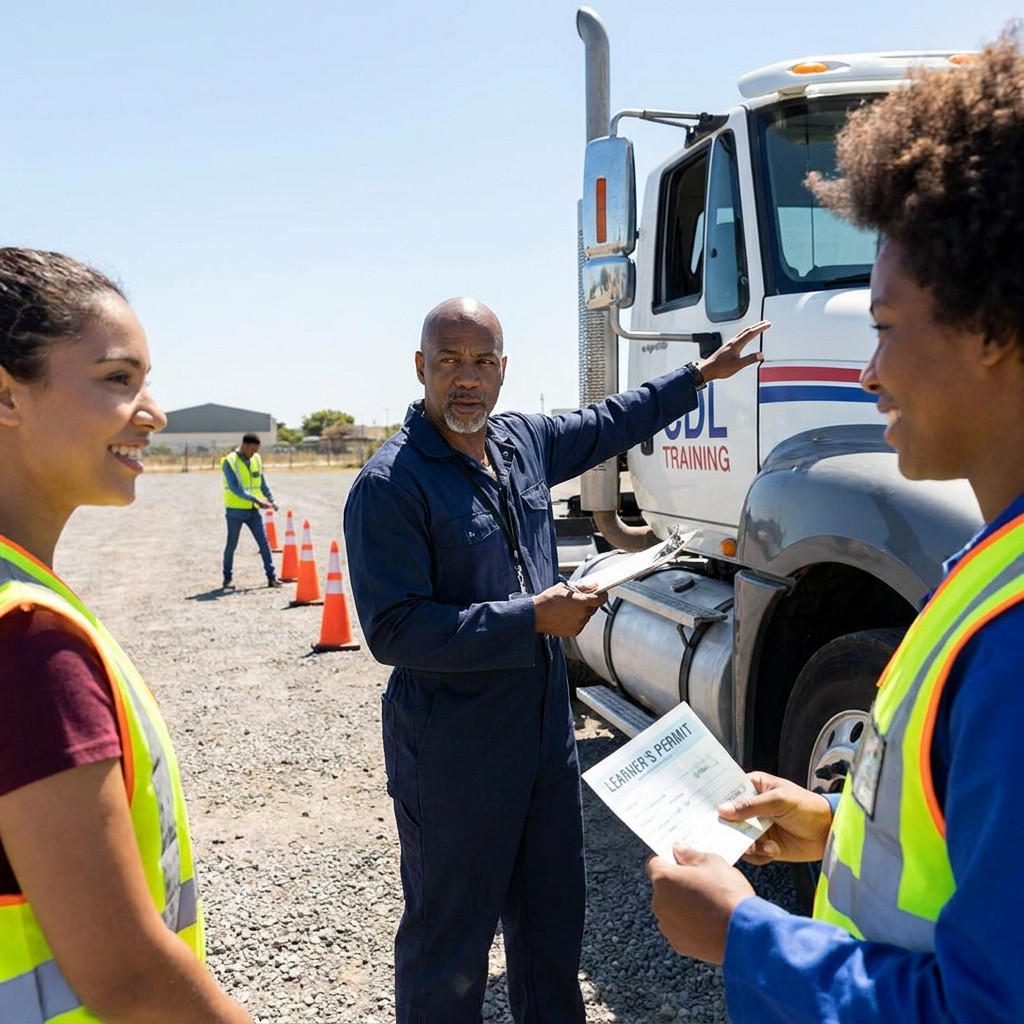
After you finish the required coursework, you need to pass written knowledge exams at your state’s DMV to earn a Commercial Learner’s Permit (CLP). This permit lets you operate a commercial vehicle on public roads under supervision while you complete hands-on training.
Hold Your CLP for 14 Days & Train
You must hold your CLP for at least 14 days and complete ELDT before you’re eligible for the CDL skills test. Use this stretch to build real-world experience under a qualified instructor, backing up classroom learning with actual driving practice.
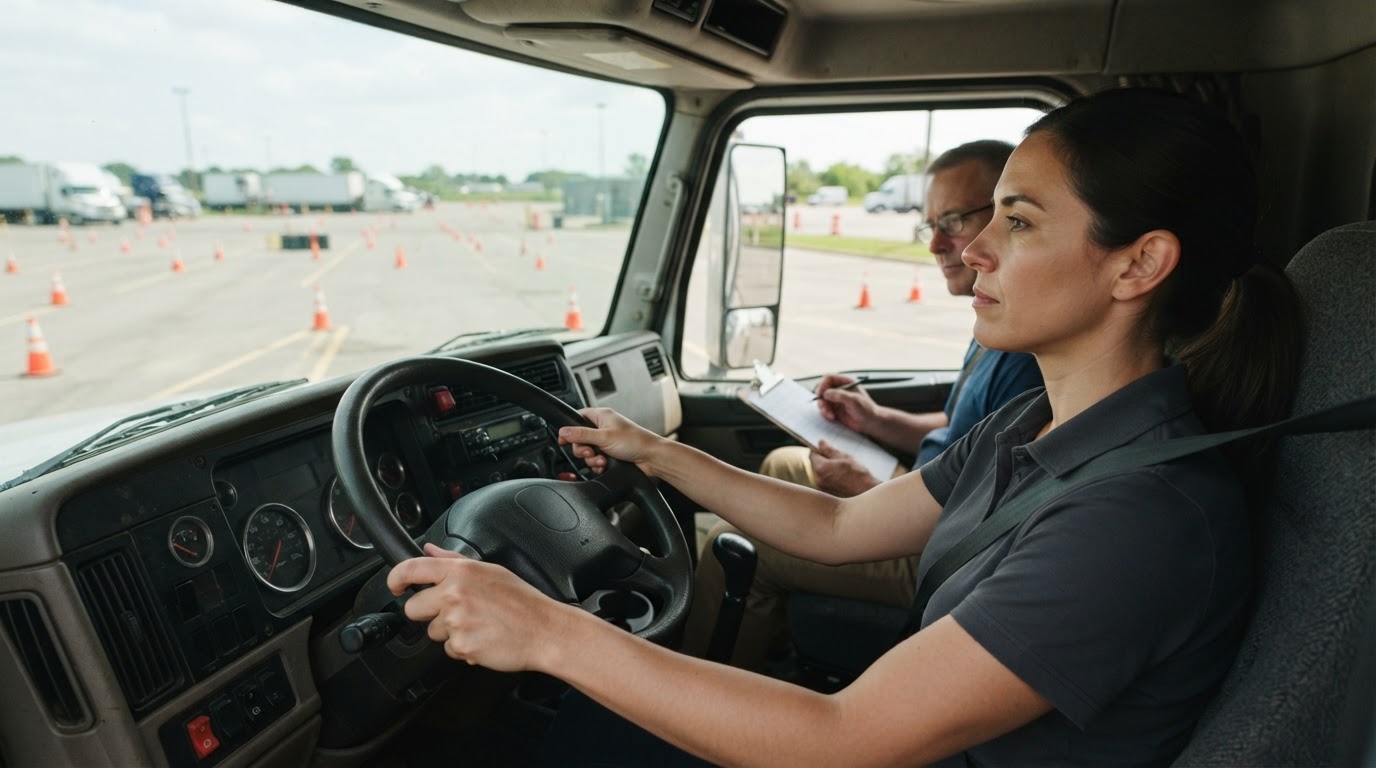
Pass the CDL Skills Test (3 Parts)
You have to pass all three parts of the skills test.
Part 1. Vehicle Inspection
Done entirely from memory. You walk around the vehicle. You verbally identify and inspect every required component, and this is where most test-takers lose points.
Part 2. Basic Control Skills
Many states have now moved to the Modernized CDL Skills Test, which updated the Basic Control Skills exercises. Under the modernized format, 4 standardized maneuvers get tested.
Forward Stop
Pull forward and stop precisely inside a designated target zone.
Straight-Line Backing
Back the vehicle in a straight line through a defined corridor without crossing the boundaries.
↪Forward Offset Tracking
Drive forward through an offset path while keeping control through the lane shift.
↩Reverse Offset Backing
Back the vehicle through an offset path, showing controlled rear steering.
Note: Under the modernized format, Parallel Parking and Alley Dock (90-degree) are no longer tested as separate maneuvers. Ask your state DMV which format is currently used at your testing location, standard or modernized.
Part 3. Road Test
Drive in real traffic with a state examiner. You get evaluated on lane changes, turns, intersections, highway driving, and overall vehicle control.
Fail any part and all remaining portions get postponed. Three attempts total. Always test in the same class of vehicle you plan to drive professionally, so you avoid automatic restrictions on your license.
Receive Your CDL. You’re Licensed
Take your passing test documentation to the DMV counter for processing, where some states issue the CDL the same day while others mail it within 7–14 business days. Check every detail before you leave the counter. Corrections later can cost time and money.
CDL Endorsements, Boost Your Career & Pay
CDL endorsements are optional specialized qualifications added to your license that open extra job categories and lift your earning potential by a lot, and each one needs a separate written test at your state DMV, with some also requiring a skills test.
| Code | Endorsement | Available For | Description |
|---|---|---|---|
| H | HazMat | A & B | Transport placarded hazardous materials. Requires a TSA security threat assessment and background check. |
| N | Tanker | A & B | Haul bulk liquids or gases in a tank vehicle. |
| P | Passenger | A & B | Vehicles carrying 16 or more passengers including the driver. |
| S | School Bus | A & B | Requires P endorsement first, plus background checks and extra road testing for student safety compliance. |
| T | Double/Triple Trailers | Class A only | Authorizes pulling two or three trailers at once. Only available to Class A CDL holders. |
| X | Tanker + HazMat | A & B | Combined N + H endorsement for bulk hazardous liquid transport. One of the highest-paying CDL specializations. |
Salary & Career Outlook
Trucking is still stable work, and well paid. It’s one of the strongest sectors in the U.S. economy, and with the 2026 rule changes tightening driver supply, experienced CDL holders are seeing stronger demand and better pay, though actual earnings depend heavily on carrier, route type, experience, and endorsements.
Class B average salary: $48,000–$65,000/year depending on role, location, and endorsements. Local routes, predictable schedules, and union positions (transit/municipalities) can push Class B pay well above average.
Class A Job Opportunities
- Over-the-Road (OTR) & long-haul trucking
- Regional routes & dedicated carrier lanes
- Flatbed & specialized freight
- Tanker operations (with N endorsement)
- Local Class A routes, home daily
- Owner-operator, $150K+ potential
Class B Job Opportunities
- School bus driver (with S endorsement)
- City transit & charter buses
- Dump truck / construction
- Sanitation & municipal services
- Local delivery & box truck routes
Tips to Pass Your CDL Test First Time
Study the CDL Manual Cover to Cover
Most knowledge test questions come straight from the state manual. Pay close attention to the air brakes and combination vehicles sections. If you plan to add endorsements later, study those chapters separately.
Use Free Online Practice Tests
Plenty of free CDL practice tests are online. Use flashcards to lock in concepts and take timed practice tests to simulate the real exam before test day.
Memorize the Pre-Trip Inspection
The vehicle inspection part of the skills test runs entirely from memory. Practice the full routine out loud again and again until it’s automatic. This is where most test-takers lose points.
Test in the Right Vehicle
Take your skills test in the same type of vehicle you plan to drive professionally. Test in a different class and you get automatic restrictions printed on your CDL that can limit your job options.
Verify Your ELDT Provider is Active
Before you enroll in any CDL school, confirm it’s currently listed on the FMCSA Training Provider Registry. Thousands of schools got removed for non-compliance, and training at an unlisted school just does not count.
Confirm Your MVR Shows Medical Cert
After your DOT physical, confirm your medical certification shows up correctly in your electronic MVR. As of January 10, 2026, paper certificates no longer count; your MVR record is the only valid proof.
Upgrading from Class B to Class A CDL
Already have a Class B? You’re already ahead. Earning a Class A CDL on top of your Class B follows a very similar process. The main difference: extra training on combination vehicles and the related knowledge test sections.
A Class B CDL gives you solid, stable work, but a Class A CDL opens far greater earning potential, wider job options, and access to long-haul and OTR work. With experienced Class A drivers earning $100K–$120K+ a year and the 2026 driver supply tightening, now is a strong time to make the upgrade.
Get Your CDL Started in 2026
Class A or Class B, your choice shapes the vehicles you drive, the routes you take, the schedule you keep, and how much you earn. With updated 2026 regulations in effect and driver demand running high, this is a strong time to get your CDL.
Disclaimer: CDL requirements vary by state and are subject to change. This article reflects federal FMCSA regulations current as of May 2026. Always verify requirements with your state’s DMV and the official FMCSA website before you start your application.