
Reefer freight tips
🧊 Reefer Freight Tips: How to Avoid a Rejected Load
A rejected reefer load is every driver's nightmare — hours wasted, a claim on your name, maybe a fight over who pays. The good news: most rejections come from a handful of avoidable mistakes. Here's how experienced reefer drivers protect themselves. 🌡️
🚫 Why reefer loads actually get rejected
- Temperature out of range. At delivery a receiver takes a pulp temperature (the internal temp of the product). If it's even 1–2°F outside spec, the whole load can be refused.
- Product was already warm at pickup. If it wasn't pre-cooled by the shipper, no reefer can fix it in transit — and you can get blamed.
- Damage or shifting. Crushed, fallen, or contaminated product from bad load securement.
- Late or missed appointment. Especially with produce and grocery DCs.
- Seal problems. A broken seal or a seal number that doesn't match the paperwork.
❄️ Set the right temperature — and the right mode
Rule #1: set exactly what the BOL says. Never "freelance" a temperature. If it's not clearly on the paperwork, call before you roll.
Then pick the correct run mode:
| Mode | Use for | Why |
|---|---|---|
| Continuous | Produce & fresh (chilled) | Constant airflow handles the heat produce gives off and keeps a steady, even temp — the safe default for sensitive freight |
| Cycle-Sentry | Frozen only (roughly below 24°F) | Saves fuel by cycling on/off; frozen product tolerates the swing — but it can freeze or sweat produce, so never use it for fresh |
🌡️ Pre-cool before you load
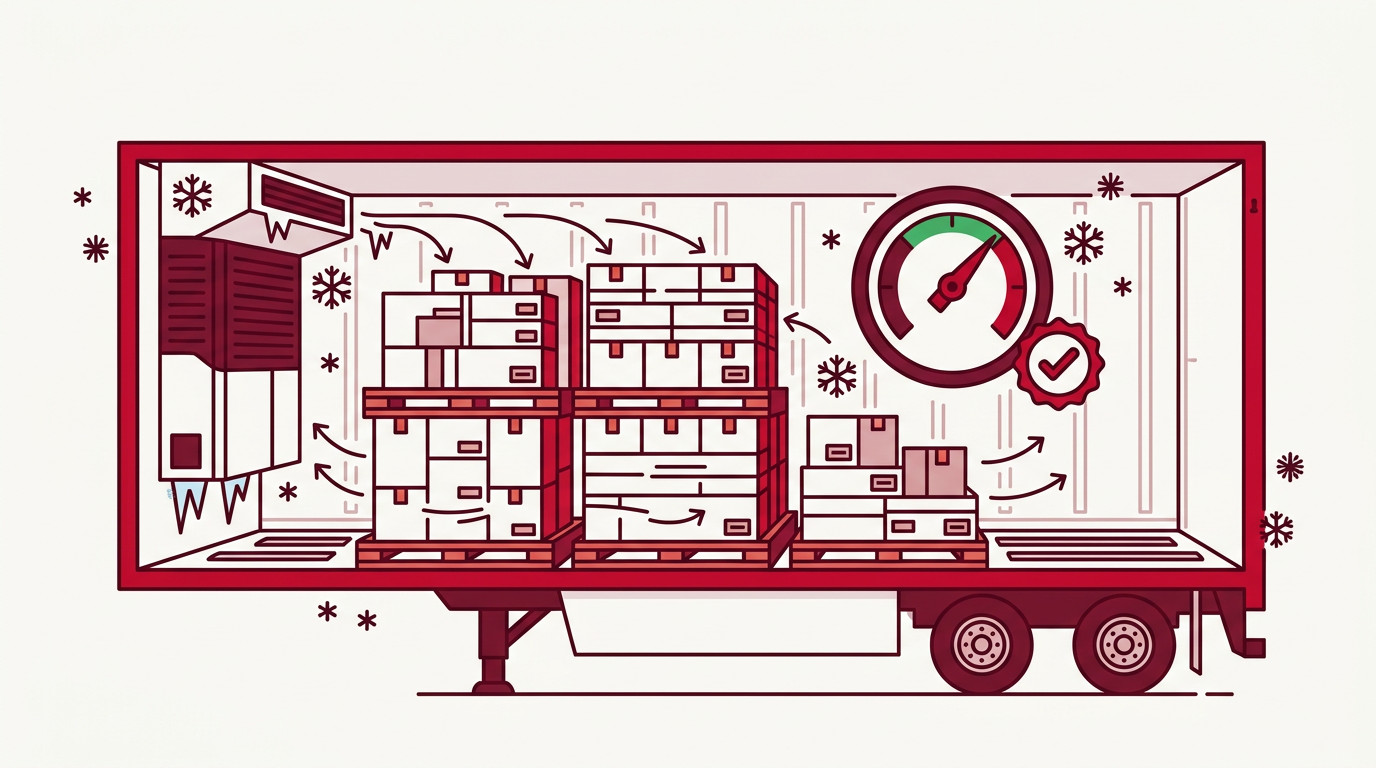
A reefer maintains temperature — it does not chill a warm load. So the trailer must already be at the target temp when product goes in.
- Pre-cool the empty trailer to the exact BOL set point. Rough timing: fresh/chilled ~1–2 hours, frozen 4+ hours.
- Then turn the unit off to load (or as the shipper directs) so you're not pulling in hot dock air.
- Refuse warm product politely. If the product itself is out of temp at pickup, note it and call dispatch — don't sign for something you can't fix.
📋 Document everything at pickup — it's your defense
This record proves you received the load in spec — so if it's cold enough leaving and rejected on arrival, the problem wasn't you.
💨 Load for airflow
- Don't block the front air chute — cold air has to reach the back of the trailer.
- Keep product off the front wall and don't bury the return-air path.
- Leave the floor channels (T-rails) clear so air moves under the load.
- Secure with load bars / load locks so nothing shifts, falls, or gets crushed.
🔧 On the road
- Check the reefer 2–3 times a day — set point vs. actual, and watch your reefer fuel.
- Start every day with a PTI (pre-trip) — tires, brakes, air leaks, oil, wiring, and the reefer unit.
- If an alarm trips: open the alarm list, take a photo, and report it immediately so the team can help before it becomes a claim.
- Keep the temperature download from the unit — it's the final proof of how the load rode.
❓ Frequently asked questions
What temperature do I set a reefer to?
Exactly what the bill of lading specifies. Never guess or adjust to a temperature that isn't on the paperwork — if it's unclear, confirm before leaving.
Continuous or Cycle-Sentry mode?
Continuous for produce and fresh (chilled) freight, because it keeps constant airflow and a steady temperature. Cycle-Sentry only for frozen loads, which tolerate the on/off swing.
Can a reefer cool down a warm load?
No. A reefer maintains temperature; it can't bring a warm product down to spec in transit. Product must be pre-cooled by the shipper, and the trailer pre-cooled before loading.
What is pulp temperature?
It's the internal temperature of the product, measured with a probe thermometer. Receivers check it at delivery, and if it's even 1–2°F out of range the load can be rejected.
🚛 Run reefer with a team that has your back
At ASTEL you're never alone with a reefer alarm: 24/7 road support, a chat that tells you exactly what to do, our own mechanics and spare trucks — plus steady miles and honest pay.
Apply in 2 minutes →General best-practice guidance for informational purposes; always follow the specific temperature and handling instructions on your BOL and your carrier's procedures. Set points, modes, and pre-cool times vary by commodity and equipment.