

Reefer vs Dry Van — Comparing Pay and the OTR Driver's Life
Thinking about switching from a dry van to a refrigerated trailer, or picking your first OTR lane? Reefer usually pays more, but it asks more of you too. Here's an honest, driver-to-driver breakdown of the money, the routine, and who each one really suits.
The short answer on reefer vs dry van
Reefer (refrigerated) freight tends to pay a few cents more per mile and runs year-round because food doesn't stop moving. In return you carry more responsibility: temperature control, stricter appointments, and longer detention. Dry van is simpler and easier to learn on, but rates swing harder with the season. If you want steady miles and a bigger check and you don't mind the extra care, reefer wins for most OTR drivers.
| Factor | Reefer | Dry Van |
|---|---|---|
| Pay | Higher, better CPM and a bigger % of gross (higher linehaul rates) | Lower rate per load, but simpler to earn |
| Freight volume | Steady year-round (food, produce, pharma) | High but more seasonal swings |
| Difficulty | Higher: temp checks, reefer fuel, pre-cool | Lower: load, close the doors, roll |
| Scheduling | Mostly by appointment; docks often run 24/7 (incl. nights) | Often FCFS (live queue); docks usually 8–5 |
| Detention / wait | More common at grocery & produce docks | Usually less |
| Home time | Similar OTR patterns | Similar OTR patterns |
| Best for | Drivers who want max miles & pay | New drivers, simpler routine |
What each trailer actually hauls
Dry van is the classic enclosed box with no temperature control, and it moves everything that doesn't spoil: retail goods, packaged food, paper, electronics, building materials. It's the easiest freight to learn on because the job is basically load, close the doors, and drive.
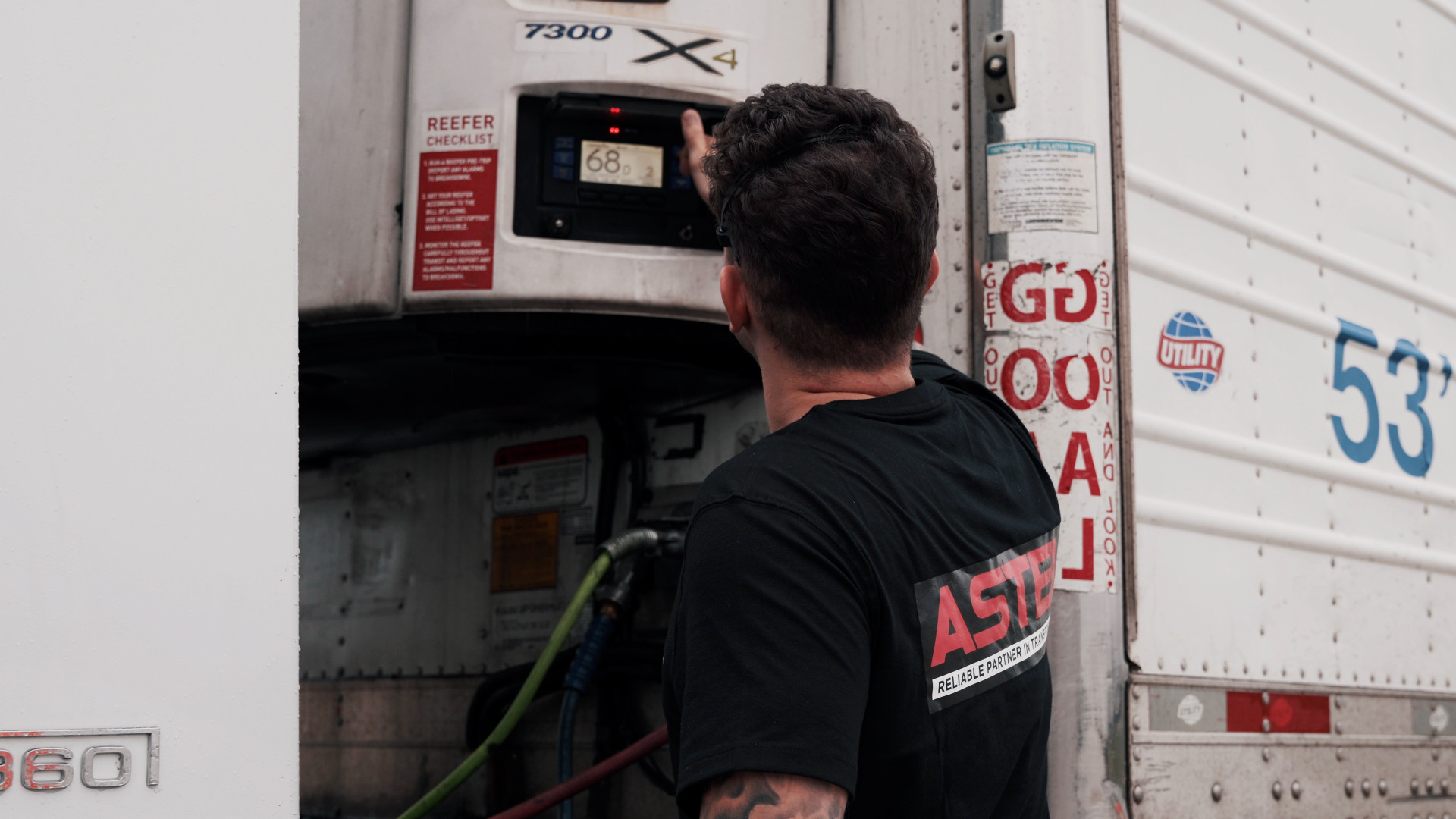
Reefer is a dry van with a refrigeration unit and insulated walls. It hauls anything that needs a set temperature: produce, meat, dairy, frozen food, and increasingly pharmaceuticals. The trailer keeps its own fuel and its own logbook of temperatures, and that's exactly where the extra pay (and the extra work) comes from.
The pay difference and why it exists
First, how you get paid. Carriers pay OTR drivers one of two ways: cents per mile (CPM) or a percentage of the load's gross (typically 25–30%). This matters, because reefer wins on both. On CPM, reefer usually runs a few cents higher. On percentage pay it matters even more, since reefer loads carry higher linehaul rates, so the same 27% of a reefer load is simply a bigger number than 27% of a comparable dry van load.
Across the market, reefer freight generally pays more than comparable dry van freight. The gap isn't random. You're being paid for three things:
- Year-round demand. People eat in every season, so refrigerated freight doesn't dry up in winter the way some dry van lanes do. That means fewer empty weeks and more consistent miles.
- Responsibility. A rejected temperature-sensitive load can be worth tens of thousands of dollars. Carriers pay a premium to drivers they trust with it.
- Extra tasks. Pre-cooling the trailer, setting the right temp, pulp-temping produce, monitoring the reefer unit: that's real work, and it's in the rate.
The reefer reality, what the extra pay buys you
Before you chase the higher CPM, know what you're signing up for:
- Temperature discipline. Set point, continuous vs. cycle-sentry, pre-cool before loading. Get it wrong and the load can be refused at the door.
- Reefer fuel & maintenance. The unit runs on its own diesel; you monitor fuel and watch for alarms.
- Detention at the dock. Grocery warehouses and produce shippers are famous for long waits. Good carriers pay detention. Always ask how much and after how many hours.
- Appointment freight. Almost every reefer pickup and delivery runs on a fixed appointment, so your whole trip has to be planned to the hour. Miss the window, and the next open slot can be 3–5 days out. Dry van's live queue rarely punishes a mistake that hard.
Life on the road really is different
The big-picture OTR rhythm (weeks out, reset, home time) is similar for both. The real difference is the clock you live by.
Dry van keeps business hours. Most dry van shippers and warehouses run roughly 8 to 5, and a lot of them are FCFS (first come, first served), a live queue where you show up in the window, take a number, and wait your turn. It's forgiving: if you're an hour late, you just get in line.
Reefer runs on the night shift and the clock. Grocery distribution centers, think Walmart, Aldi, Kroger, often receive 24/7, and much of it at night. The reason is simple: product has to be on store shelves by 7–8 a.m., so trucks get unloaded overnight and the goods are trucked out to the stores by morning. That means more overnight appointments and a body clock that doesn't always match the sun.
And because reefer is almost all by appointment, planning is everything. You back-time the whole trip to hit an exact slot; miss it and you may sit 3–5 days for the next one. Dry van's live queue rarely costs you like that. The honest lifestyle summary: reefer pays more and runs steadier, but you trade some control of your clock: nights, tight appointments, and to-the-hour planning.
Pros & cons at a glance
Reefer
- Higher pay per mile
- Steady, recession-resistant freight
- More consistent miles year-round
- Temperature responsibility
- Night appointments & to-the-hour planning
- More detention at docks
- Extra equipment to manage
Dry Van
- Simplest freight to learn
- Daytime hours, forgiving FCFS queue
- Great first OTR job
- Lower pay per mile
- More seasonal rate swings
- More competition for loads
Which one should you pick
Choose dry van if you're new to OTR and still building confidence. You want the simplest possible routine while you learn the road.
Choose reefer if you want the bigger, steadier paycheck, you're comfortable being responsible for the load, and you want miles that don't disappear in the slow season. For most experienced OTR drivers, that's the smarter long-term seat.
Start driving reefer with a carrier that pays on time
At ASTEL, drivers earn $110,000–$150,000 a year on year-round reefer freight — about 3,500–3,700 miles a week in peak season, all miles paid (loaded & empty), weekly pay (same day if you ask before noon), a real 4-weeks-out / 1-week-home schedule, and safety & fuel bonuses.
Apply in 2 minutes →Questions about our reefer lanes and pay? Call +1 765-222-3002 or email hr@astelcorp.com.