

The DOT drug test truck drivers face, and what actually ends careers
Every CDL driver meets the cup: before the first dispatch, at random through the year, and after certain accidents. The test itself is routine. What ends careers is not knowing three traps: state-legal marijuana, CBD gummies, the word "refusal." Here is the whole system in plain language.
Truck drivers get tested on five separate schedules
| Test type | When it happens |
|---|---|
| Pre-employment | Before your first safety-sensitive work for any carrier. No negative result, no dispatch. Part of every hiring packet, alongside the MVR, PSP and Clearinghouse checks (see how trucking hiring works step by step). |
| Random | Unannounced, computer-selected, spread through the year. For 2026 the FMCSA minimum rates are 50% (drugs) and 10% (alcohol) of average driver positions. Once notified, you go immediately. Delay reads as refusal. |
| Post-accident | Required after a fatality, and after accidents with an injury or a towed vehicle if you're cited. Alcohol testing within 8 hours, drug testing within 32. |
| Reasonable suspicion | A trained supervisor documents specific observed signs and sends you for testing. |
| Return-to-duty & follow-up | After a violation: directly observed tests as part of the SAP program, then at least 6 unannounced tests in the first 12 months, up to 5 years total. |
The DOT 5-panel test checks five substance groups
- Marijuana (THC). The #1 source of violations in the Clearinghouse, year after year.
- Cocaine
- Amphetamines / methamphetamine (including MDMA)
- Opioids. Heroin, codeine, morphine. Semi-synthetics too, like hydrocodone, oxycodone, hydromorphone, oxymorphone.
- PCP
The standard specimen is urine, collected at a certified site. Oral-fluid (saliva) testing was legally approved as an alternative, but certified laboratories are still coming online, so in practice expect the cup. Federal guidance in 2026 also moves to add fentanyl to the panel. Composition changes. Never treat it as a loophole.
Alcohol has its own line, tested by breath instead of urine, with a separate rule about timing before you get behind the wheel: a result of 0.04 or higher is a violation, and no alcohol is allowed within 4 hours before safety-sensitive duty.
Three traps actually catch drivers
- "It's legal in my state." Not for you. CDL drivers are governed federally, and federal law prohibits marijuana whether it's recreational or backed by a medical card. Most Clearinghouse violations are exactly this misunderstanding.
- CBD products. CBD itself isn't tested for, but CBD oils and gummies are poorly regulated and often contain real THC. The lab reports THC. "It was only CBD" is not a recognized defense. If you hold a CDL, the safe amount of CBD is zero.
- Refusal. Not showing up, walking out, delaying without reason, or tampering with a specimen counts as a refusal, treated exactly like a positive test. Never "think it over" at the collection site. The moment to raise questions is before, through your medical review officer or your company.
The FMCSA Clearinghouse tracks every violation nationwide
The Clearinghouse is a federal database of drug and alcohol violations for CDL drivers. Every carrier must query it before hiring you (a full query, with your electronic consent) and at least annually for every driver on the roster. A violation record follows you to any employer until you complete the return-to-duty process. Switching companies doesn't reset it. And since late 2024, an unresolved violation also blocks your state from renewing or keeping your CDL downgraded-free.
Failing a test starts a long, costly path back
- Immediate removal from all safety-sensitive functions. You stop driving that day.
- The violation is recorded in the Clearinghouse, visible to every future employer's query.
- SAP evaluation. A Substance Abuse Professional prescribes education or treatment, then confirms completion.
- Return-to-duty test, directly observed, negative result required.
- Follow-up testing. At least 6 unannounced tests in the first 12 months, extendable to 5 years.
The way back exists, but it's long, unpaid and expensive. The SAP program is on your dime, and many carriers simply don't hire drivers with a violation history. No load and no gummy is worth losing a $90,000+ career.
Frequently asked questions
What drugs does the DOT test look for?
Five panels: marijuana (THC), cocaine, amphetamines/methamphetamine, opioids (including hydrocodone and oxycodone) and PCP. Alcohol is tested separately by breath, with 0.04 as the violation threshold.
Is the DOT drug test urine or saliva?
Urine at a certified collection site is the practical standard. Oral-fluid testing is approved on paper, but certified labs are still rolling out, so plan for a urine test.
Can I use marijuana if it's legal in my state?
No. CDL drivers fall under federal rules, which prohibit marijuana regardless of state legality or a medical card. THC positives are the single largest violation category in the Clearinghouse.
Will CBD make me fail a DOT drug test?
It can. CBD products are loosely regulated and often contain enough real THC to trigger a laboratory-confirmed positive, which is reported as a marijuana violation. "It was CBD" is not an accepted defense.
What counts as refusing a DOT drug test?
Failing to appear, leaving the site, unreasonable delay, or tampering with the specimen counts. A refusal carries exactly the same consequences as a positive test: removal from driving and a Clearinghouse record.
How long does a violation stay in the Clearinghouse?
Five years from the violation date, or until you complete the full return-to-duty and follow-up process, whichever is later. Every prospective employer sees it when they run the required query.
A clean test is your ticket. We'll take it from there.
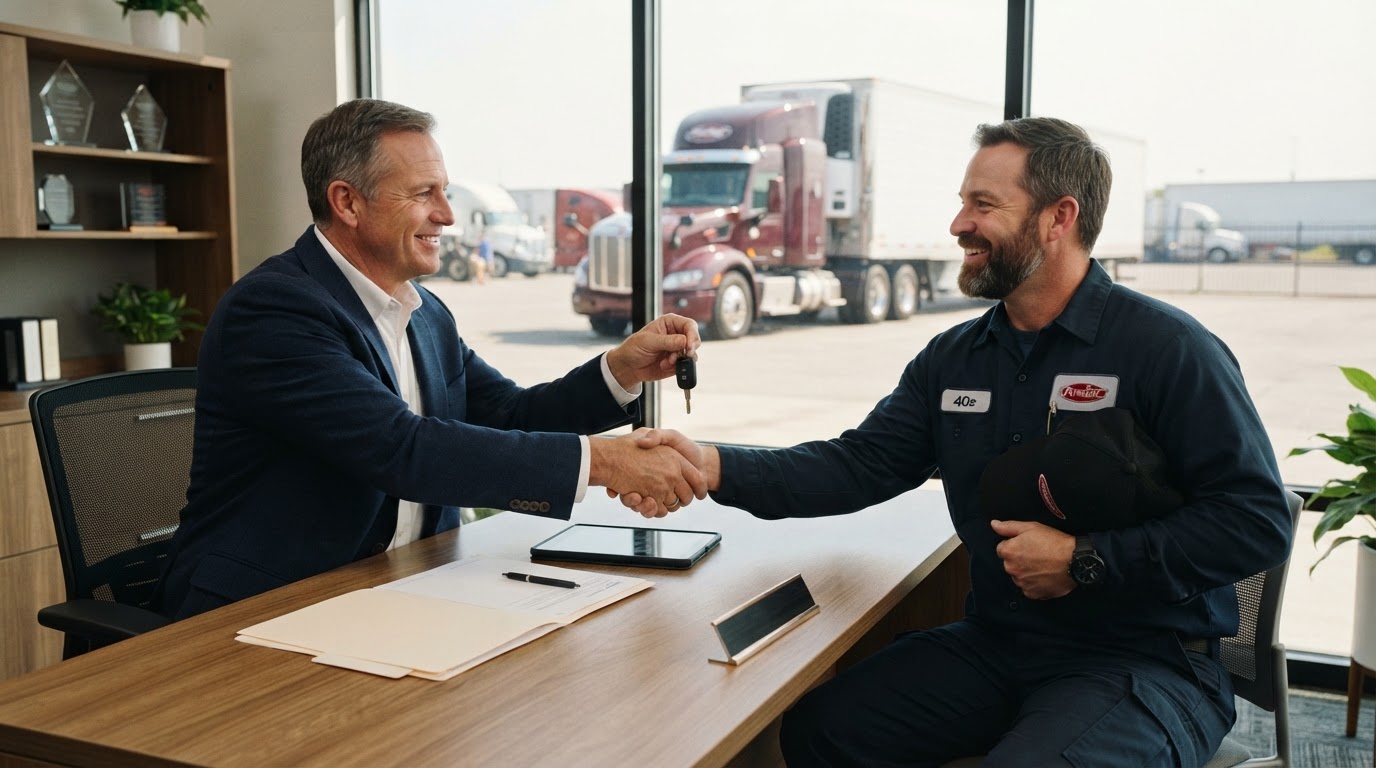
ASTEL runs the full FMCSA testing program by the book — the same rules for everyone, no surprises. Drivers earn $90,000–$110,000 a year on year-round reefer freight, paid weekly, with a direct line to the owner.
Apply in 2 minutes →Based on 49 CFR Part 40 and Part 382 (FMCSA drug & alcohol testing), FMCSA Clearinghouse rules, and announced 2026 random testing rates (50% drugs / 10% alcohol). Panel composition and oral-fluid implementation are actively changing in 2026 — verify current requirements at fmcsa.dot.gov. This article is general information, not legal or medical advice.