

The 15-minute pre-trip checklist that saves your week
Every breakdown on the shoulder, every out-of-service order at a scale, every "how did I not see that tire" moment, most of them were visible at 6 AM in the parking lot, for free. The pre-trip inspection (PTI) is the cheapest insurance in trucking. Here is what the law actually requires and the routine professionals really run.
Three federal rules cover the daily inspection cycle
Three rules cover the daily cycle, and drivers mix them up constantly.
- 49 CFR 392.7, before driving. You must be satisfied that the listed parts and accessories are in good working order: service brakes and trailer brake connections, parking brake, steering, lights, reflectors, tires, horn, wipers, mirrors, coupling devices. No federal form is required for the pre-trip itself; the requirement is the check, not the paperwork.
- 49 CFR 396.13, before driving. Review the last driver vehicle inspection report on the vehicle and, if defects were noted and repaired, sign to acknowledge the repairs.
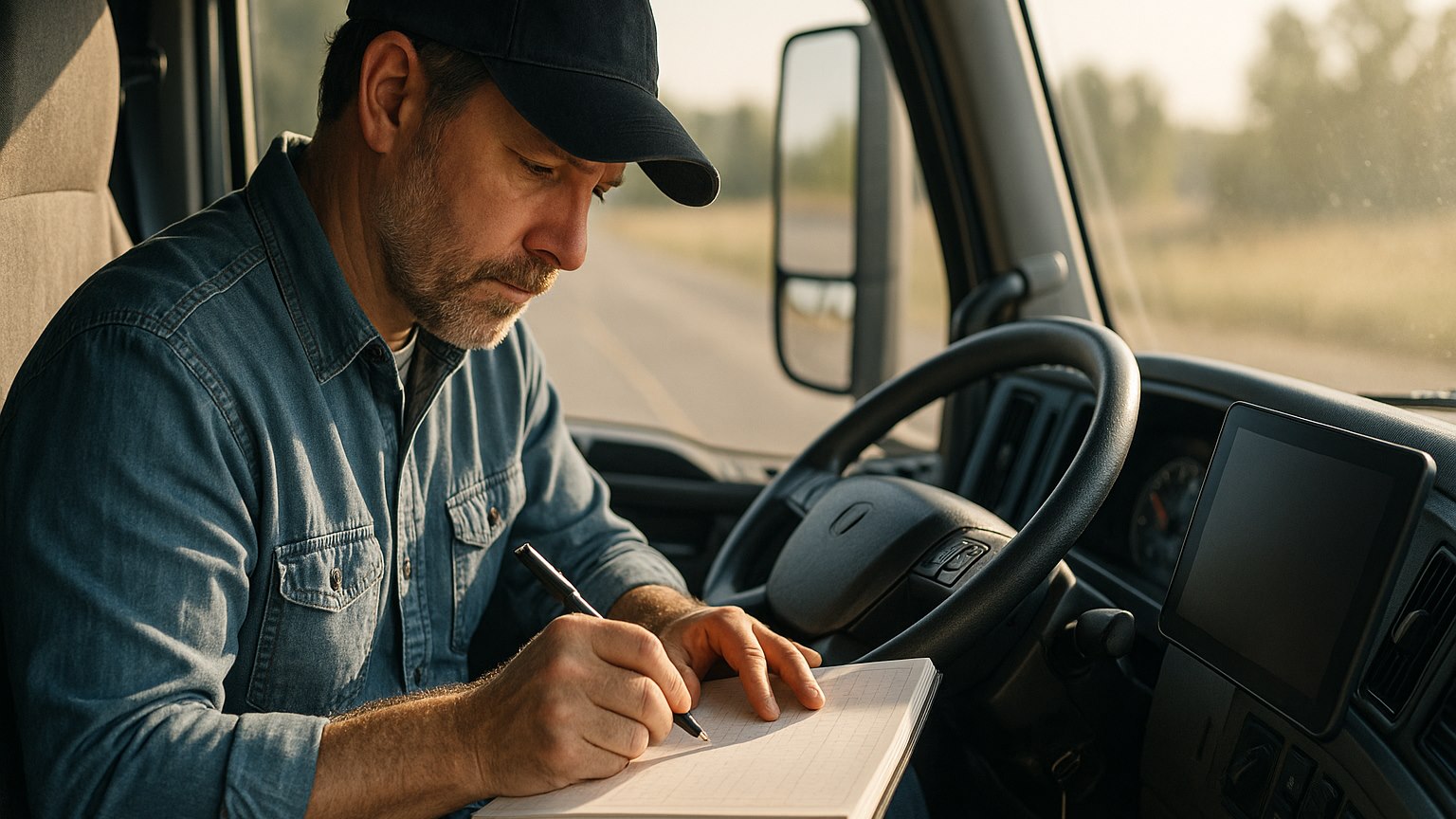
- 49 CFR 396.11, end of the day. Prepare a DVIR listing any defects that would affect safety or cause a breakdown. Since 2014, property-carrying drivers file a report only when there is a defect. A clean day needs no paper, but a real defect written up is your legal protection.
The walk-around covers eight zones on the truck
| Zone | What you're checking |
|---|---|
| 1. Approach | Lean, fresh fluid spots under the truck, anything hanging. A puddle of coolant tells you the day's plan before you open the hood. |
| 2. Engine compartment | Oil and coolant levels, power steering fluid, belts (cracks, fraying, ~½–¾" play), hoses, leaks, steering linkage, front brake chambers, slack adjusters and hoses, front suspension. |
| 3. Lights & reflectors | Full circle with headlights and 4-ways on: headlights, markers, turn signals, brake lights, trailer tail. Burned-out bulbs are the cheapest violation you'll ever hand an inspector. |
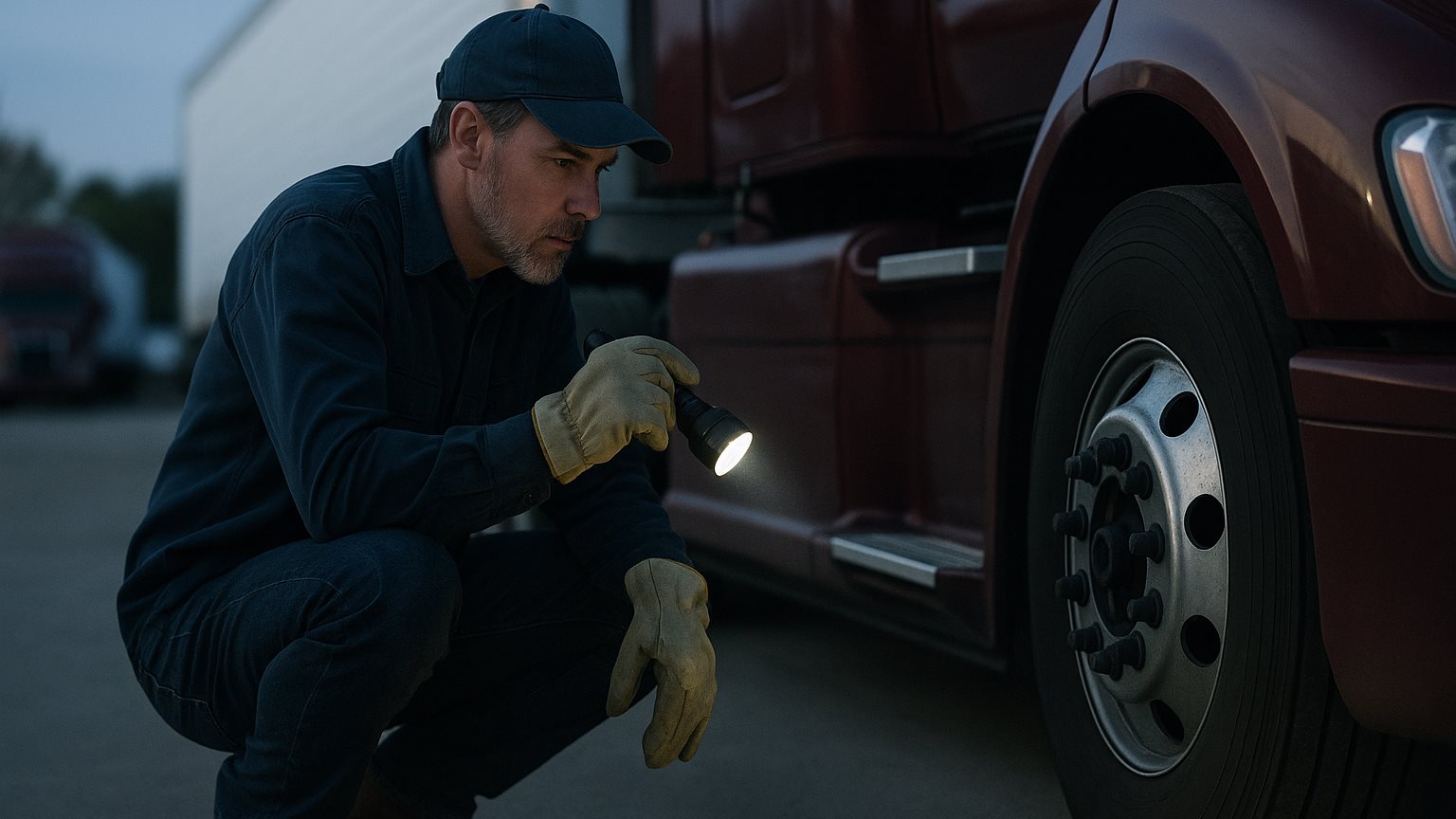
| 4. Coupling | Fifth-wheel jaws locked around the kingpin (flashlight, not faith), no gap between skid plate and trailer apron, kingpin release arm in, air lines and pigtail secured, no chafing. |
| 5. Tires & wheels | Tread ≥4/32 on steers, ≥2/32 elsewhere, no cuts or bulges, proper inflation (thump is a habit, gauge is a check), lug nuts tight — rust trails around studs mean movement; hub oil level and leaks. |
| 6. Trailer & rear | Doors and hinges, seal in place, mudflaps, license plate light, ABS lamp cycles off, rear impact guard, air leaks you can hear. |
| 7. Air brakes | Build pressure, engine off, brakes applied at ~90 psi — «step on it» and hold: listen for leaks, watch the gauge. Low-air warning must trigger before 60 psi. Any steady hiss is a stop-work signal. |
| 8. In-cab | Gauges, horn (city and air), wipers and washer fluid, mirrors set, seat belt, and emergency kit: three triangles, charged fire extinguisher, spare fuses. |
Reefer trailers add five items to the morning list
A refrigerated trailer adds its own morning list, and skipping it costs a load, not a light bulb.
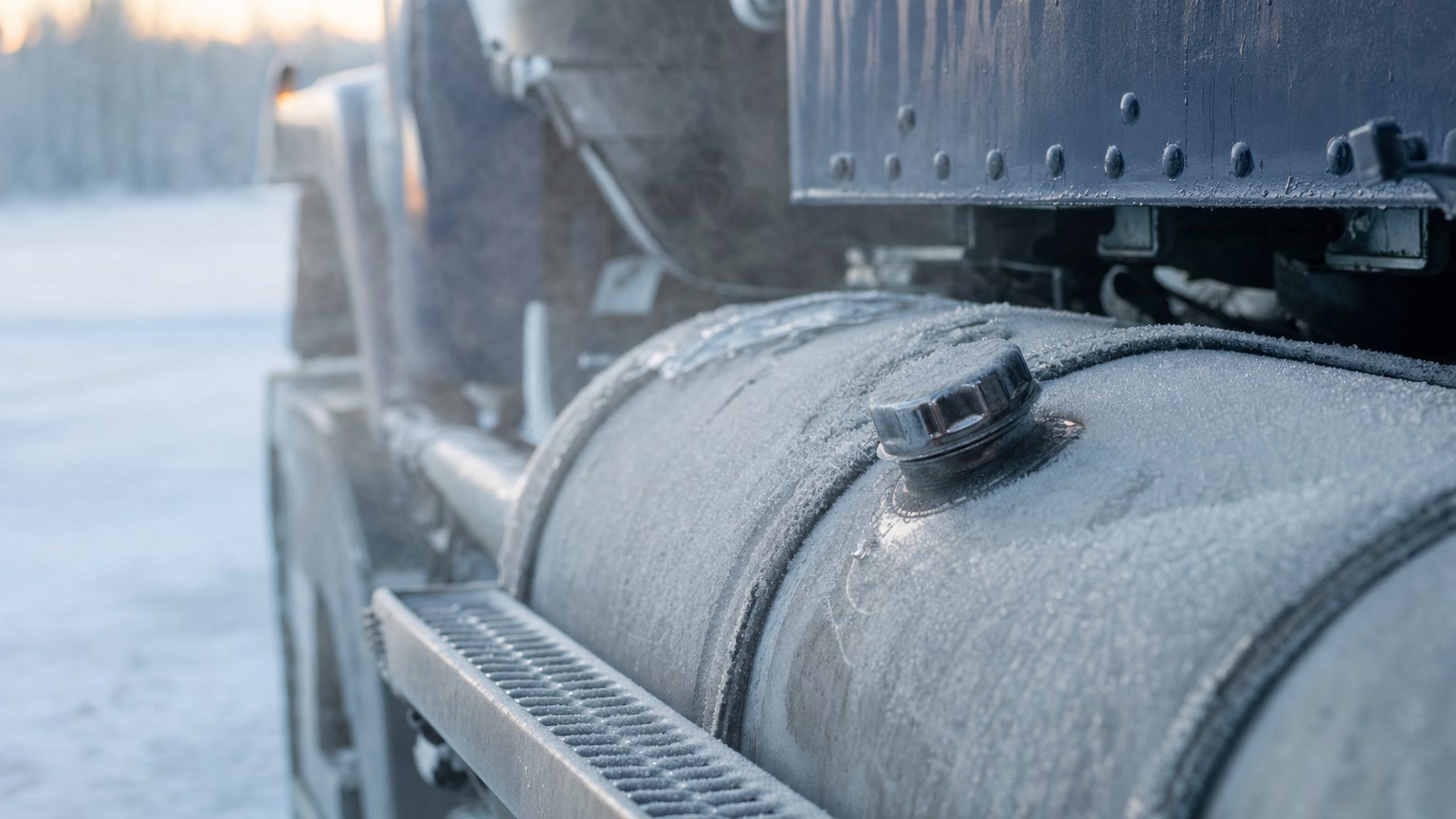
- Reefer fuel: keep the trailer tank at ¾ or more; the unit quits before the tractor does.
- Mode and setpoint per the rate confirmation: continuous for fresh produce, start-stop only where the RC allows it.
- Alarm codes: check the unit's display; photograph any code and report it before departure, not at the receiver.
- Doors and seals: a torn door gasket is a temperature excursion waiting for a hot afternoon.
- Air chute and bulkhead should stay intact and unblocked; airflow is what actually holds the temp.
Brake defects decide most roadside inspection outcomes
Roadside data says it plainly: brake violations are the top out-of-service category, roughly a quarter of all OOS orders, followed by tires and lights. Nearly all of it is visible on a morning walk-around: an audible leak, a cracked hose, a tire at 1/32, a dead trailer light. A driver who did a real PTI walks into a Level 1 inspection calm. A driver who didn't is gambling with a tow bill and a 10-hour parking lot stay. What inspectors check level by level, in our DOT roadside inspection guide; in winter, add the cold-weather checks from the winter driving guide.
The DVIR protects you when a defect is written up
A defect you wrote up is the company's problem to fix. A defect you drove past is yours to own at the scale. The professional habit: find it, photograph it, write it on the DVIR, tell dispatch or the shop, and if a truck was written up, the next driver signs off on the repair before driving (396.13). Companies with their own shops turn write-ups around fast; companies without them teach drivers not to write things up, and that's a red flag when you're choosing where to work.
Frequently asked questions
Is a pre-trip inspection required by law?
Yes. 49 CFR 392.7 requires the driver to be satisfied that brakes, steering, lights, tires, horn, wipers, mirrors and coupling devices are in good working order before driving, and 396.13 requires reviewing the previous inspection report. The pre-trip itself doesn't require a federal form; the end-of-day DVIR is written when a defect exists.
How long should a pre-trip inspection take?
A practiced daily routine takes 15–30 minutes for a tractor and trailer. The CDL exam version is slower because you name every part aloud; the working version is faster but covers the same zones.
Do I log the pre-trip as On Duty?
Yes, inspection time is On Duty (Not Driving). A log that shows no inspection time before a full driving day is an easy audit flag.
What is checked in an air brake test?
With full pressure and the engine off, apply the brakes at around 90 psi and hold — pressure should hold steady with no audible leaks. The low-air warning must activate before 60 psi. A steady hiss anywhere in the system means the truck doesn't move until it's found.
What extra checks does a reefer trailer need?
Reefer fuel level (¾ tank or more), correct mode and setpoint per the rate confirmation, no active alarm codes, intact door seals, and an unblocked air chute. Each one protects the load, not just the equipment.
Good equipment makes good inspections.
ASTEL trucks are maintained by our own mechanics, replacement trucks mean a breakdown doesn't eat your week, and a clean DOT inspection pays a $50–$500 bonus. Drivers earn $90,000–$110,000 a year, paid weekly.
Apply in 2 minutes →Regulatory references: 49 CFR 392.7 (pre-trip satisfaction), 396.11 (DVIR), 396.13 (review of prior report); tread depth minimums per FMCSA regulations; brake out-of-service share per recent CVSA roadside data (2025). Rules and enforcement priorities change — verify current requirements at fmcsa.dot.gov. This article is general professional guidance, not legal advice.