

❄️ Winter Driving for Truck Drivers: How OTR Pros Handle Snow, Ice and Chain Laws
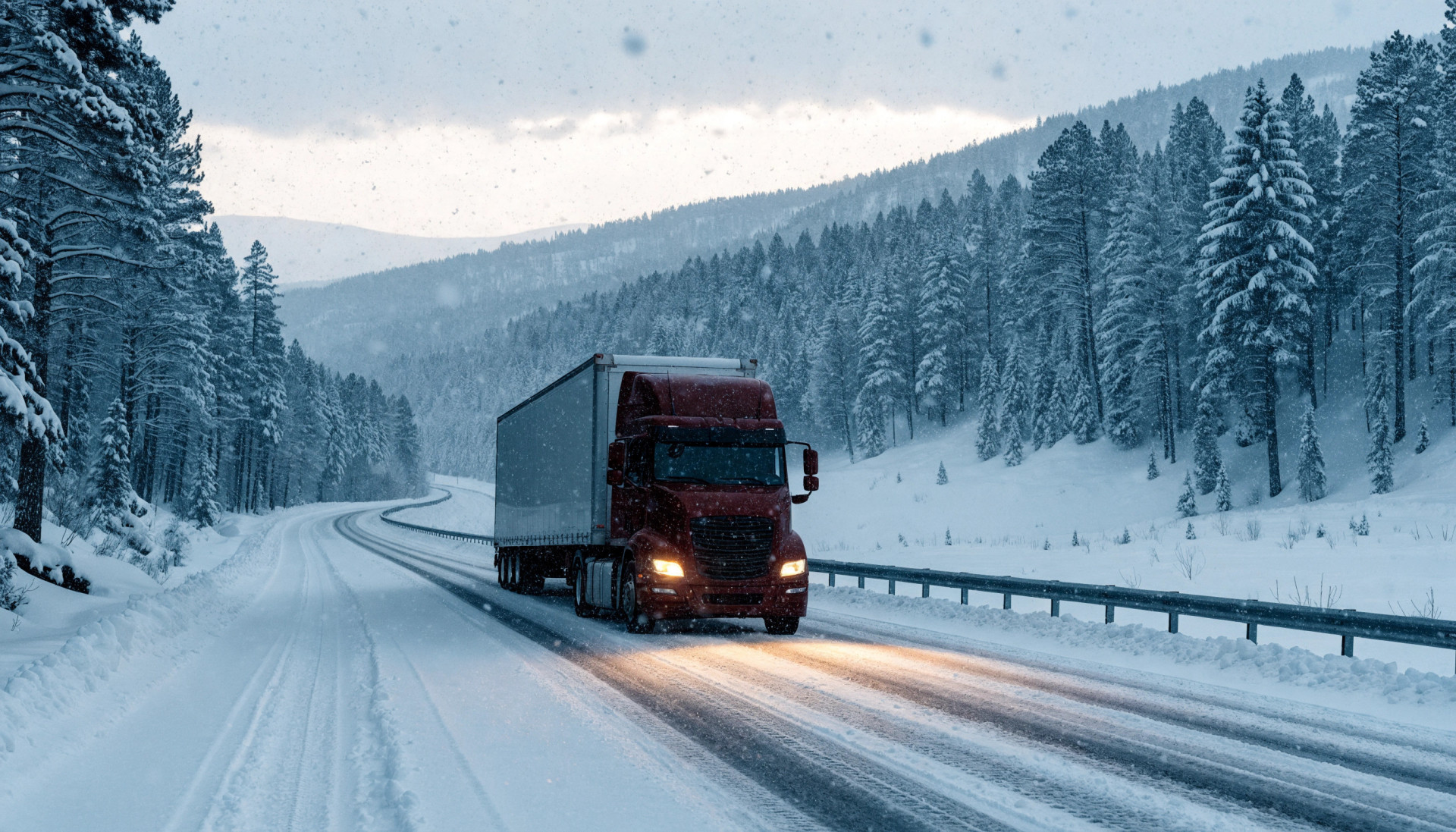
Winter is when the road sorts drivers into two groups: the ones who prepared and the ones who provide the footage for next year's safety videos. It's also — quietly — the best-earning season for reefer freight. Here's how professionals get through it safe, calm and paid. 🧤
🔗 Chain laws: where you must carry chains
Chain rules are state law, and the fines are real. The strictest and best-known example is Colorado:
- When: September 1 through May 31, every year — this is a must-carry rule, active regardless of weather.
- Where: the I-70 mountain corridor (Dotsero to Morrison) and, since the 2024 expansion, most state and federal highways west of I-25.
- Who: commercial vehicles over 16,000 lbs GVWR/GCWR.
- What: chains (or approved alternative traction devices) for at least four drive-wheel tires; clip-on chains and tire cables are not permitted for commercial vehicles.
- Fines: around $500 for not carrying, and over $1,000 with surcharges if you block the road because you chained up late or not at all.
Wyoming, Utah, California, Oregon and Washington run their own chain regimes on mountain passes, activated by conditions. The working habit: before a winter trip through mountain states, check each state's 511 service for chain requirements and closures — I-80 through Wyoming is famous for closing entirely in wind and whiteouts.
🧊 Black ice: how to spot it and survive it
Black ice isn't black — it's a thin, transparent glaze that makes asphalt look merely wet. What actually warns you:
- Bridges, overpasses and shaded curves freeze first — they lose heat from both sides while the ground still holds warmth.
- Watch the spray. Wet roads throw visible spray off other vehicles' tires. Spray suddenly gone at the same wetness look = the water froze.
- Glassy shine in your headlights, especially early morning and after sunset, when temps dip through freezing.
- Ambient temperature near or below 32°F — but remember the road surface can freeze while your gauge still reads above freezing.
If you're on it: do nothing sudden. Off the throttle smoothly, keep the wheel straight, no hard braking, no lane change. The truck usually rolls across a patch fine — panic inputs are what spin it.
🎒 The winter kit: what belongs in the truck
| Category | What to carry |
|---|---|
| Traction | Chains sized for your tires + tighteners/bungees, heavy gloves, kneeling mat, flashlight or headlamp with spare batteries, small shovel, bag of sand or kitty litter |
| You | Insulated boots, warm layers, sleeping bag rated for real cold, 2–3 days of food and water, phone power bank |
| The truck | Winter-rated washer fluid + a spare gallon, ice scraper and brush, extra fuel filter, anti-gel diesel additive for hard freezes |
| Habits | Keep the fuel tank above half — it's your heater if you're stuck, and it fights condensation in the fuel system |
🌡️ Winter and your reefer: heat mode season
Reefer work doesn't stop in winter — it flips. Produce and liquid loads that rode in cooling all summer now need protect-from-freeze service: the unit heats the trailer to keep freight above its damage point while the outside air tries to turn it to ice.
- Set the unit exactly per the rate confirmation — heat mode setpoints matter as much as cold ones, and a frozen load rejects the same as a cooked one.
- Check the unit more often in extreme cold — hard freezes stress reefer fuel, batteries and door seals.
- Mind the reefer's own diesel — anti-gel applies to the trailer tank too, not just the tractor.
🛑 When to shut down — and why it's a professional decision
States close roads when it gets bad enough; the harder call is stopping before the closure order does it for you. The professional rules:
- If you're asking yourself whether it's still safe, it isn't. That question is the answer.
- Park early. Truck parking evaporates the moment a storm warning posts — the driver who stops at 4 PM gets a spot and dinner; the one who pushes to 8 PM sleeps on a ramp.
- Tell dispatch immediately. Good companies replan around weather; the load can be late — you can't be replaced.
- Document conditions — a photo and a message create a clean record of why you stopped.
❓ Frequently asked questions
Do truck drivers need to carry chains in every state?
No — chain rules are per-state and mostly apply to mountain corridors. Colorado's commercial must-carry (September 1 – May 31, most highways west of I-25) is the strictest standing rule; states like Wyoming, Utah, California, Oregon and Washington activate requirements by conditions. Check each state's 511 before winter mountain routes.
How do you spot black ice while driving a truck?
Watch for a glassy shine on the pavement, disappearing tire spray from other vehicles, and treat bridges, overpasses and shaded curves as frozen whenever temperatures are near freezing.
Should truckers use cruise control in winter?
No. On snow, ice or slush, cruise control can apply power at exactly the wrong moment and turn a small slip into a jackknife. Keep your foot in control on any questionable surface.
When does diesel start to gel?
Untreated diesel can begin gelling in hard freezes — roughly the low teens Fahrenheit and below, depending on the blend. Winter blends and anti-gel additives push that point much lower; treat both tractor and reefer fuel ahead of severe cold.
Is winter OTR driving worth it financially?
For prepared drivers, yes — winter overlaps with peak reefer season, so demand and miles stay high exactly when less-prepared drivers park. Skill in winter conditions converts directly into full weeks.
🚛 Winter is our season.
ASTEL's reefer freight runs year-round, with the busiest stretch from August through March — 3,500–3,700 miles a week in season. Our trucks are maintained by our own mechanics, replacement trucks keep a breakdown from killing your week, and dispatch answers 24/7 — including at 2 AM in a snowstorm. Drivers earn $90,000–$110,000 a year, paid weekly.
Apply in 2 minutes →Chain-law details reflect Colorado statute and CDOT guidance as of the 2025–2026 season and can change; other states' rules vary and activate by conditions — always verify current requirements via each state's 511/DOT service before travel. Safety guidance is general professional practice, not a substitute for your company's policies or judgment on the road.