

Backing a Semi Is the Skill That Separates Nervous Rookies from Calm Professionals
Nobody's career ended because they backed slowly. Plenty have been derailed by backing fast. Docks, tight truck stops, angled parking at 11 PM: backing is where new drivers sweat and where most preventable accidents live. The professionals aren't braver. They run a system, and here it is.
The setup decides everything before you shift into reverse
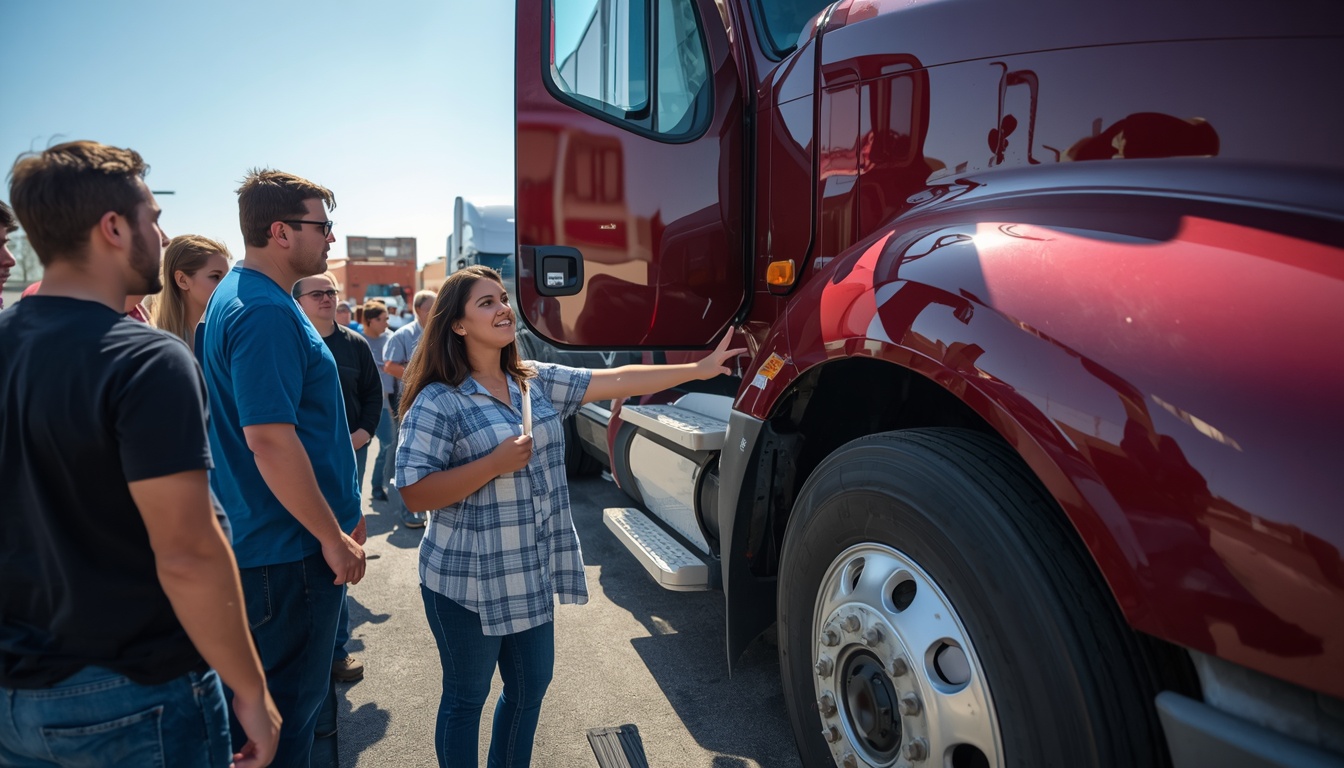
Watch a veteran take a tight dock. Most of the work happens driving forward. They roll past the hole slowly, read the angles, place the tractor exactly, and then the backing itself looks boring. Copy that.
- Scout the spot first. Roll past it. Note obstacles at trailer height (overhangs, mirrors of neighboring trucks), potholes, the slope, where the sun or darkness is.
- Give yourself room. Pull further forward than feels necessary; distance in front of you converts into gentle angles behind you. Most rookie jackknifes start from a setup that was two truck-lengths too short.
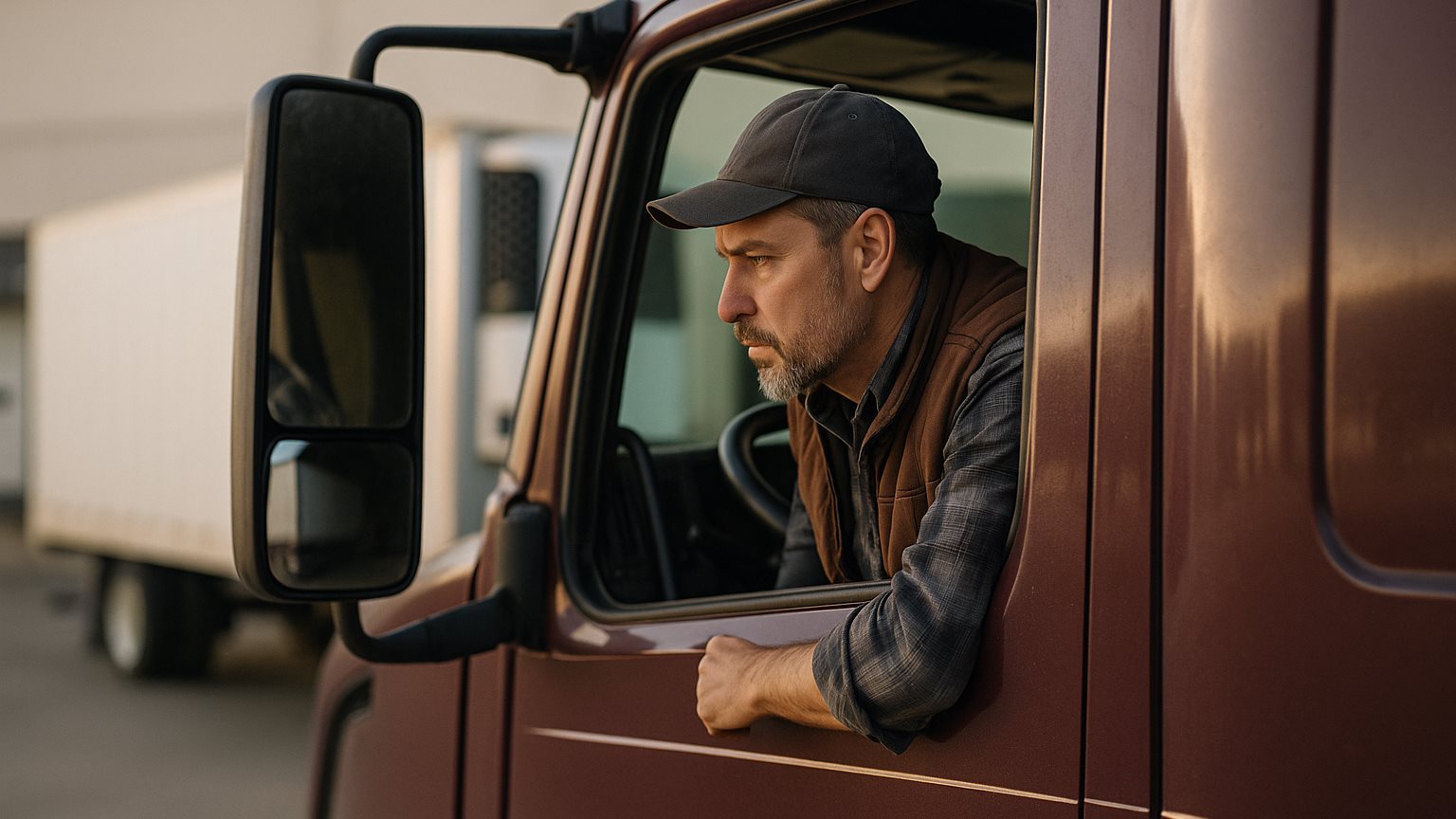
- Favor the driver side. A driver-side back keeps the whole trailer in your best mirror. A blind-side back hides it behind sheet metal, and professionals treat blind-side as a last resort, not a flex, circling a lot to avoid one.
- Set the stage. Windows down, radio off, 4-ways on. You need your ears and your full attention more than the playlist.
GOAL is the three most profitable letters in trucking
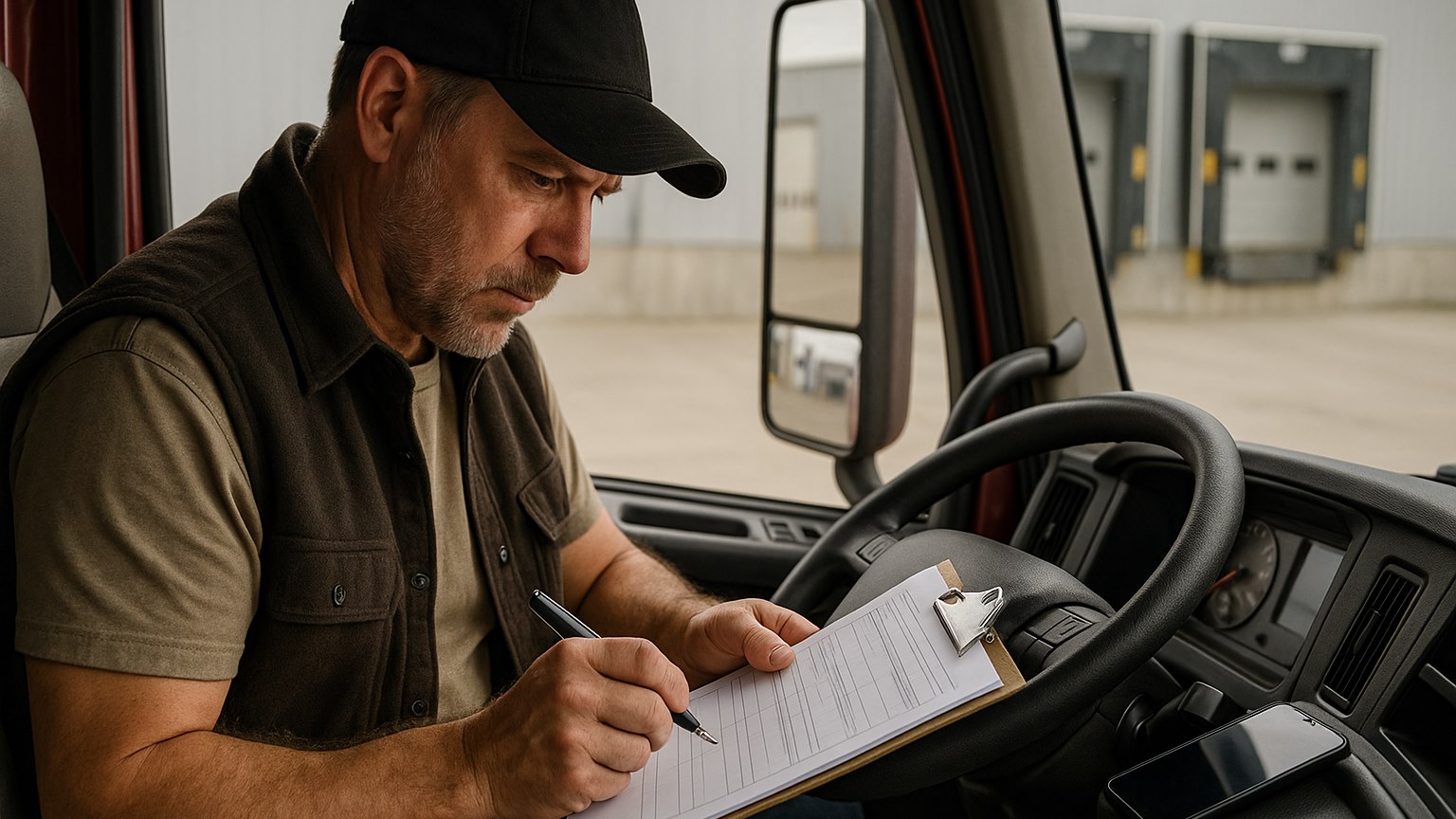
Get Out And Look, as many times as needed. Walk to the back, look at the actual gap, the actual dock line, the actual pole your mirror can't see. Nobody competent has ever mocked a driver for GOALing; every terminal has a story about the driver who didn't. The math is absurdly one-sided: a GOAL costs 30 seconds, a hit costs an accident report, possibly a post-accident test, a deductible and months of "remember that time." When visibility is bad (night, rain, a lot you've never seen), GOAL twice as often. This habit alone deletes most backing accidents.
The maneuvers, from easy to expert
| Maneuver | What it is | The key |
|---|---|---|
| Straight-line | Backing straight between two lines | Micro-corrections: chase the trailer with the wheel the moment it drifts, a quarter turn at a time |
| Offset / 45° | Backing into a space one lane over | The pivot point: start the counter-steer earlier than feels right, then straighten |
| Alley dock / 90° | Backing perpendicular into a dock or parking slot | The setup arc and patience, see the step-by-step below |
| Blind side | Any back toward the passenger side | Avoid it by repositioning whenever possible; if forced, GOAL constantly and creep |
These are the same maneuvers scored on the CDL skills test. The exam isn't hazing, it's a preview of every shift.
The 90° alley dock, one step at a time
- Pull past the hole about a trailer length, positioned 3–4 feet off the row, and confirm the spot is clean (GOAL #1).
- Set your arc. Hard steer toward the row as you creep forward, swinging the tractor away; you're building the angle that lets the trailer hook into the hole.
- Reverse at idle. No throttle. Watch the trailer's rear corner in the mirror, because that corner is the whole game.
- Chase the drift. If the trailer swings too tight, steer toward that mirror to open it; too wide, steer the other way. Small inputs, made early, beat big inputs made late.
- GOAL at the half-way point (GOAL #2) and check the far side you can't see and your distance to the dock.
- Straighten as the trailer enters the hole. Bring the tractor in line behind it, then walk it back the last feet at a crawl.
- Any doubt, pull up. A pull-up isn't a failure; it's the maneuver's reset button, and both examiners and yard veterans read it as competence.
Backing at night, in rain and in strange lots
- At night, back toward light when you can, use your work lights if equipped, and never trust a dark gap you haven't walked (GOAL again).
- In rain, mirrors lie through droplets. Wipe them at GOAL stops, and slow your slow speed further.
- A new lot at 11 PM is the classic hit scenario: tired driver, tight rows, poor light. If the spot requires an audience-grade maneuver on your worst battery, find an easier spot. The trip-planning habit of parking earlier exists partly for this reason.
- Spotters help, but responsibility stays yours. Agree on signals before moving, keep them visible in the mirror, and stop the instant you lose sight of them. A spotter is extra eyes; the license in the seat is still yours.
And a word for the first-year driver: everyone was terrible at this once, including the smoothest operator on the yard. Practice on empty lots on weekends, take the extra pull-ups, and by month six the maneuver that spikes your pulse today will be muscle memory. We wrote about surviving the whole first year in the no-experience guide.
Frequently asked questions
Why is the setup so important in backing?
Because reverse steering can only refine an angle, not repair one. A wide, shallow, driver-side setup gives the trailer a gentle arc into the hole; a short, steep setup guarantees jackknife angles no mirror skill can fix. Pros spend more time positioning forward than backing.
What does GOAL mean in trucking?
Get Out And Look, physically walking to the back of the trailer to check the gap, the lines and the obstacles mirrors can't show. It costs 30 seconds, deletes most backing accidents, and no professional has ever been mocked for doing it too often.
Which way do you turn the wheel when backing a trailer?
Toward the mirror where the trailer is drifting: if the trailer falls into your left mirror, steer left to push it back straight. Small, early corrections at idle speed beat big late ones every time.
What is a blind-side back and why avoid it?
Any backing maneuver toward the passenger side, where the trailer hides from your mirrors. Professionals reposition or circle the lot to convert it into a driver-side back; when it's unavoidable, they creep and GOAL constantly.
Are pull-ups during backing a sign of a bad driver?
The opposite. A pull-up resets a deteriorating angle and costs nothing; forcing a bad angle costs accidents. On the CDL test pull-ups carry a minor point cost, but in real yards they read as competence.
Skills grow fastest where the equipment and the schedule let them.
ASTEL hires CDL-A drivers — including drivers early in their career — onto maintained trucks with dispatch support 24/7. Drivers earn $90,000–$110,000 a year, paid weekly, with a direct line to the owner.
Apply in 2 minutes →Backing techniques described are standard professional practice taught in ELDT-registered CDL programs; skills-test scoring details vary by state. Always follow your company's yard policies and use a spotter where required. This article is general professional guidance.