

Trucking Paperwork for New OTR Drivers — BOL, POD and Everything In Between
Nobody gets into trucking because they love forms. But every load lives on paper (or in an app) from the bill of lading at the shipper to the settlement in your bank. Get the paperwork right and the money follows quietly. Get it wrong and you'll spend your 34-hour reset arguing about a pallet count. This is the whole system, driver to driver.
Every document has an owner, and mixing them up is the rookie mistake
A rookie mistake is treating every piece of paper the same. Some are legal contracts, some are your money, some are proof for a DOT officer. This is the map:
| Document | Who signs / issues it | Why it matters, and what happens if it's missing |
|---|---|---|
| Bill of lading (BOL) | Shipper issues; driver signs at pickup | The contract and receipt for the freight (required by 49 CFR 373.101). Your signature says the count and condition on it are true. Missing = no proof of what you loaded, no defense in a claim. |
| Proof of delivery (POD) | Receiver signs and dates the BOL, usually with a stamp | The proof the load arrived. The carrier invoices against it; brokers won't pay without it. Missing = load can't be billed, settlement delayed. |
| Rate confirmation (rate con) | Broker and carrier office | Sets the rate, pickup/delivery numbers, temperature, plus lumper and detention terms. You may see it for reference; the money terms belong to the office, not the dock. |
| Lumper receipt | Lumper service issues | Proof of the unloading fee. Missing = the carrier can't bill it back and you can't be reimbursed. |
| Seal record | Shipper applies; driver verifies and writes the number | Proves the trailer wasn't opened in transit. A seal number that doesn't match the BOL is an automatic rejection at most food receivers. |
Check these eight things before you sign the BOL
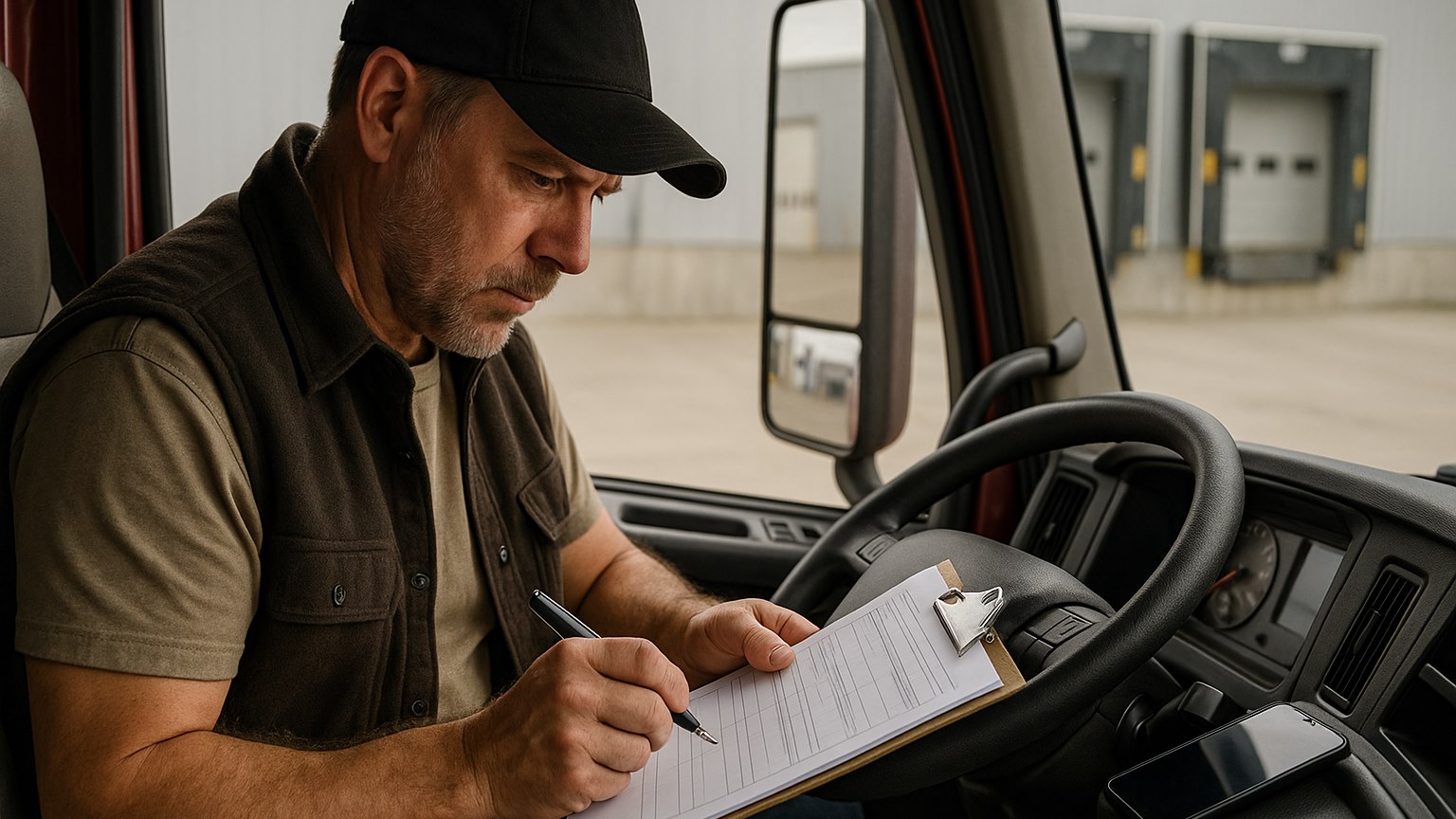
Signing a bill of lading is the one moment where a driver has real legal weight. Once your name is on it, the carrier is presumed to have received exactly what the paper says, in good condition. So before you sign:
- Match the load. Shipper, consignee, pickup number and PO number must match what dispatch sent you. Wrong paperwork on the right trailer happens more often than you'd think.
- Count the pieces. Pallets or cases or units, whatever the BOL states. If you can watch the loading, count. If you can't, go to step 3.
- Look for "shipper load and count" (SLC). When the shipper loads and seals the trailer without you watching, the BOL should say SLC (or SLAC: shipper load, stow and count). That note shifts responsibility for the count to the shipper. No SLC note and you weren't allowed to see the load? Ask for it or write it yourself before signing.
- Verify the seal. Watch it go on, read the number out loud, compare it to the BOL, photograph it. If the shipper hands you a seal and walks away, apply it yourself and write the number on every copy.
- Read the temperature line (reefer). Set point, continuous versus cycle-sentry, pre-cool requirement, pulp temps. It must match the rate con; a mismatch is a call to dispatch, not a guess. The full routine is in our guide to avoiding reefer load rejections.
- Check the weight against your axles. If the BOL says 44,000 lb, plan on a scale ticket. The ticket is cheap; the overweight fine isn't.
- Write every exception. Damaged shrink wrap, leaning pallets, a case short, a warm trailer at loading: on the BOL, with time and date, before you sign. "STC, said to contain" is the standard note when you couldn't verify the count.
- Sign, date, keep your copy, and photograph every page before you pull away.
A clean POD is the last link between your miles and your paycheck
Most orientation classes skip the money mechanics behind this. The carrier can't invoice the broker or shipper until it has a signed proof of delivery; the broker won't release payment without it; and your settlement is built on the loads the office could close. The receiver's signature and stamp on your BOL is not a formality. It's the last link between the miles you drove and the deposit on Friday.
A clean POD means: signed, dated, stamped if they use a stamp, and no exceptions, or exceptions that are accurate and specific. "3 cases damaged, pallet 12" is fine. "Received short" with no number is a headache for everyone.
What goes wrong in practice:
- No signature. Drop and hook at night, guard shack says "just leave it." Get a stamp, a gate pass, or at minimum a photo of the trailer at the door with the time.
- Temperature disputes. If the receiver pulps product and claims it's out of range, note their reading, your reefer reading and the seal status on the POD before it's signed. Then call dispatch. ASTEL's 24/7 dispatch handles exactly this kind of paperwork standoff, and if it escalates, there's a direct line to the owner.
The same POD carries your arrival and departure times, the timestamps behind detention and layover claims. In and out times initialed by the receiver are worth real money.
Seal integrity decides big claims over one small number
On refrigerated and food-grade freight the seal is sacred. Receivers compare the number on the trailer to the BOL; a mismatch or a broken seal means many refuse the load outright, even if every pallet is perfect. Two rules:
- Never break a seal yourself unless dispatch or the shipper authorizes it in writing. A DOT inspection is the exception. Note the officer's name and badge number on the BOL and record the new seal.
- Photograph the seal at pickup, at any long stop, and at delivery before anyone touches it. Seal broken in transit? Stop, photograph, call dispatch, and get a new seal documented before you reach the receiver.
Lumper receipts, scale tickets and fuel build the reimbursement stack
Some documents don't concern the freight at all. They concern your wallet.
- Lumper receipts. When a third-party crew unloads you at a grocery or retail DC, the fee is the carrier's or broker's cost, not yours. At ASTEL the lumper fee is paid by the company, a payment code issued on the spot, or reimbursement against the receipt. No receipt, no reimbursement, so get it before the crew leaves. How it works at the dock: live load vs drop and hook.
- Scale tickets. Weigh when the BOL is heavy or the shipper loaded unevenly; keep the ticket (and reweigh slips) with the load's paperwork.
- Fuel receipts. Interstate fuel is taxed under IFTA and the carrier files quarterly by state. Fuel cards capture the data; keep the paper for any cash or off-card fill.
- Tolls and repairs. Receipt, photo, load number, and call before you spend: dispatch can usually pay directly, and ASTEL's own repair shop handles most fixes without a roadside bill at all.
Trip packs and scanning apps move your paperwork home
A trip pack is all the paperwork for one load bundled together: BOL/POD, lumper and scale receipts, fuel receipts, plus the trip sheet if your company uses one. Twenty years ago that was an envelope at a truck stop. Today it's a scan from the cab.
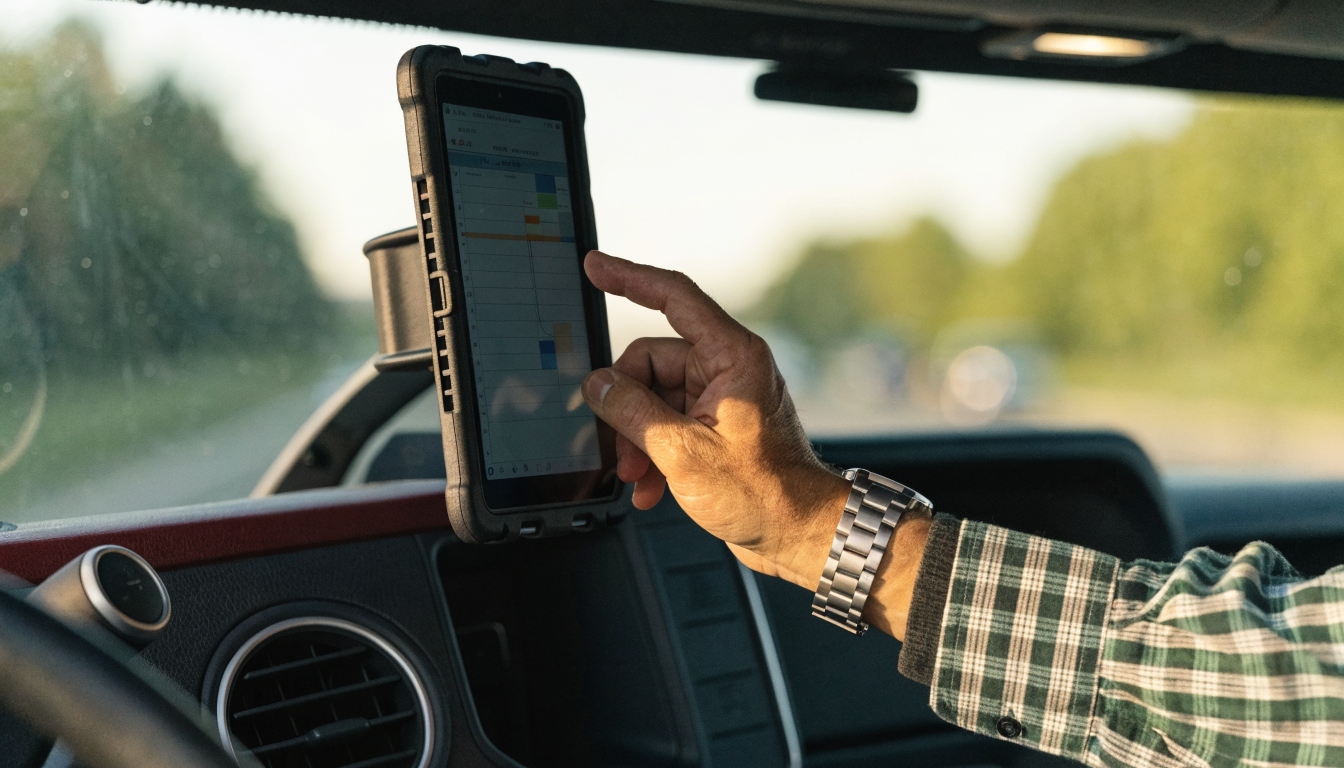
The most common tool is Transflo Mobile+ (descendant of the old TripPak service): photograph the documents, tag them by type and load number, send them straight to the carrier's billing system, often with an electronic signature. Some carriers use their own app or the document feature inside the ELD platform; the principle is identical. More in best apps for truck drivers.
Habits that keep money moving:
- Scan the signed POD before you leave the receiver's lot, so the office can invoice the next morning.
- Scan flat, in good light, every page including the back if there's writing on it, and keep the originals by load number until the load is paid.
Paperwork is the clock behind pay. ASTEL settles weekly and the deposit lands the same day before noon, but a load without a POD can't be on that settlement. Scanning tonight instead of Monday is the difference between paid this week and paid next.
The DOT document set stays with the truck, load after load
Freight paperwork changes every load. Cab paperwork stays with the truck and gets checked at every roadside inspection. The company prepares most of it; you keep it findable and current.
- Your CDL with the right class and endorsements, and your medical examiner's certificate (med card), often linked to your CDL record now, but officers still ask for the paper.
- Registration (cab card) for tractor and trailer, and the insurance card.
- IFTA license copy in the cab, two IFTA decals on the tractor, plus the apportioned (IRP) cab card.
- Annual inspection proof for tractor and trailer (sticker on the unit or report in the cab, per 49 CFR 396.17).
- Permits the route requires: state permits (New York HUT, New Mexico weight-distance, Oregon, Kentucky KYU) and oversize/overweight if applicable.
- ELD packet, the four items every officer checks: ELD user manual, data transfer instruction sheet, malfunction instruction sheet, and blank paper logs for at least 8 days.
- Records of duty status: today plus the previous 7 days on the ELD, ready to transfer. That's where hours-of-service rules meet paper.
- The current load's BOL: the officer reads shipper, consignee and commodity; on hazmat loads the shipping papers must be within reach on the seat or door pocket.
At the inspection: hand over what's asked for, in order, without digging. A binder with tabs turns a Level 1 into a shorter conversation, and at ASTEL a clean DOT inspection earns a bonus of $50, $200 or $500 depending on the level.
Federal rules set how long you should keep your paperwork
Carriers keep bills of lading and freight bills for at least a year under the federal retention schedule (49 CFR Part 379), and hours-of-service records with supporting documents for six months (49 CFR 395.8(k)). For a driver, the practical rule: keep copies and photos of every load until it's paid and the claim window has passed. A year is a comfortable margin.
If this feels like a lot for week one, that's normal. A good orientation and first load walks you through every form once, and dispatch exists partly to answer "what do I write here?" at 2 a.m. Unfamiliar terms are in the trucking terms glossary; how the job is set up overall is on our page for drivers.
Frequently asked questions
What is a bill of lading in trucking?
The bill of lading (BOL) is the document the shipper issues for each load: who ships it, who receives it, what it is, how many pieces and how much it weighs. The driver signs it at pickup, and that signature is the carrier's receipt for the freight. The same paper becomes the proof of delivery when the receiver signs it.
What should a driver check before signing the BOL?
Pickup and PO numbers against the dispatch info, piece count, seal number on the trailer versus the paper, the temperature instructions for reefer loads, and any shipper load and count (SLC) note. Write every visible damage or shortage on the BOL before you sign, and photograph every page.
What does shipper load and count (SLC) mean?
SLC means the shipper loaded and counted the freight without the driver verifying it, usually because the trailer was sealed before the driver saw the load. The note shifts responsibility for the count and loading to the shipper. If you couldn't watch the loading, make sure SLC is written on the BOL.
Why is proof of delivery so important for getting paid?
The carrier invoices the broker or shipper only with a signed POD, and brokers do not release payment without one. A clean POD sent the same day, signed and stamped, lets the office bill the load immediately, so it lands on your next settlement instead of the one after.
What documents do I need to show at a DOT roadside inspection?
CDL, medical certificate, registration and insurance for tractor and trailer, IFTA license copy, annual inspection proof, any state permits, the current BOL, and the ELD packet: user manual, transfer instructions, malfunction sheet and at least 8 days of blank logs, plus your current and previous 7 days of records of duty status.
Paperwork handled, miles paid
At ASTEL, lumper fees are paid by the company, every mile is paid ZIP-to-ZIP, and 24/7 dispatch helps sort out any paperwork issue on the spot. Weekly settlements arrive the same day before noon. Drivers earn $90,000–$110,000 a year — that's $2,400–2,700+ a week gross, a flat $0.80 per mile for drivers with 1+ year of experience.
Apply in 2 minutes →Bill of lading requirements per 49 CFR 373.101; records retention per 49 CFR Part 379 Appendix A and 49 CFR 395.8(k); periodic inspection proof per 49 CFR 396.17; ELD documents and hours-of-service per 49 CFR Part 395. Procedures at shippers, receivers and brokers vary by contract; this reflects common U.S. practice as of August 2026. This article is general information, not legal advice.