

What to Pack for OTR, From the Documents to a Four-Week Bag
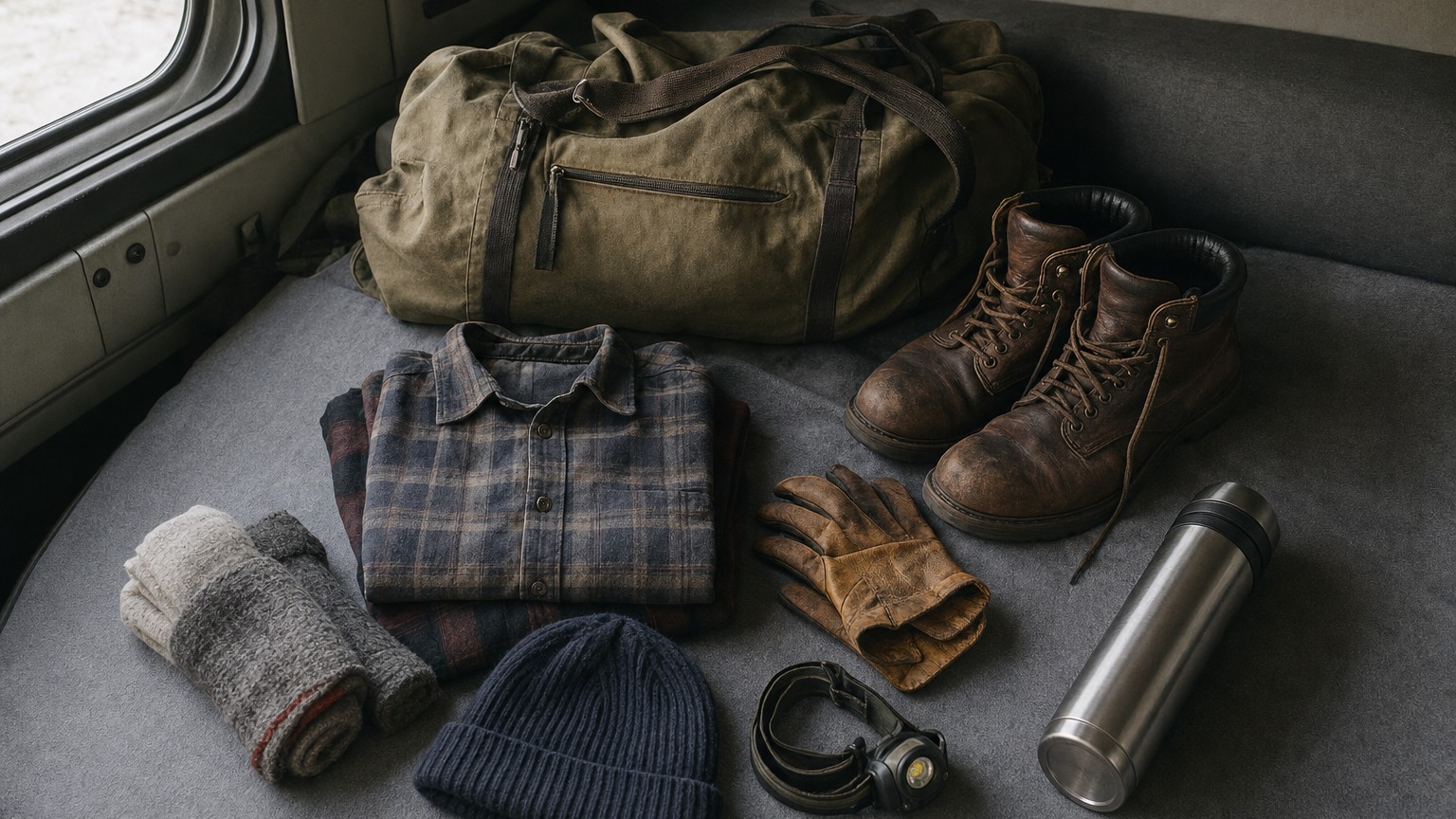
"I start my first OTR run next week and I'll be out about four weeks. What do I pack?" Less than you think. The answer to what to pack for OTR fits in one duffel, one plastic bin and a small cooler: the documents the law requires, clothes for about a week, a way to eat without living on truck stop food, and gear for the weather you're driving into. Laundry handles the rest.
That's the dispatcher's answer, and it comes from watching first-trip drivers show up with three suitcases. The sleeper of a long-haul tractor has a bunk, a couple of cabinets, a wardrobe space and some storage under the bed. Everything you bring has to fit there with the truck moving, and anything loose in the cab becomes a projectile in a hard stop.
Four weeks out matters for the list. ASTEL runs a 4+1 schedule, about four weeks on the road and a week at home, with the dates agreed with dispatch in advance. That rhythm decides how much you pack: enough for a week, plus a plan to wash it.
Documents ride with you every day
Your CDL goes in your wallet, not in the truck. Driving a CMV without the license in your possession is one of the serious traffic violations in 49 CFR 383.51, though a valid license shown to the court by your court date clears it.
The medical certificate is changing. The temporary exemption that let a paper card stand in for the electronic record runs through 11:59 p.m. on October 11, 2026. After that, the record on your state CDL file is the proof. Keep a paper or phone copy anyway, because it helps sort out a transfer error at the DMV. The details are in our article on paper medical card rules after October 11.
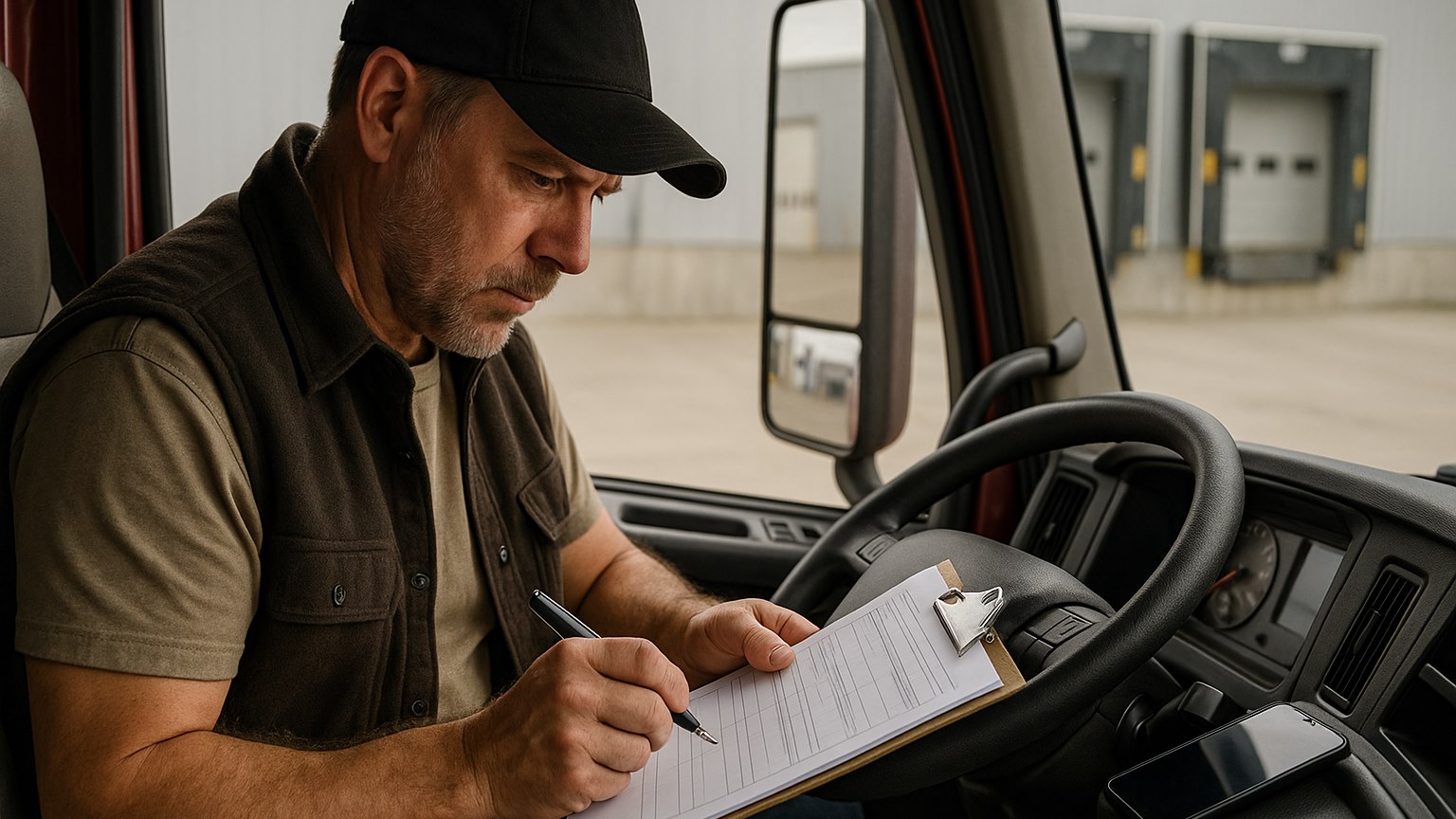
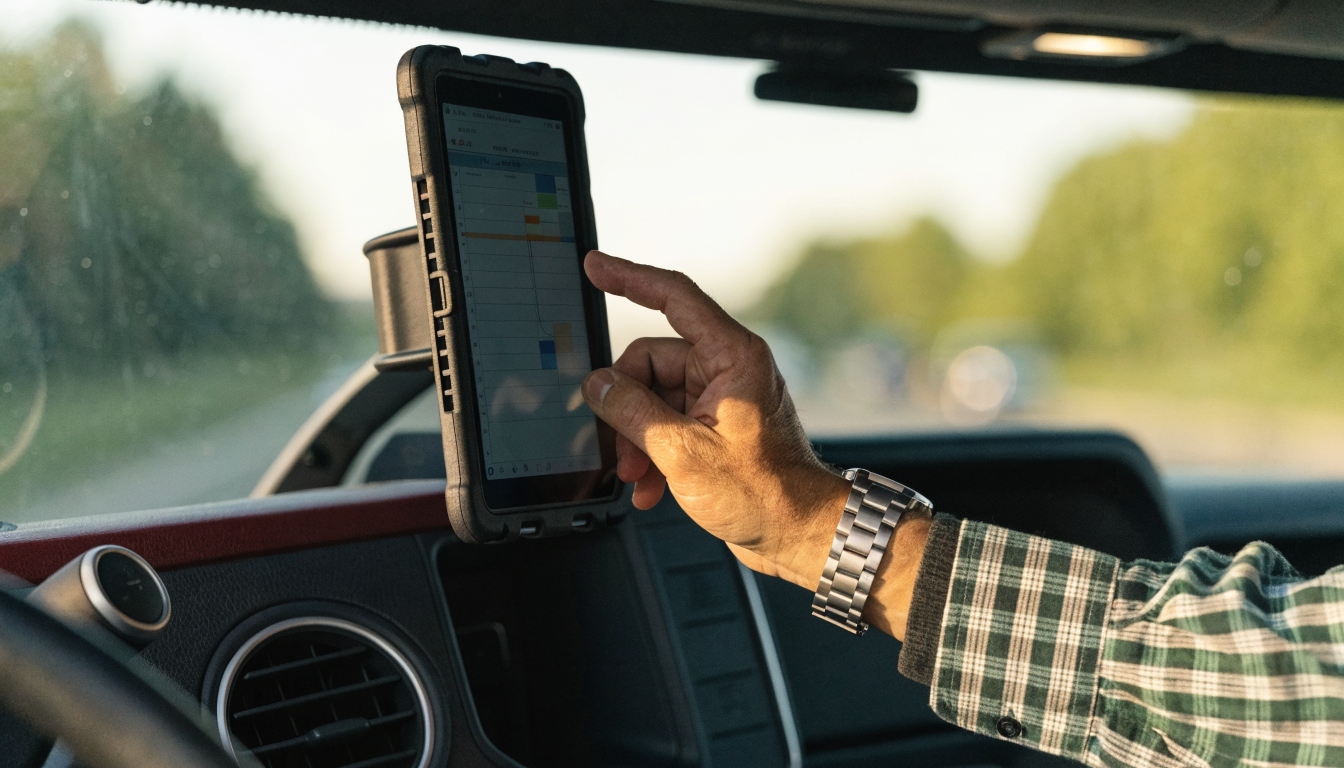
The truck carries its own papers, and the carrier supplies them. Under 49 CFR 395.22(h) the ELD information packet must include instructions for transferring your logs to an officer, instructions for malfunctions and blank graph-grids for at least 8 days. Check that it's in the cab on day one. What to do when the ELD fails is in what to do when an ELD malfunctions. The trip paperwork itself, from the BOL to the POD, is covered in trucking paperwork explained.
Pack a week of clothes and plan the laundry
Seven or eight days of clothes is the working number. More than that just fills the cabinets. Truck stop laundromats run $4–8 per wash and dry, and one load a week keeps a four-week trip going.
Layers beat bulk. A run in October can start at 75°F in Texas and end at 25°F in Minnesota two days later. Pack T-shirts and two or three warm layers, including a hoodie. Bring a rain jacket too. From October on you'll want a real winter coat.
Add work pants that can take grease from a fifth wheel, and enough socks to change them daily. Wet socks in January are a misery you only need once.
Many shippers and receivers want closed-toe shoes on the dock, and some require a reflective vest. Bring sturdy boots with good grip and a vest. Steel toes aren't required everywhere, but they help in a trailer full of pallets. Add a pair of slip-on shoes for the cab and the truck stop.
The ASTEL yard in Chicago has showers, a sauna and a laundry. A stop at the yard between loads lets you wash everything at once and start the next week clean.
The packing list by category
| Category | What to pack | Why it matters |
|---|---|---|
| Documents | CDL, copy of the medical certificate, ID, health insurance card, a list of your prescriptions | A missing CDL is a serious violation; the rest saves a day at a clinic |
| Clothes | 7–8 days of layers, rain jacket, winter coat, work pants, daily socks | One laundry load a week keeps a four-week trip going |
| Footwear | Grippy boots, slip-on shoes, shower shoes | Docks, icy fuel islands, shared showers |
| Sleep | Fitted sheet for the bunk, pillow, sleeping bag rated for cold, blackout curtain clips, earplugs | You sleep at truck stops next to running reefers |
| Food | 12-volt fridge or cooler, a few days of groceries, water, a kettle or a lunchbox heater | Counter food costs $150–200 a week, cooking about $60–100 |
| Power | Phone charger, power bank, inverter if the truck allows one | Your phone holds the load info, the maps and the ELD app |
| Hygiene | Towel, toiletries, shower shoes, laundry detergent | Shower credits are free with fuel on most loyalty programs |
| Weather and safety | Work gloves, insulated gloves, headlamp, ice scraper, reflective vest | Chains go on in the dark, and fueling happens in the cold |
| Reefer | Probe thermometer, a pen with a small notebook | You check load temperature and record it |
| Health | Prescriptions with spares; CPAP with its 12-volt adapter if prescribed; a basic first aid kit | Pharmacies near truck parking are rare |
Food and power decide the weekly budget
Food is the biggest cost you control on the road. Truck stop counter meals run $15–25 each, so three a day adds up to more than $300 a week. Drivers who cook from a 12-volt fridge spend about $60–100 a week instead of $150–200.
The fridge pays for itself first. A 12-volt unit costs about $150–400 once. An inverter of 1,500 watts or more, around $100–300, runs a microwave or a slow cooker. Watch the batteries, though. A 1,000-watt microwave pulls more than 80 amps from a 12-volt system, so run it with the engine on during a stop, or with an approved power setup, and not for an hour on parked batteries. Ask the carrier before you wire anything into the truck.
Groceries are a planning problem. Some Walmart stores and supermarkets allow truck parking, and a weekly grocery stop can sit in the trip plan like a fuel stop. The full weekly budget, line by line, is in truck driver expenses on the road.
Showers cost nothing if you fuel right
A truck stop shower lists at $12–15, up to $18 in busy corridors. The loyalty programs at the big chains give a shower credit with a qualifying fuel purchase, usually around 50 gallons. ASTEL trucks fuel at Pilot / Flying J or where dispatch agrees, so the credits come with the job.
Pack your own towel even though the showers supply one. Shower shoes are not optional. A small bag that holds soap, shampoo, a razor and a toothbrush saves a trip back to the truck at 11 p.m.
Winter gear goes in before October ends
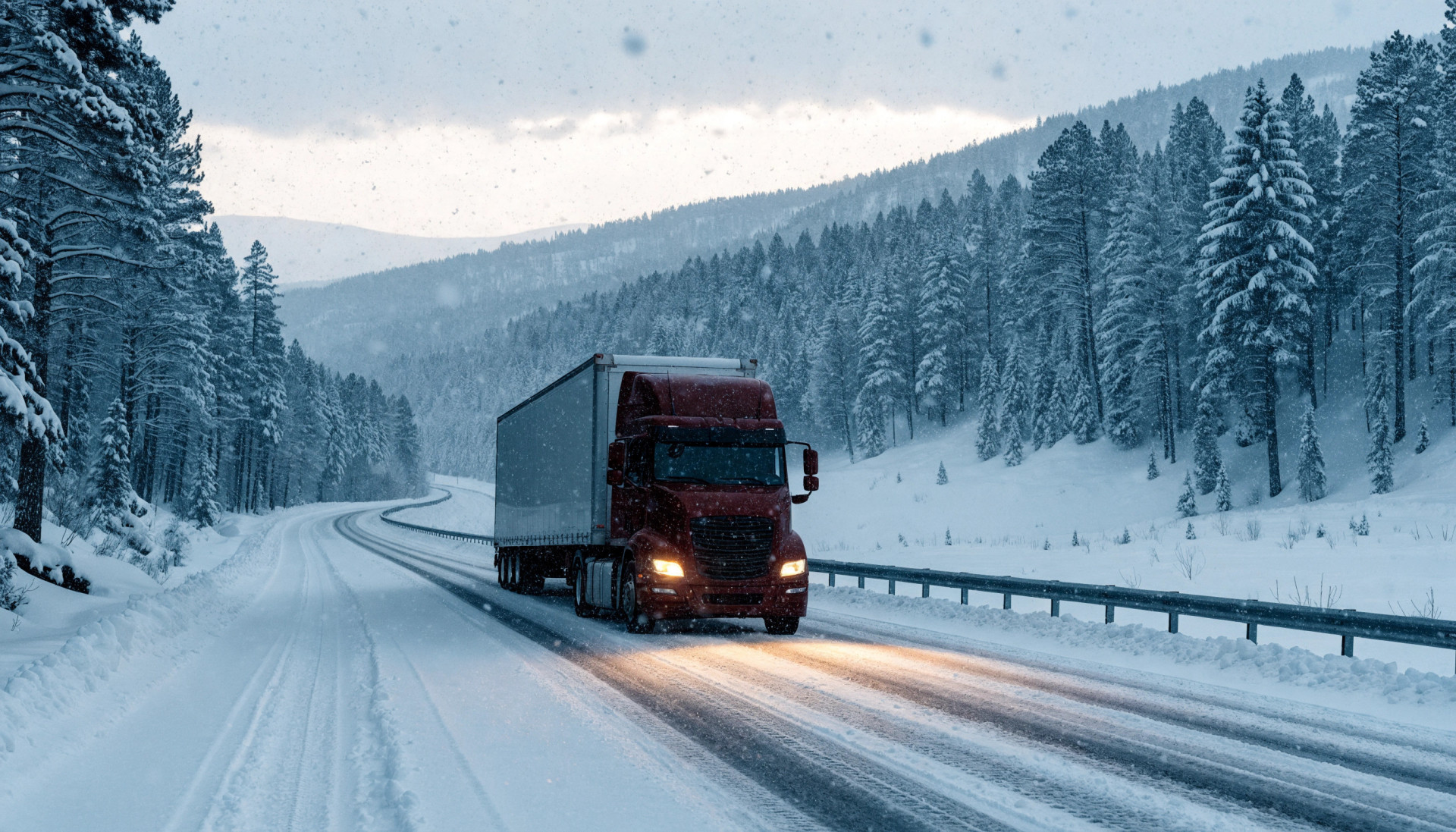
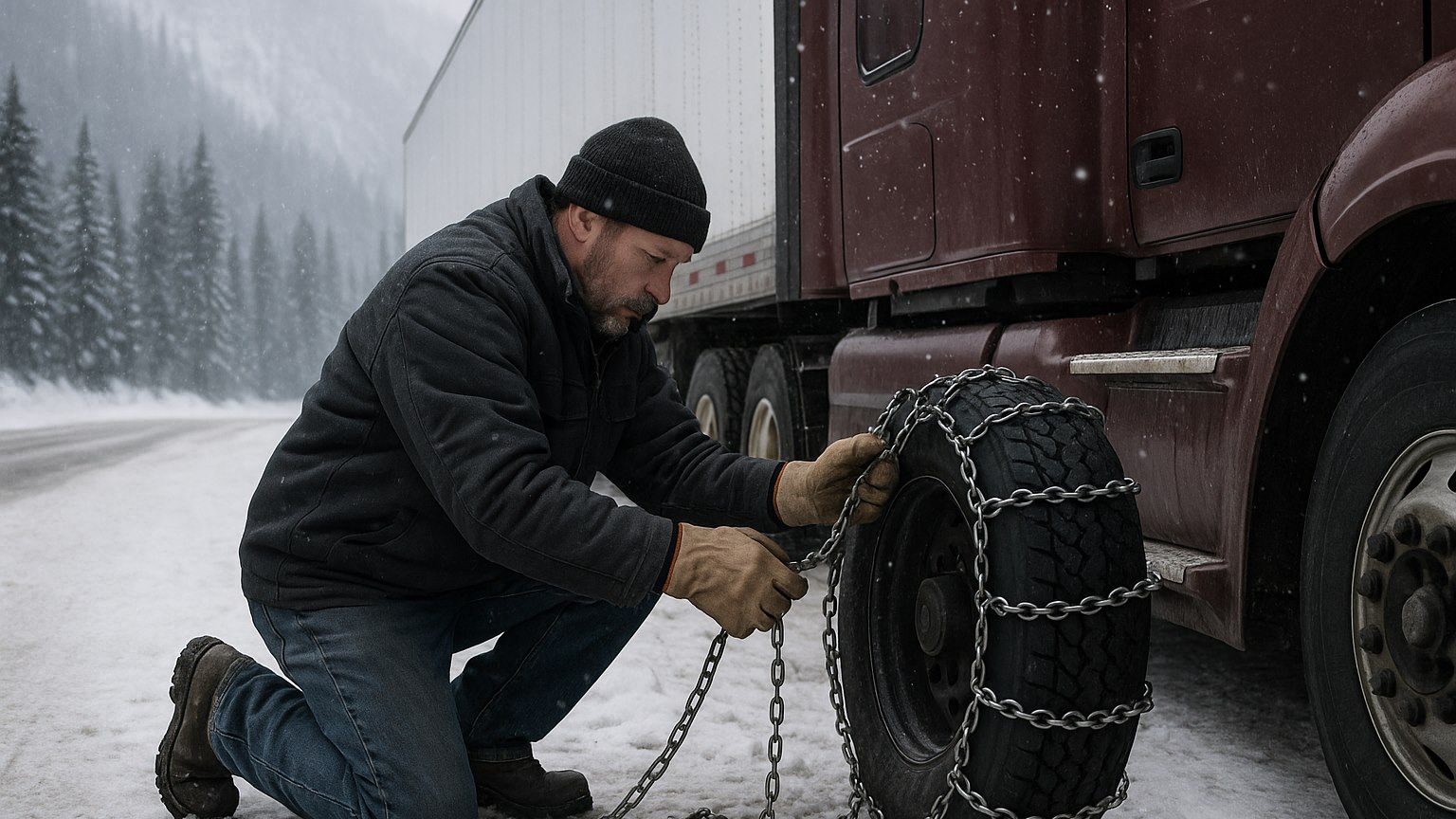
A first trip in October can see snow in the Rockies before the month is out. Colorado's chain law requires commercial vehicles over 16,000 pounds to carry chains or approved traction devices from September 1 through May 31 on I-70 west of Morrison and several other mountain corridors. The chains belong to the truck, but the gloves, the headlamp and the knee pad are yours. How to put them on is in our guide on how to chain up a semi truck.
Add insulated gloves, a warm hat, an ice scraper, a small shovel if there's room, and a sleeping bag rated well below freezing in case the heat goes out. More of the cold-weather list is in winter driving tips for truck drivers.
Reefer drivers bring a thermometer
On a reefer load the temperature is your responsibility once you sign the BOL. ASTEL drivers check the load temperature and the unit 2–3 times a day. A probe thermometer lets you check product at the shipper before you accept a warm load, and a small notebook backs up the readings you send to dispatch. The habits that prevent rejected loads are in reefer freight tips.
Medications travel in their original bottles
Bring every prescription with a few days of spares and keep them in the labeled bottles. Pharmacies with truck parking are scarce, and a refill can mean a detour. Tell the medical examiner about the medicines you take at your DOT physical, as the form asks.
If you've been prescribed a CPAP, it goes in the truck with a 12-volt adapter or a power setup that runs all night. Many examiners ask for compliance data before they renew a short certificate, and that topic is covered in sleep apnea and the DOT physical.
Three things federal rules ban from the cab
Radar detectors are out. Under 49 CFR 392.71 a driver may not use one in a CMV or drive a CMV that has one on board, even unplugged in a bag.
Alcohol stays home. Under 49 CFR 392.5 a driver on duty may not carry any beer or other alcohol in the truck unless it's part of the shipment on the paperwork.
So does any passenger the carrier hasn't approved in writing. Under 49 CFR 392.60 the written authorization has to name the person, where the ride starts and ends, and the date it expires. Ask about pets the same way. Carriers set their own pet rules, and the answer belongs in writing before the trip.
Marijuana in any form is a separate risk. DOT rules bar it for drivers in safety-sensitive jobs whatever your state allows, and CBD products can test positive. The testing rules are in our article on the DOT drug test.
Frequently asked questions
What should I pack for my first OTR trip?
Pack your CDL, a copy of your medical certificate, 7–8 days of layered clothes, boots, gloves, a rain jacket and a winter coat, a 12-volt fridge or cooler, shower shoes and a towel, a headlamp, a phone charger, your prescriptions and bedding for the bunk. Reefer drivers add a probe thermometer.
How many clothes should a truck driver pack for four weeks?
About a week's worth, 7–8 days in layers. Truck stop laundromats cost about $4–8 per wash and dry, so one load a week keeps a four-week trip going, and the sleeper has little storage space. Add a rain jacket and a winter coat from October on.
What documents does a truck driver need to carry?
Your CDL must be in your possession while you drive a CMV. Keep a copy of your medical certificate, but the official proof is the electronic record on your state CDL file, and after October 11, 2026 a paper card no longer stands in for it. The truck's ELD packet must hold transfer and malfunction instructions and blank logs for at least 8 days.
What is not allowed in a semi truck cab?
Federal rules ban radar detectors in a CMV, alcohol on duty unless it's manifested cargo, and passengers without written authorization from the carrier. DOT rules bar marijuana for drivers in every state. Pet rules are set by each carrier.
Is a 12-volt fridge worth it for an OTR driver?
For most drivers, yes. A 12-volt fridge costs about $150–400 once, while cooking from it brings food costs down to about $60–100 a week compared with $150–200 for truck stop meals. It usually pays for itself within the first month or two.
Pack for four weeks, come home for one
ASTEL is a family-owned carrier out of Chicago running refrigerated freight year-round on late-model Volvo trucks, with our own repair shop and mechanics, 24/7 dispatch and a direct line to the owner. Drivers earn $90,000–$110,000 a year — $2,400–2,700+ a week gross, a flat $0.80 per mile for drivers with 1+ year of experience, all miles paid ZIP-to-ZIP, weekly pay, plus $50/$200/$500 bonuses for clean DOT inspections.
Apply in 2 minutes →Sources: 49 CFR 383.51, Table 2 (driving without a CDL in possession); FMCSA National Registry rule and the temporary paper medical certificate exemption ending October 11, 2026; 49 CFR 395.22(h), ELD information packet; 49 CFR 392.5 (alcohol), 392.60 (unauthorized passengers) and 392.71 (radar detectors); 49 CFR Part 382 and DOT guidance on marijuana and CBD; Colorado chain law for commercial vehicles as expanded by SB24-100; truck stop price figures from ASTEL's 2026 guide to truck driver road expenses. Current as of October 2026; rules and prices may change. Schedule and amenity details describe ASTEL driver terms. General information, not legal or medical advice.