

Truck Idling Laws by State and City, With the Limits and the Fines
A heavy truck burns about 0.8 gallon of diesel an hour at idle, according to Argonne National Laboratory. At the EIA average of $6.199 a gallon on October 5, 2026, that's just under $5 an hour, or roughly $50 over a 10-hour break. Truck idling laws add the second cost. Chicago allows a diesel truck to idle 3 minutes in any 60. The ticket is $250.
Idling limits run from 1 minute to 15
| Place | Limit | Weather or rest exemption | Fine |
|---|---|---|---|
| California, statewide | 5 minutes | Trucks with a California Certified Clean Idle label are exempt | Minimum $300 |
| Connecticut | 3 minutes | No limit below 20°F | Up to $5,000 |
| Delaware | 3 minutes | 15 minutes below 32°F, no limit below −10°F; rest in the sleeper if no electrified truck stop is within 25 miles | $50–$500 |
| District of Columbia | 3 minutes | 5 minutes below 32°F | $500, doubling after that |
| Atlanta, Georgia | 15 minutes | 25 minutes below 32°F | Minimum $500 |
| Illinois: Cook, DuPage, Kane, Lake, McHenry and Will counties, plus Madison, Monroe and St. Clair near St. Louis | 10 minutes in any 60 | No limit below 32°F or above 80°F; resting in a sleeper berth is exempt | $90 for a first conviction |
| Chicago | 3 minutes in any 60 | No limit below 32°F or above 80°F | $250 |
| Denver | 5 minutes in any 60 | No limit below 10°F, or below 20°F over the previous 24 hours | Up to $1,000 |
| Maine | 5 minutes in any 60 | 15 minutes at 0–32°F, no limit below 0°F; sleeper heat or air during rest | $25–$500 first offense |
| Maryland | 5 minutes | Heating or cooling equipment exempt | Up to $500 |
| Massachusetts | 5 minutes | Narrow exemptions for service and delivery power | Up to $100 first, $500 after |
| Nevada | 15 minutes | Traffic, repairs and a few other cases | See state code |
| New Hampshire | 5 minutes | 15 minutes from 32°F to −10°F, no limit below −10°F | See state code |
| New Jersey | 3 minutes | 15 minutes after 3 hours stopped below 25°F; sleeper only with a 2007 or newer engine or a particulate filter | $250, $500, then $1,000 |
| New York, statewide | 5 minutes | No limit after 2 hours stopped below 25°F | $500–$18,000 |
| New York City | 3 minutes, 1 minute next to a school or park | Loading or processing equipment only | From $350, more for repeats |
| Oregon | 5 minutes in any 60 | Rest heat or air below 50°F or above 75°F; cargo temperature control exempt | Up to $180 |
| Pennsylvania | 5 minutes in any 60 | 15 minutes while weighing, loading or unloading; no sleeper exemption | $150–$300 plus civil penalties |
| Philadelphia | 2 minutes | 5 minutes below 32°F, 20 minutes below 20°F | $300 |
| South Carolina | 10 minutes in any 60 | Sleeper heat or air during rest periods | $75 |
| Texas: Dallas, Fort Worth, Houston, San Antonio, Austin and other listed areas | 5 minutes | Rest under hours of service if no external heat or air hookup is within 2 miles | Varies by city |
| Salt Lake City and Salt Lake County | 2 minutes | Warnings for the first 3 offenses | $135 in the city after that |
| Virginia | 10 minutes for diesel in urban areas | Auxiliary power exempt | Up to $25,000 |
| West Virginia | 15 minutes in any 60 | Sleeper rest below 40°F or above 75°F when legally parked | $150–$300 |
The table comes from ATRI's June 2025 compendium, and ATRI warns that it is a reference, not a legal text. Codes change. Some cities stack a stricter rule on top of the state's, which is how Philadelphia ends up at 2 minutes inside a state that allows 5 and how New York City sits at 3 inside a state that allows 5. Treat the numbers as a map of where to be careful and check the local code for the place you park. New York City's own site now lists the 1-minute limit next to parks as well as schools.
Cold and heat exemptions decide most nights
Most limits come with a weather clause. At 2 a.m. that clause is what matters. In Chicago and the Illinois counties around it, the limit simply doesn't apply below 32°F or above 80°F. Maine gives 15 minutes an hour between 0°F and 32°F and no limit below zero. New Hampshire uses 32°F to −10°F for the 15-minute step.
Other places set the bar much colder. New York's statewide rule relaxes only after a truck has been stopped 2 hours and the temperature is below 25°F. Connecticut drops its limit below 20°F, and Denver below 10°F, or below 20°F if the previous 24 hours stayed that cold. A 40°F rainy night counts as mild almost everywhere. You'll be cold, and you'll still be in violation.
Read the weather clause in the actual code before you rely on it. "Below 32°F" means the air temperature where you're parked, not what the dash says after an hour in the sun. Idling on an exemption? Keep a screenshot of the hourly forecast.
Sleeper berth exemptions are patchy
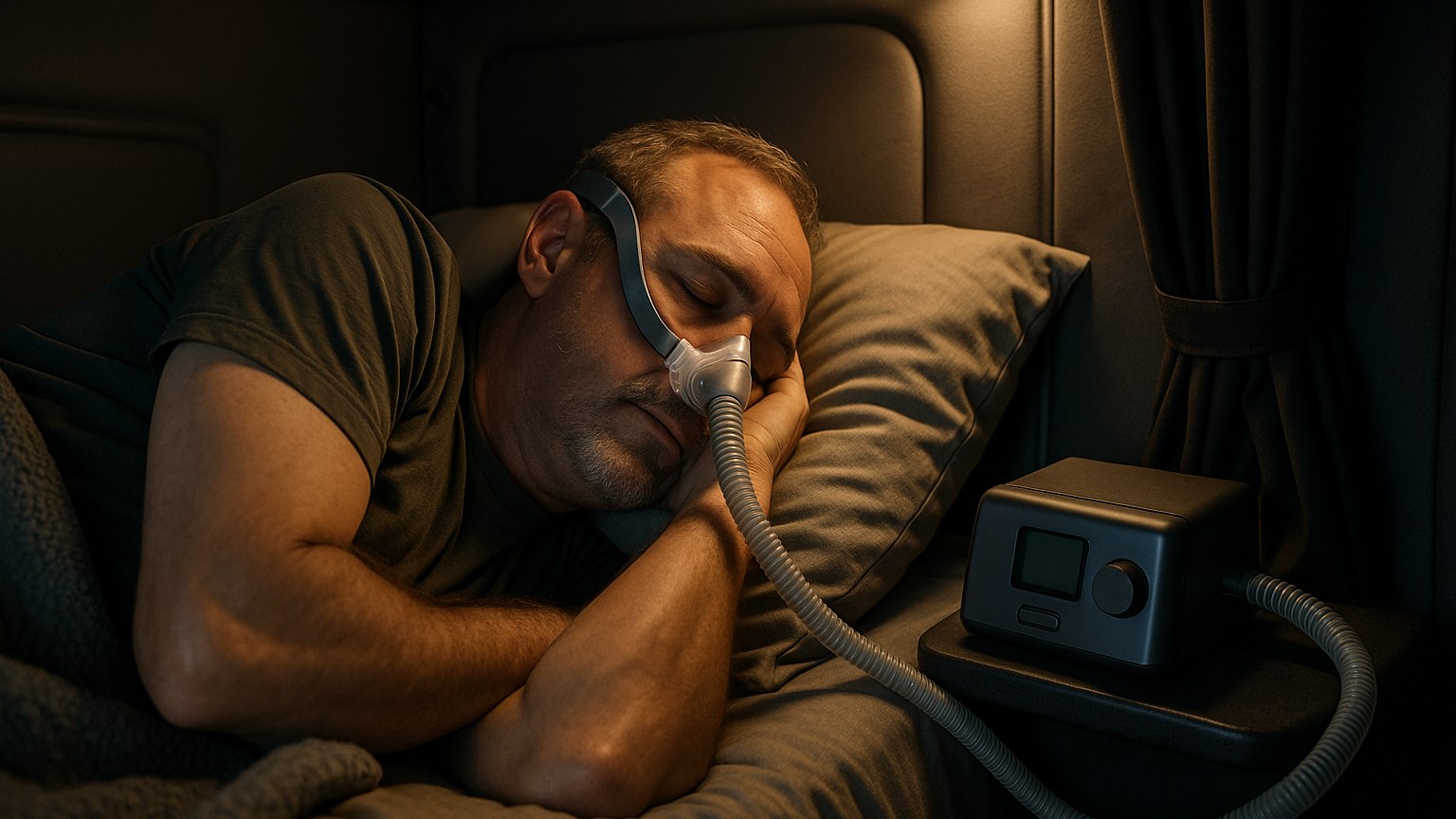
Federal rules require 10 hours off duty, and part of that rest usually happens in the sleeper. Some idling laws recognize that. Illinois exempts a driver resting in a sleeper berth from its 10-minute limit, though Chicago's 3-minute rule lists no such exemption, only the temperature range. Kansas exempts sleeper heat or air in Johnson and Wyandotte counties. Maine and Minneapolis do the same during rest periods.
Others attach strings. West Virginia allows sleeper idling only below 40°F or above 75°F and only when you're legally parked. Vermont exempts sleeper heat or air in trucks of model year 2017 or older. New Jersey allows it only with a 2007 or newer engine or a diesel particulate filter. Texas and Delaware tie the exemption to distance from an electrified hookup, 2 miles in Texas and 25 miles in Delaware.
Pennsylvania lists no sleeper exemption, and neither does New York's statewide rule apart from its cold-weather clause. So a night in a Pennsylvania truck stop on the engine is a ticket risk in any season. Plan for it.
Reefer units follow separate rules
Idling laws aim at the truck's engine. The trailer's refrigeration unit runs on its own diesel engine and its own tank, and most codes treat it as auxiliary equipment. Oregon exempts cargo temperature control by name, and Burlington, Vermont, and Madison, Wisconsin, list refrigeration units among their exemptions. Salt Lake County and Park City, Utah, exempt reefer power too.
A few places go the other way. Sacramento bans running a refrigeration unit within 100 feet of homes or schools unless you're loading or unloading, and Placer County sets that distance at 1,000 feet. California also regulates reefer units under its own transport refrigeration rules. Park a running reefer at the back of the lot, away from houses, and you rarely have a problem. How to set the unit for a long stop is in our guide on how to run a reefer unit.
Chicago gives a truck 3 minutes an hour
ASTEL runs out of a yard in Chicago, and the city rule is tight: 3 minutes of idling in any 60-minute period, with a $250 fine. Outside the city, the state law covers Cook County and the collar counties at 10 minutes an hour, and up to 30 minutes an hour while you wait to weigh, load or unload. A driver on a 55°F October night in a Chicago suburb falls under the state's 10-minute limit. In Chicago itself the limit is 3 minutes.
Enforcement is another matter. A WBEZ and Chicago Sun-Times investigation published on June 5, 2026 found that in nearly 20 years under the state law, the Chicago Police Department and the Cook County sheriff had written just two citations, one each, and that the city ordinance is seldom enforced too. That's no reason to idle all night on a city street, because a single complaint can bring a ticket, and residents notice a truck running under their windows.
New York City is different. The city lets residents file idling complaints with video through its Citizens Air Complaint Program, and a resident can receive a reward. A truck idling 3 minutes and 1 second on a Manhattan curb is a violation on the city's own definition.
An hour of idling costs about $5
Argonne's 0.8 gallon an hour is an average for a heavy truck at idle. High idle burns more. At $6.199 a gallon, 8 hours a night for 5 nights a week comes to about 32 gallons and $198 a week. Over 40 weeks that's nearly $8,000 of diesel spent standing still.
Company drivers feel it in MPG. ASTEL's Fuel bonus adds up to $0.02 per mile for good MPG and fueling by the rules, and long idle hours pull MPG down because the engine burns fuel without adding a mile. Fuel stops are planned on Pilot / Flying J or where dispatch agrees. Habits that move MPG are in our article on fuel efficient truck driving, and the price trend is in diesel prices for truck drivers.
Idle-free heat and air keep you legal
Many idling laws exempt idle-reduction equipment. That's the real fix. An auxiliary power unit runs a small engine or a battery pack instead of the main engine. A diesel-fired bunk heater burns a fraction of a gallon to heat the sleeper overnight. Battery-powered air conditioning covers summer nights, and shore power plugs the cab into a post at an electrified truck stop. New Jersey names APUs, generator sets and bunk heaters directly in its exemptions.
Cold starts are the other reason drivers idle, especially in January on the northern Plains, when a parked engine left off overnight can be hard to wake up. A block heater on shore power keeps the engine warm without running it, and the fuel side of winter is covered in diesel gelling in winter. Where to find a legal spot for the night is in our truck parking guide.
Frequently asked questions
Is there a federal law on how long a truck can idle?
No. There is no single federal time limit for truck idling. Limits are set by states, counties and cities, usually 3–5 minutes, with 10–15 minutes in some states. ATRI's compendium of idling regulations, updated in June 2025, lists the rules and their exemptions place by place.
How long can a truck idle in California?
Five minutes at any one location under California's statewide rule. Trucks with a California Certified Clean Idle label are exempt, and the minimum fine is $300. Sacramento and Placer County also restrict running a refrigeration unit near homes and schools.
Can I idle my truck in the sleeper berth to stay warm?
It depends on where you park. Illinois, Kansas counties around Kansas City, Maine and South Carolina exempt sleeper heat or air during rest, and several codes lift the limit in deep cold. Pennsylvania lists no sleeper exemption, and Chicago allows 3 minutes an hour unless it's below 32°F or above 80°F.
Does a running reefer unit count as idling?
Usually not. Idling laws target the truck's engine, and many codes treat the refrigeration unit as auxiliary equipment or exempt cargo temperature control outright, as Oregon does. Sacramento and Placer County in California restrict reefer units near homes and schools unless you're loading or unloading.
What is the fine for idling in New York City?
Fines start at $350 for a first offense when a truck idles more than 3 minutes in New York City, and repeat violations cost more under the city's penalty schedule. Next to a school or a park the limit drops to 1 minute.
Fuel-smart drivers earn more here
ASTEL is a family-owned carrier out of Chicago running refrigerated freight year-round on late-model Volvo trucks, with our own repair shop and mechanics, 24/7 dispatch and a direct line to the owner. Drivers earn $90,000–$110,000 a year — $2,400–2,700+ a week gross, a flat $0.80 per mile for drivers with 1+ year of experience, all miles paid ZIP-to-ZIP, weekly pay, plus $50/$200/$500 bonuses for clean DOT inspections.
Apply in 2 minutes →Sources: American Transportation Research Institute, Compendium of Idling Regulations (updated June 2025), with the state, county and city codes it cites, including 13 CCR § 2485 (California), 625 ILCS 5/11-1429 (Illinois), Chicago Municipal Code § 9-80-095, N.J.A.C. 7:27-14.3 (New Jersey), 6 NYCRR 217-3.2 (New York) and NYC Administrative Code § 24-163; NYC Department of Environmental Protection, idling rules, penalty schedule and Citizens Air Complaint Program (October 2026); Argonne National Laboratory idling fuel estimate via the DOE Alternative Fuels Data Center; EIA Gasoline and Diesel Fuel Update, U.S. on-highway diesel for October 5, 2026; WBEZ and Chicago Sun-Times, "No idling by diesel trucks and buses? That's the law in Chicago and statewide but with almost no enforcement" (June 5, 2026). Current as of October 2026; idling limits, fines and exemptions may change, and local codes control. Pay and bonus figures describe ASTEL driver terms, not guarantees. General information, not legal advice.