

Truck Parking and Where an OTR Driver Actually Sleeps at Night
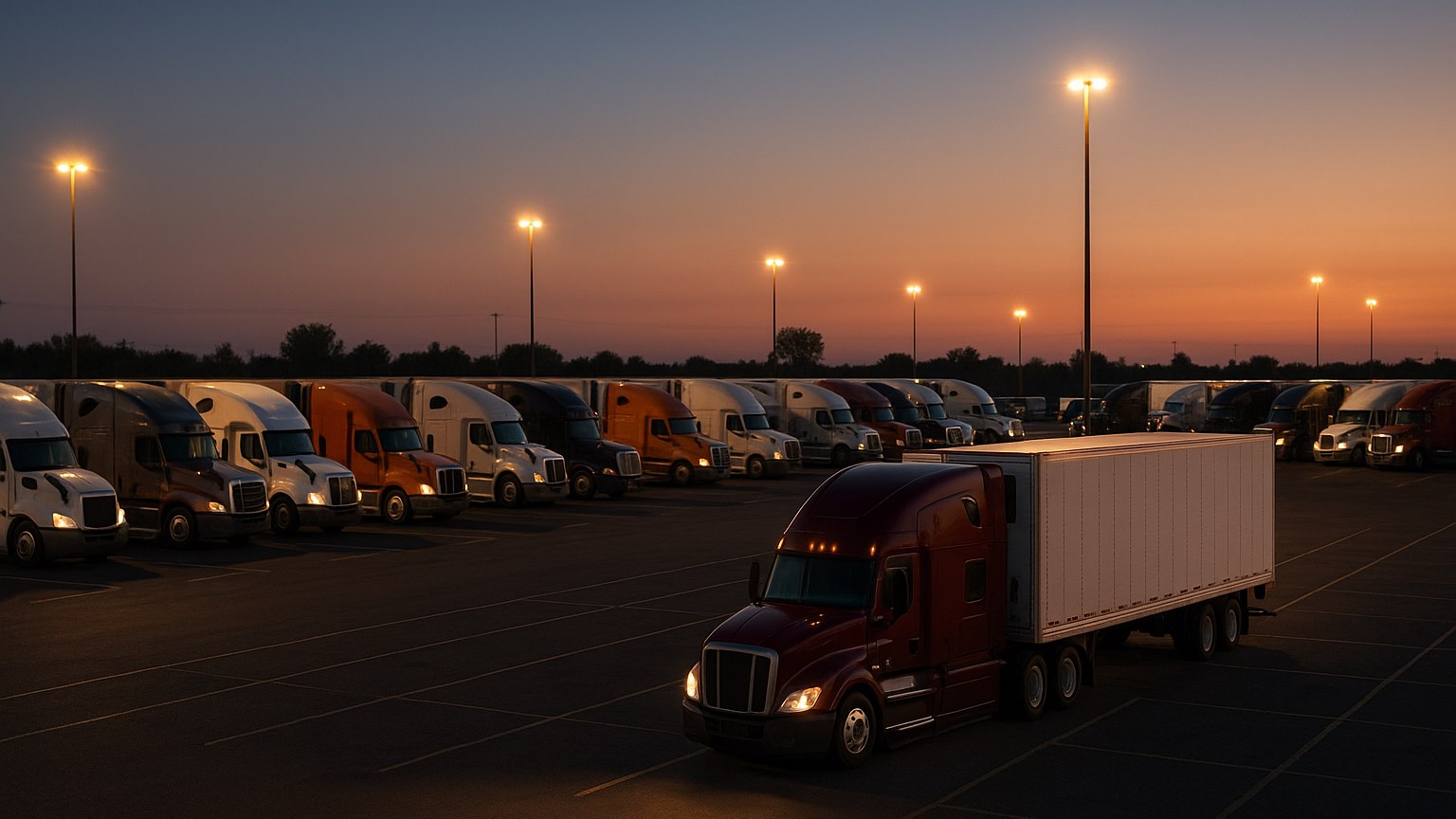
Every OTR day ends with the same quiet race. Your clock runs out. The sun goes down, and somewhere ahead there is, or isn't, a rectangle of asphalt with your name on it. Parking has ranked among the top concerns in national driver surveys for years, and it's the one problem you fight every single night. Experienced drivers win it with a routine, not luck.
Why parking is this hard
It's simple arithmetic. Millions of trucks, a few hundred thousand truck-designated spaces, and freight that concentrates on the same corridors (I-80, I-40, I-95, I-10) at the same evening hours. Federal "Jason's Law" surveys have documented the shortage in every state for over a decade, and demand keeps growing faster than lots get built. For a driver the shortage converts into three daily taxes: time spent hunting, miles burned circling, and sleep lost when the day ends badly. You can't fix the infrastructure. You can fix your process.
Your options, honestly ranked
| Where | Cost | What to know |
|---|---|---|
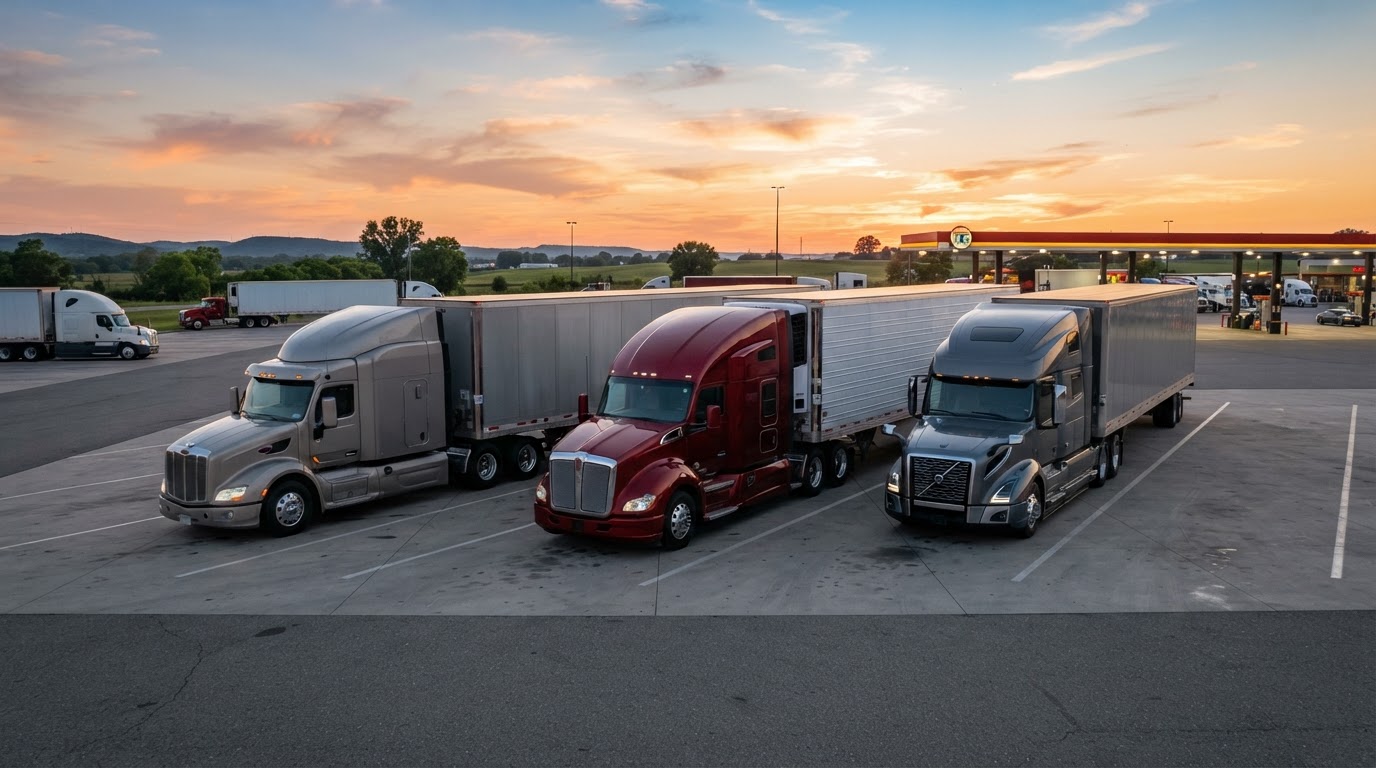
| Major truck stops (Pilot/Flying J, Love's, TA) | Free + paid reserved | Showers, food, fuel. Also the first lots to fill. Free rows often gone by 5–7 PM on busy corridors |
| Reserved spots at the same stops | ~$12–25/night; $20–40 in California | Guaranteed spot, booked from the app mid-morning. Cheap insurance when your ETA lands after dark |
| Rest areas | Free | Fill up early; several states post time limits. No services, but quiet and legal |
| Shipper/receiver lots | Free | Some allow overnight parking before an early appointment, ask first. It can save an entire evening of hunting |
| Walmart & big-box lots | Free | Store-by-store policy, increasingly restricted for trucks. Look for signs, ask inside, never block lanes |
| Ramps & shoulders | "Free" | Last resort only: crash risk, tickets, worst sleep of your life. Plan so you don't end up here |
The evening timeline that never fails
- Morning. Parking is part of the route. When you plan the day's miles, pick where the day ends, a primary stop plus a backup 30–50 miles earlier. This is the same discipline as trip planning, applied to the last hour instead of the first.
- Midday. Check and book. Apps like Trucker Path show live lot status crowdsourced from drivers (see our app toolkit). If your corridor looks red and your ETA is past 8 PM, reserve. The $15 you spend beats an hour of circling and a ramp.
- Afternoon: protect the landing. Watch your HOS clock. The 14-hour window doesn't care that the lot is full. Shutting down 30 minutes early at a good spot beats squeezing 30 more miles into a bad night.
- Arrival: park smart. Pull through when you can, avoid end-of-row spots where distracted drivers may clip your trailer, and set yourself up for an easy exit in the morning (our backing guide helps).
What parking does to your budget
Reservations are a real line item: five nights a week at $15 is ~$300/month, comparable to your food budget on the road (we did that math in the road expenses guide). Two ways to keep it sane:
- Reserve selectively. You don't need a reservation in rural Nebraska. You probably do near Atlanta, Dallas, Chicago or anywhere in California. Book where the map is red, ride free where it's green.
- Use loyalty points. Fuel-brand loyalty programs earn points on every gallon; many drivers cover most showers and a chunk of reserved nights with points alone.
Safety and sleep are the part that isn't optional
- Light and neighbors beat convenience. A visible, lit row beats a dark corner near the exit, for your cargo and your nerves.
- Lock it, log it. Doors locked, windows up to a crack, valuables out of sight; note your row number so 2 AM you doesn't wander the lot.
- Winter changes the rules. In storm country, park before the pass closes, not after. The calculus is in our winter driving guide.
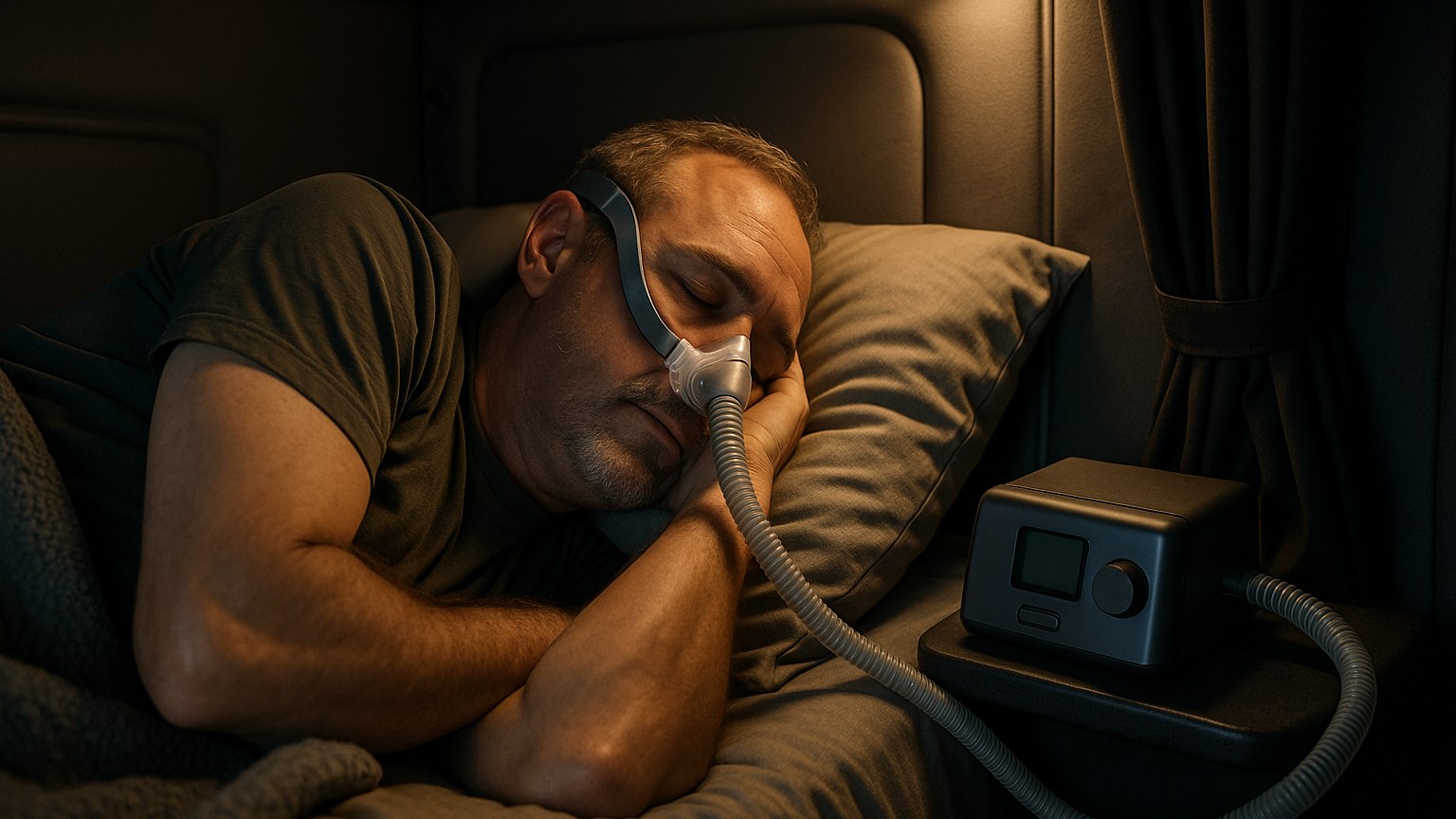
- Guard the sleep itself. A found spot is only half the win. The other half is 7–8 real hours in it. Cab-sleep tactics live in the driver health guide.
Frequently asked questions
Where do truck drivers park overnight?
Mostly at truck stops (Pilot/Flying J, Love's, TA) and rest areas. With permission, some park at shipper or receiver lots too. Reserved paid spots at major truck stops guarantee a space on crowded corridors.
How much does reserved truck parking cost?
Typically $12–25 per night at major chains, and around $20–40 in California. Many drivers reserve only on crowded corridors and park free elsewhere.
What time do truck stops fill up?
On busy freight corridors free spots are commonly gone by 5–7 PM, earlier near big metros. Drivers who plan to be parked before sunset rarely have a problem.
Can truck drivers park at Walmart?
Sometimes. It's a store-by-store policy and increasingly restricted. Check for posted signs and ask the store manager; never block fire lanes or delivery docks.
Is it legal to sleep on a highway ramp?
In most places no, and it's dangerous everywhere. Ramp and shoulder parking causes serious crashes and draws tickets; treat it as a last-resort emergency, not a strategy.
A yard that feels like a second home
ASTEL drivers start and end their cycles at a comfortable Chicago yard — secure parking, an on-site shop, and dispatch that answers 24/7 and helps plan every night's stop. Reefer freight year-round, $90,000–$110,000 a year, paid weekly.
Apply in 2 minutes →Parking shortage figures per FHWA "Jason's Law" truck parking surveys and industry driver-concern studies; prices reflect major U.S. truck-stop chains as of 2026 and vary by location. This article is general information, not legal advice.