

Will Self-Driving Trucks Replace Truck Drivers in 2026?
On September 23, 2026, Aurora gave investors rides on I-45 between Dallas and Houston in a truck with nobody behind the wheel, and told them it wants more than 30,000 driverless trucks on the road by 2030. That same month it had about 20 trucks running that way. Self-driving trucks are no longer a trade-show demo: they haul paying freight in Texas every day. A driver with a CDL, or someone about to get one, has real reason to ask what this means for the job. Here is the honest picture as of September 2026: where the robots actually drive, what they still can't do, and what it means for your next five to ten years.
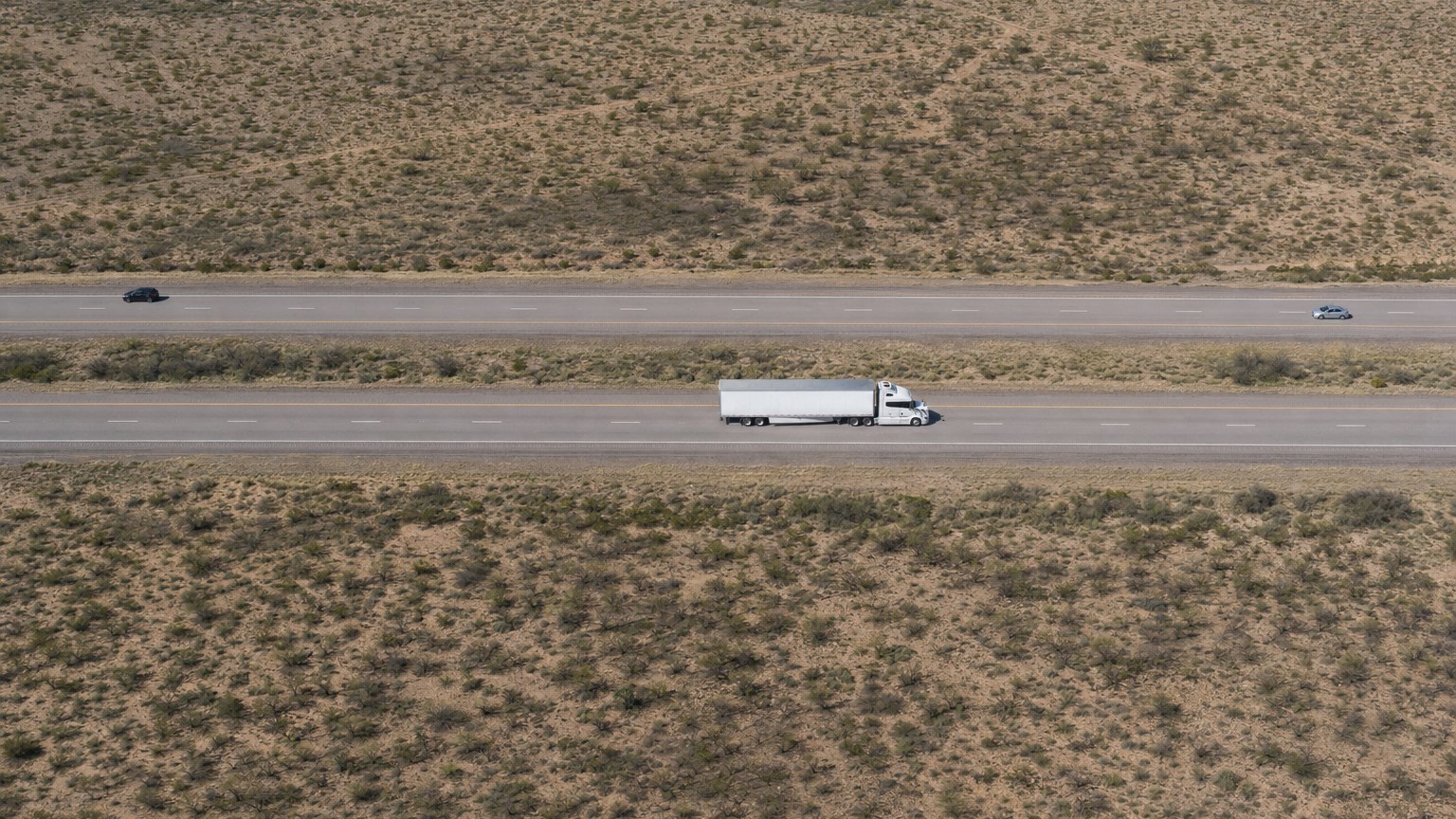
Where self-driving trucks actually haul freight today
The short version: Texas, New Mexico and Arizona, on interstates, between company-controlled hubs. Here is who is doing what.
Aurora — the company everyone watches
Aurora first pulled the human driver on April 27, 2025, on I-45 between Dallas and Houston, with Uber Freight and the refrigerated carrier Hirschbach as launch customers. By February 2026 it ran five lanes: Dallas–Houston, Fort Worth–El Paso, El Paso–Phoenix, Fort Worth–Phoenix and Dallas–Laredo. On July 22, 2026 it launched second-generation International LT trucks with nobody behind the wheel. The company reports more than 500,000 driverless miles and about 20 fully driverless trucks in September 2026, and says it is "fully allocated" to finish the year with 200.
McLane — a food distributor goes driverless
In May 2026, McLane, the Berkshire Hathaway-owned distributor, announced it would run Aurora trucks driverless between Dallas and Houston and add lanes between its distribution centers across the Sun Belt by the end of 2026, moving supplies, perishables included, for restaurant chains. The detail that matters for drivers: McLane's own drivers still take the loads the last mile to customers, in separate trucks. The software does the interstate; people do the stores.
The rest of the field
| Company | Where | Status as of September 2026 |
|---|---|---|
| Kodiak | Permian Basin oilfields, West Texas and eastern New Mexico | 35 driverless trucks hauling frac sand (June 2026); aims for driverless long-haul highway runs by year-end |
| Bot Auto | Houston–Dallas corridor | First fully humanless commercial load on April 29, 2026: 231 miles overnight, from a Houston truck lot to a truck stop south of Dallas |
| Waabi | Texas (truck partner: Volvo) | Hauls loads with a human still in the cab; aims for driverless by the end of 2026 |
| PlusAI | I-35 in Texas (trial with International and Ryder) | Targets factory-built driverless trucks in 2027 |
Notice what the list has in common: warm-weather states, long interstate stretches, and start and end points the tech company controls: a terminal, a truck lot, a sand mine. Not one of them is backing into a grocery DC in Chicago in February.
How much of the driving is really automated
It depends on the truck and the month. Aurora's first commercial runs in spring 2025 had nobody on board. Within weeks, truck maker PACCAR asked for a person in the driver's seat because of prototype parts, so from May 2025 those trucks carried an "observer" who did not drive. The new International trucks launched in July 2026 run with no one behind the wheel; Aurora says a member of its roadside-assistance team may ride in the rear seat on some longer trips, not to drive or supervise.
So "driverless" in a headline can mean anything from an empty cab to a person in the seat who doesn't touch the wheel. The fine print matters more than the headline.
The hub-to-hub model, and why it starts in Texas
Almost every company runs the same playbook. A human driver brings a trailer from the shipper to a transfer hub near the interstate, the self-driving truck takes it hundreds of miles to another hub, and another human driver takes it to the receiver. Software handles the predictable middle; people handle the messy ends. Why this model wins first:
- Hours of service don't apply to software. A solo driver gets 11 hours of driving and then a 10-hour break. Aurora says its trucks run the roughly 1,000-mile Fort Worth–Phoenix lane nonstop and cut transit time nearly in half. At its investor day it claimed average use of more than 225,000 miles a year per truck, more than double a typical truck.
- Sun Belt weather and roads help too. Little snow and ice, long straight interstates, few tight interchanges.
- The rules are friendly. Texas law has allowed automated vehicles to operate without a human on board since 2017, and Aurora says most states now permit driverless deployment in some form.
- Endpoints are controlled. No appointment windows at a customer's dock, no lumpers, no guard shack, no "door 47, come back at 2 a.m."
The honest takeaway: the most exposed freight is long, straight, warm-weather dry van and drop-and-hook between big metros. Short-haul and multi-stop work is last in line. Northern routes, mountain grades and dock-heavy work are even further back.
What self-driving trucks can't do yet
Here is how the work splits today, based on what the companies themselves have announced:
| Task | Self-driving truck today | Human driver |
|---|---|---|
| Interstate miles between hubs, dry weather, day or night | Doing it commercially on Sun Belt lanes | Still does most of these miles nationwide |
| Rain, fog, heavy wind | Aurora says it's validated; pulls over when conditions exceed its limits | Slows down, adjusts, keeps rolling |
| Snow, ice, chain laws, mountain passes | Not in any announced commercial operation | Chains up, reads the road, picks the pass |
| First and last mile on city streets | Handed to human drivers at the hub | Local knowledge, tight turns, low clearances |
| Grocery DC: check-in, door assignment, blind-side backing, lumpers | Not part of the model | Core skill |
| Reefer: pulping product, refusing a warm load, BOL notes | Can pull a reefer trailer, can't inspect the load | Protects the load and the claim |
| Breakdown on the shoulder | Flashing beacons under an FMCSA waiver, then a roadside team | Triangles, diagnosis, call to the shop |
| Detours, closed ramps, an officer waving traffic | Remote assistance and conservative behavior | Judgment in seconds |
Weather handles rain, not snow yet
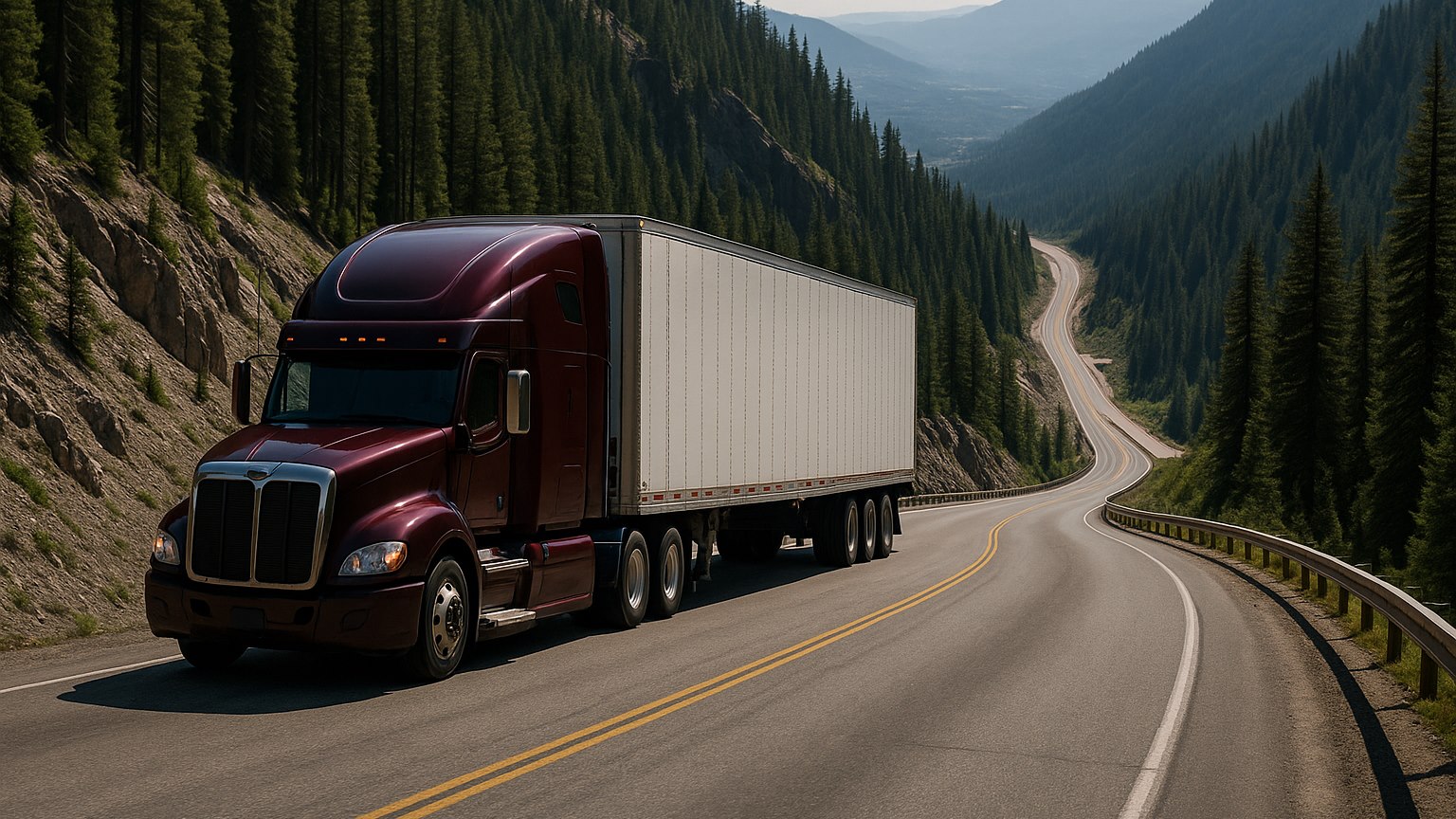
In February 2026 Aurora said its system can drive through rain, fog and heavy wind; night driving was validated in 2025. Snow and ice are not on that list, and every announced driverless route sits in the southern U.S. Beyond its validated limits, a system pulls over or waits. A driver who knows winter driving and mountain grades keeps freight moving through Wyoming or the Rockies in January, and no current self-driving truck chains up.
Docks, DCs and appointments
The hardest part of many loads isn't the highway. It's the last 500 feet. A grocery distribution center means an appointment window, a guard-shack check-in, a door assignment that changes twice, a blind-side back between two trailers, lumpers, and a receiver who wants you to wait for night receiving. That world, covered in our guide to grocery warehouse deliveries and lumper fees, is exactly what the hub-to-hub model hands back to humans.
Reefer work the robot can't babysit
Driverless trucks already pull refrigerated trailers. Hirschbach was a launch partner, and McLane moves perishables. What the software doesn't do is pulp the product at the shipper, refuse a load that goes on warm, write the temperature on the BOL, fuel the reefer tank, or stand at the receiver's dock during a temperature dispute. On a hub-to-hub lane those jobs go to the humans at each end, one reason reefer, compared in our reefer vs. dry van breakdown, stays driver-heavy work.
Breakdowns and the unexpected
When a truck stops on the shoulder, federal rules expect a driver to put out warning triangles. A truck with no driver can't, so FMCSA granted Aurora a limited waiver, effective July 10, 2026, to use flashing amber beacons on the cab instead. Blown tires, a wreck ahead, a detour through a small town: each needs a roadside team or remote assistance. Those are jobs too, just not driving jobs.
What federal and state rules say
At the federal level, as of September 2026 there is no complete FMCSA rulebook for driverless trucks. A proposed rule on operating ADS-equipped trucks is on FMCSA's regulatory agenda and still in development. The DOT's National Strategy for Automated Vehicles, released September 3, 2026, sets priorities for 2026–2030 but is not a regulation. For now, companies operate under existing rules plus targeted waivers like the beacon waiver above.
States. Texas is the center of the action. California adopted rules on April 28, 2026 that allow heavy-duty autonomous trucks on its public roads in phases: testing with a safety driver, then driverless testing, then deployment, with at least 500,000 miles per phase for heavy vehicles. The first heavy-duty testing permit went to Kodiak on August 13, 2026, with a safety driver aboard. Several state legislatures have debated bills that would require a human on board. Rules vary by state and may change.
What this means for truck drivers over the next 5–10 years
Start with scale. The Bureau of Labor Statistics counted about 2.2 million heavy and tractor-trailer truck driver jobs in 2024, projected 4% growth through 2034, and expects about 237,600 openings a year. Aurora's own 2030 target, 30,000 trucks, is about 1.3% of that workforce. Even if every one of those trucks did the work of two human-driven trucks, it's under 3%. And 2030 targets in this industry have slipped before.
The realistic scenarios:
- Southern lanes get squeezed first. Straight, high-volume runs like Dallas–Houston or Texas–Phoenix are where driverless capacity grows, which over time can soften demand and pay on those lanes.
- Hub and regional work grows. Every driverless lane needs human drivers at both ends, so expect more short-haul jobs around transfer hubs.
- New non-driving roles open up. Roadside assistance, terminal operations, remote support, often filled by people who know trucks.
- Hard freight stays human longest: reefer into grocery DCs, winter lanes, mountain passes, multi-stop, oversize. Judgment and experience decide how that kind of load ends.
The honest minus: easy, straight dry van in Texas is the most exposed segment. Build skills in the hard parts of OTR trucking, and the math works in your favor.
The truth sits between two extreme myths
How to make yourself hard to replace
You can't control the tech, only what kind of driver you are when it arrives:
- Protect your record. A clean CSA, PSP and MVR is what gets you the best seats when carriers get choosier.
- Learn reefer. Pre-cooling, pulping, alarm checks, temperature paperwork: skills software doesn't replace at the dock.
- Own winter and mountains. Chain laws, grades, black ice: the conditions the robots avoid.
- Get good at docks. Tight backing, busy DCs, night receiving and patient work with receivers.
- Stay flexible. A driver who can run OTR as well as regional and multi-stop work doesn't depend on one lane.
- Know your market value. Understand how truck driver pay is built: per mile, which miles count, raises, so you can compare offers honestly.
Ask your carrier these questions about automation
- Do you run lanes with an autonomous partner today, or plan to?
- What share of our freight is long, straight drop-and-hook versus live unloads, DCs and multi-stop?
- If driverless lanes come, will drivers move to hub or regional work, and how does pay change?
- How are raises tied to experience and a clean record?
Where ASTEL fits into this
ASTEL hauls refrigerated freight year-round out of a Chicago yard, which means grocery DCs with appointments and night receiving, temperature-sensitive loads that need a driver's eyes, and winter, mountain passes included, every single year. That's work where a driver's experience decides how the load arrives, the opposite of a sunny terminal-to-terminal lane. Drivers run a 4+1 schedule on late-model Volvo trucks with automatic transmissions, every mile, loaded or empty, is counted ZIP-to-ZIP by PC*Miler and paid weekly, drivers with 1+ year of experience get a flat $0.80 per mile, there are two raises in the first year, and top drivers earn 90¢. New drivers are welcome, too. See what the job looks like on our page for drivers.
Frequently asked questions
Are self-driving trucks already on the road without a driver?
Yes, but only on a few routes. As of September 2026, Aurora runs trucks with nobody behind the wheel on Sun Belt interstate lanes such as Dallas to Houston and Fort Worth to Phoenix, with about 20 fully driverless trucks and a goal of 200 by the end of 2026. Kodiak runs driverless trucks in the Permian Basin oilfields.
Will self-driving trucks replace truck drivers?
Not in the next few years and not across most of trucking. Driverless trucks handle long interstate stretches between hubs in good weather, while human drivers still do pickups, deliveries, city streets, winter and mountain driving. BLS still projects about 237,600 openings a year for heavy truck drivers through 2034.
Where do driverless trucks operate in the U.S.?
Mostly in Texas, New Mexico and Arizona: Dallas to Houston, Fort Worth to El Paso and Phoenix, Dallas to Laredo, and oilfield routes in the Permian Basin. California adopted rules in April 2026 that allow heavy autonomous trucks in phases, starting with testing that requires a safety driver.
Can self-driving trucks drive in snow and bad weather?
Aurora says its trucks are validated for night driving, rain, fog and heavy wind, but no company has announced commercial driverless operations in snow or ice as of September 2026. When conditions exceed what the system is validated for, the truck pulls over or waits.
Is it still worth getting a CDL with self-driving trucks coming?
For most people, yes. Autonomous trucks are starting on a small set of southern lanes, and every load still needs human drivers at pickup and delivery. Drivers with skills in reefer, grocery warehouses and winter or mountain driving are the least exposed, especially with a clean safety record.
Freight that still needs a real driver
ASTEL is a family-owned carrier out of Chicago running refrigerated freight year-round on late-model Volvo trucks, with our own repair shop and mechanics, 24/7 dispatch and a direct line to the owner. Drivers earn $90,000–$110,000 a year — $2,400–2,700+ a week gross, a flat $0.80 per mile for drivers with 1+ year of experience, all miles paid ZIP-to-ZIP, weekly pay, plus $50/$200/$500 bonuses for clean DOT inspections.
Apply in 2 minutes →Facts as of September 2026, from Aurora's Q2 2026 shareholder letter and 2026 announcements, the Aurora–McLane announcement (May 2026), Kodiak's Q2 2026 results, Bot Auto, Waabi and PlusAI statements, FMCSA's warning-device waiver (July 2026), DOT's National Strategy for Automated Vehicles (September 3, 2026), California DMV regulations (April 28, 2026) and the BLS Occupational Outlook Handbook. Company targets are their own forecasts; federal and state rules may change. Pay and mileage figures describe ASTEL driver ranges, not guarantees. General information, not legal or career advice.