

🛒 Grocery Warehouse Delivery for Truck Drivers: How a DC Works and Who Pays the Lumper
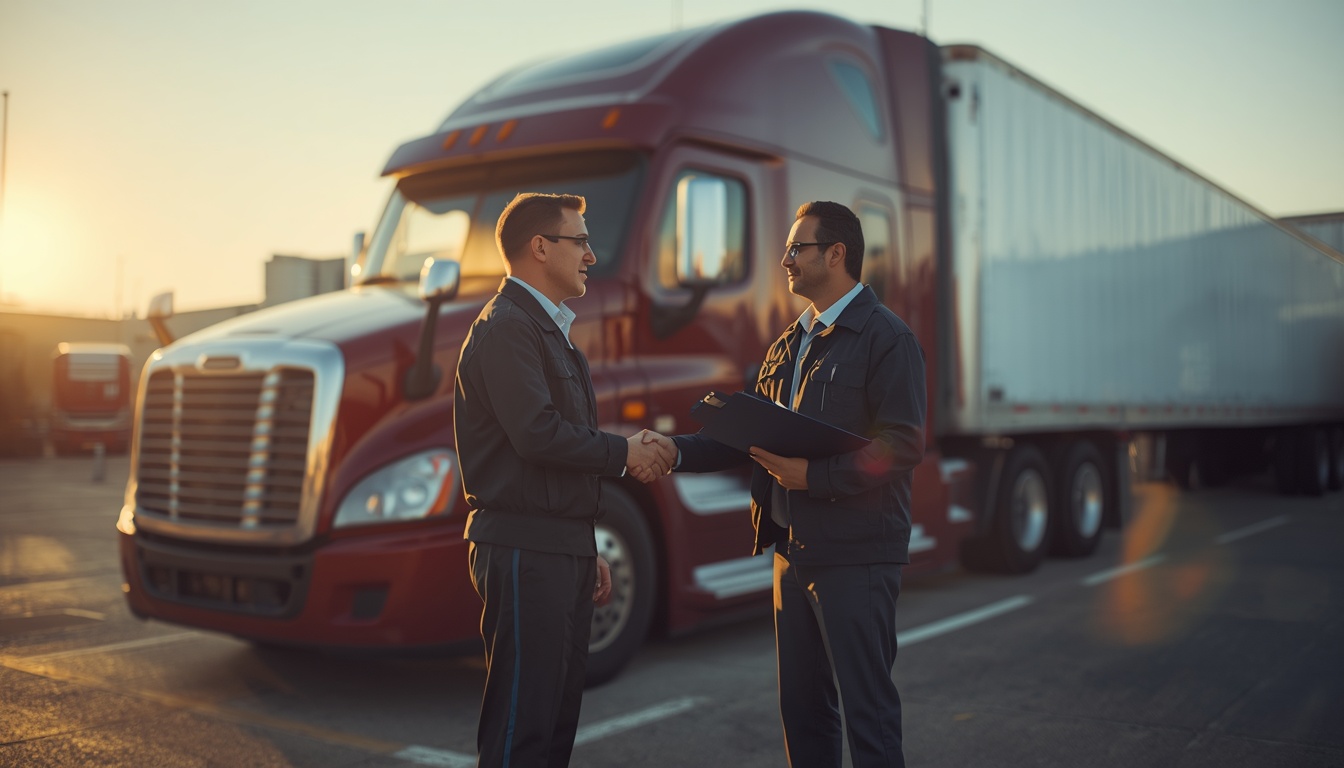
A grocery distribution center is where a reefer load either turns into money or turns into a claim. What catches drivers is everything around the reefer: an appointment window that doesn't forgive ten minutes, a kiosk instead of a clerk, a lumper who wants payment before he touches the freight, a pallet count nobody warned you about, and a POD that says "subject to inspection." Here is the whole visit at Walmart, Kroger, Costco, Aldi, Sysco or US Foods. 🚛
🕒 Why does the appointment window decide everything?
Retail and food-service DCs don't receive freight — they receive appointments. Every inbound purchase order has a delivery window negotiated between the supplier, the retailer and the broker long before the load reached you: at Walmart it hangs on a "must arrive by date" and the supplier's OTIF (on-time, in-full) score, at a food-service DC on tomorrow morning's outbound routes. A truck outside its slot is a problem to be worked around, not a customer to be served.
- Early is not a bonus. Most grocery DCs won't check you in more than about an hour before the appointment; some send you back to the street.
- Late is rescheduled. Miss the slot and the usual answer is a new appointment — the same day if the dock has a gap, the next day at busy DCs, later in the week at the worst. Until then you're a "work-in," unloaded when a door and a crew are free, after everybody who was on time.
- The clock runs at the receiving window, not the gate. At a big DC the guard-shack line, the yard and backing in can eat 30–60 minutes. "Appointment 06:00" means paperwork in the receiver's hands at 06:00.
🚪 What happens at check-in: gate, kiosk, dock, seal and temperature?
No two DCs are identical, but the sequence is consistent across chains as of September 2026 (site procedures vary and may change):
- Guard shack. CDL, carrier name, PO or appointment number, trailer and seal numbers. Many gates photograph the truck and the seal; more and more point you at a kiosk or a QR code instead of a clerk.
- Kiosk or QR check-in. Scan, enter the PO, trailer, seal and a cell number; the system confirms the appointment and queues you. A wrong PO means no appointment as far as the system is concerned — take it from the rate confirmation.
- Yard wait. You're sent to a staging lane; modern DCs assign the door by text message, older ones by CB or loudspeaker. Stay with the truck: a missed door call is a missed appointment.
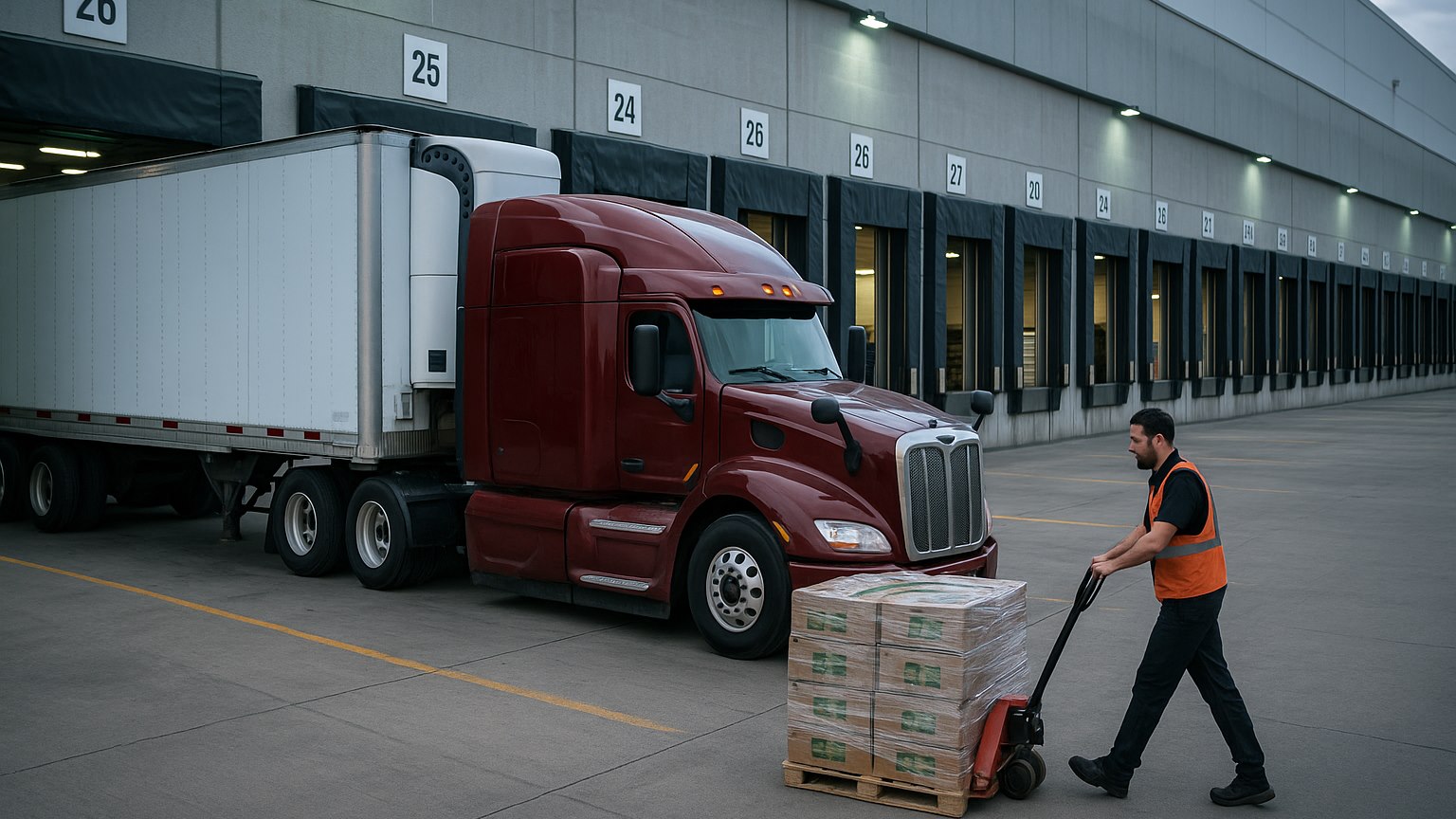
- Dock and backing. Back in, set the brakes, chock if required, open the doors only when receiving says so. At most grocery DCs the driver does not break the seal — the receiver does, and records it.
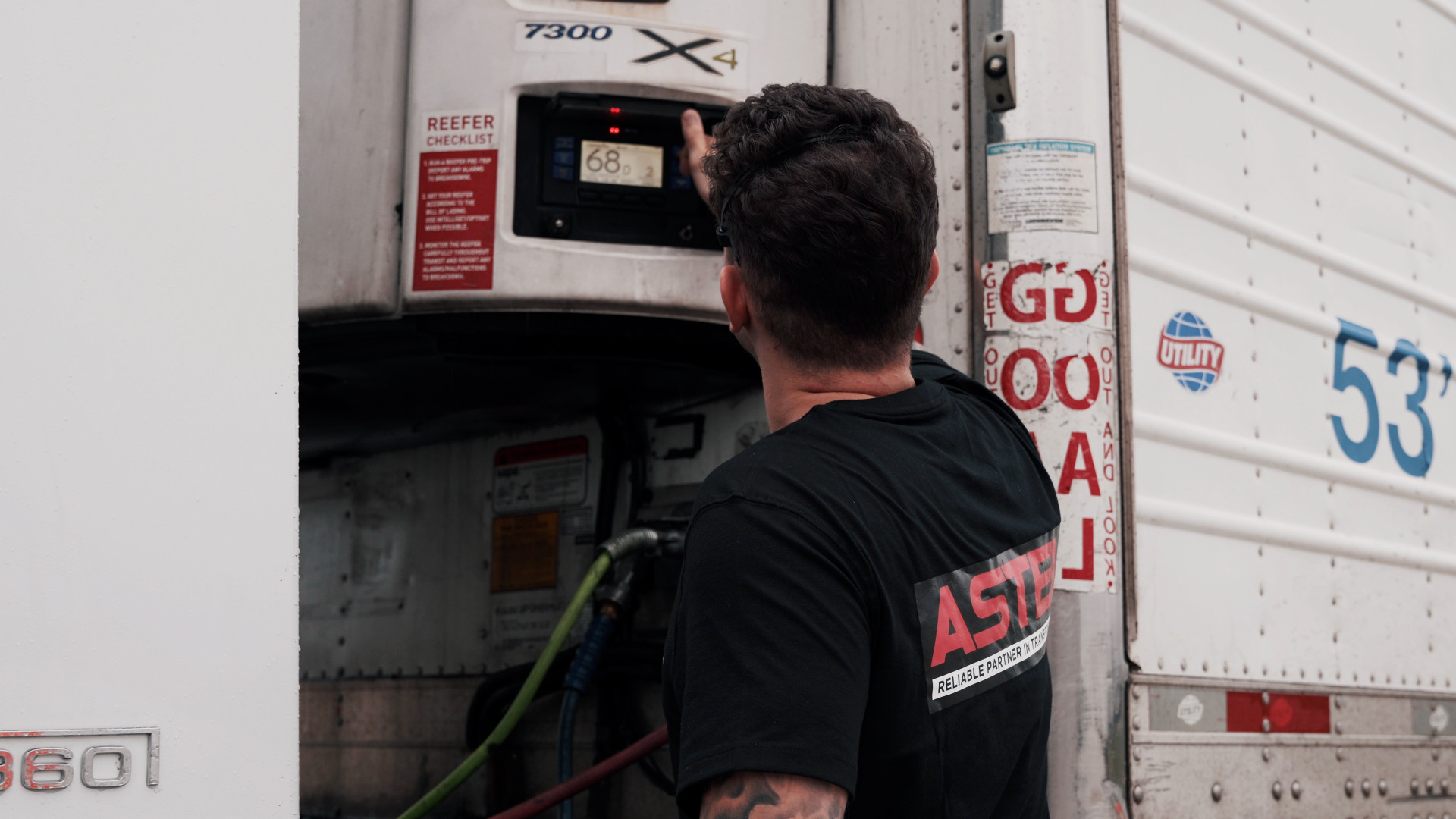
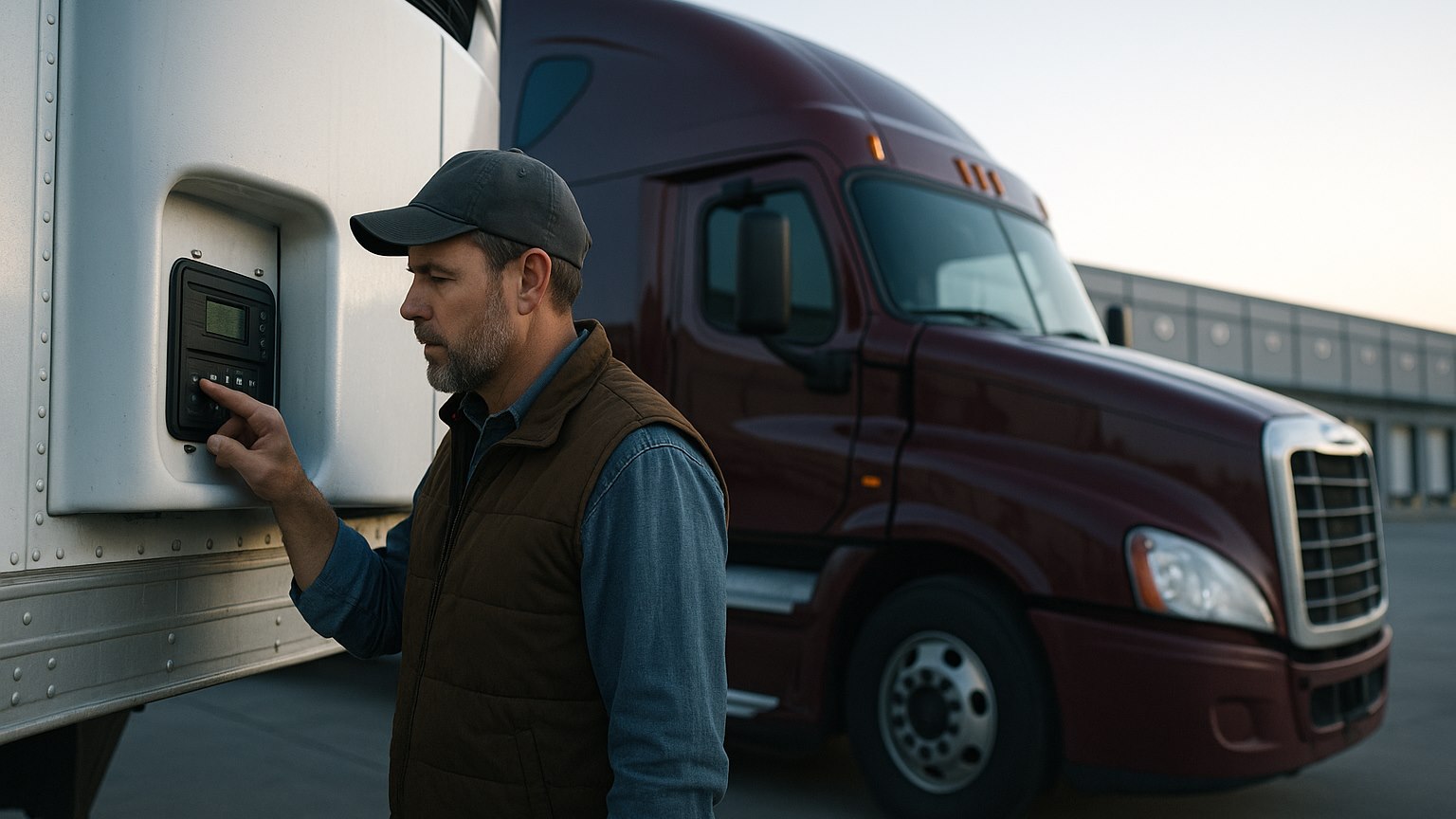
- Seal and temperature check. The receiver matches the seal number to the BOL, reads the reefer's setpoint and return air, and pulps product from the nose and the tail. This is where a load gets refused before a single pallet moves.
- Receiving window. Hand over the BOL and PO, get your time in stamped, wait for the unload.
🔐 Seal and temperature: the two things that end a delivery before it starts
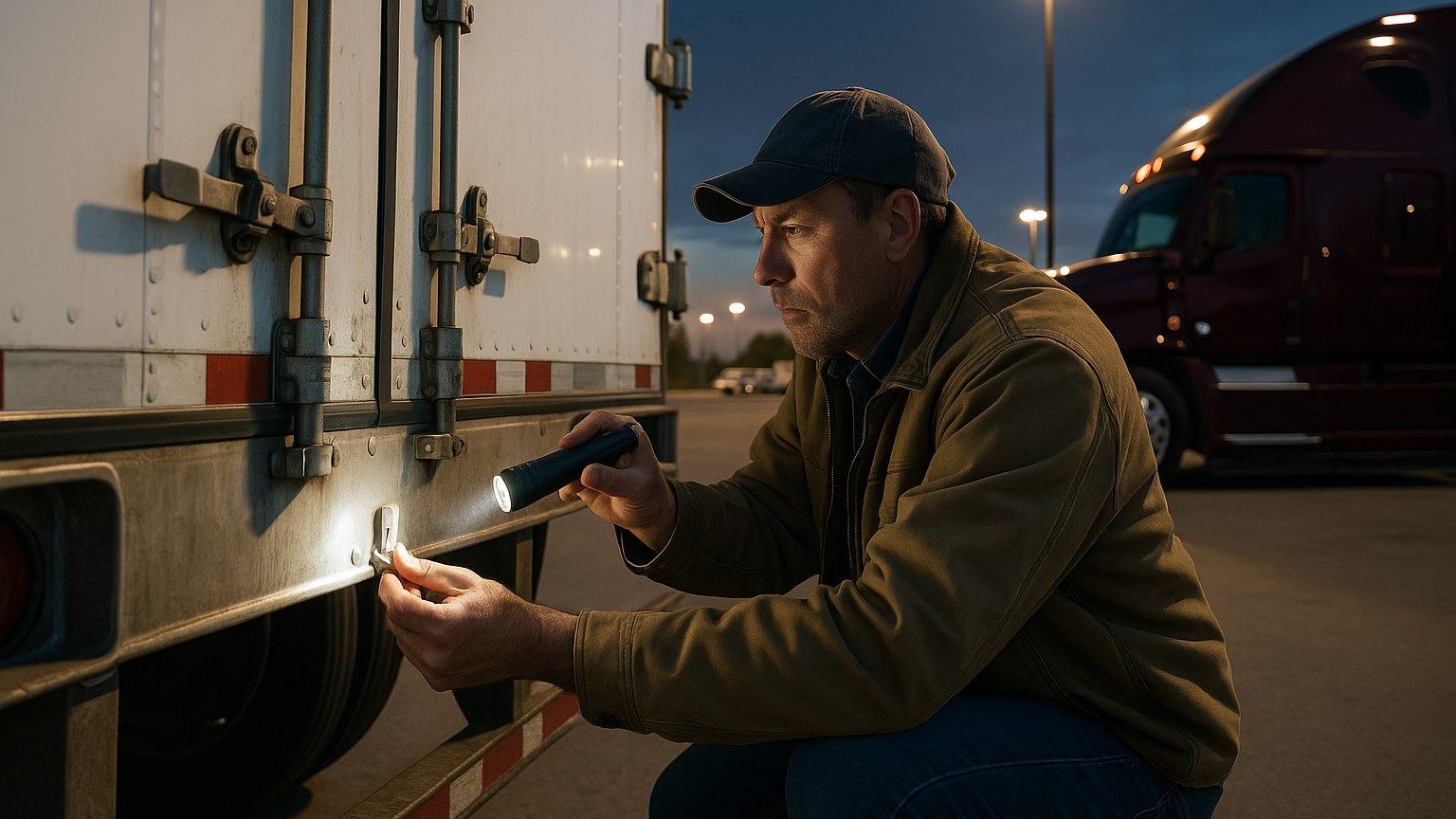
A full-truckload food shipment leaves the shipper sealed, and the seal number goes on the BOL. If the number doesn't match or the seal is missing, the receiver can refuse the whole trailer — a broken chain of custody on food is a food-safety issue. So: check the seal number against the BOL before you pull out of the shipper; never break the seal yourself; and if DOT opens the trailer on the road, get the new seal number and the officer's name on the BOL right there.
Temperature is the other gate. Under the FDA's Sanitary Transportation rule (21 CFR Part 1, Subpart O) the receiver can ask the carrier to show that the specified temperature was held in transit; the reefer's data download plus your own log are that proof. Arrive in the mode the BOL calls for, return air at setpoint, pickup pulp temperature on the paperwork — running the unit so the download backs you up is its own article. And grocery DCs are overwhelmingly live unloads, not drop-and-hook: budget the time.
👷 Who unloads the trailer, and who pays the lumper?
A lumper is a third-party unloading crew working inside the DC: they break down and restack your load to the warehouse's spec, count it and stage it. At most grocery DCs driver unload is either not allowed or too slow to be worth it, so a lumper fee is simply the price of that labor.
💵 Who pays — by law and in practice
Under federal law (49 U.S.C. § 14103) the shipper or receiver is responsible for the cost of loading and unloading, and whoever provides the service must give a receipt itemizing the work and the charge. In practice the money is fronted at the dock and reimbursed up the chain: the lumper office quotes a price, you call dispatch with the amount, dispatch or the broker issues an EFS or Comchek code, you hand over the code and get a receipt, and the carrier bills the fee back as an accessorial. As of September 2026 a grocery-DC lumper typically runs from about a hundred dollars for a small palletized load to several hundred for a floor-loaded or mixed trailer restacked case by case; it varies and may change.
🧾 The lumper rules that protect your money
- Never pay your own cash without a receipt. Cash with no itemized receipt is money you will not see again — and most lumper services no longer take cash anyway.
- Call before you pay. Dispatch needs the amount before the code is issued.
- The receipt must show the facility, date, PO or BOL number, amount, service and lumper company. Photograph it before you leave the office; "we'll email it" is not a receipt. And real lumpers work from an office inside the building — not from the yard, walking up to your cab.
| Scenario | Who does the work | Who pays and how | Your job |
|---|---|---|---|
| Lumper unload, brokered load | Lumper crew inside the DC | Broker issues an EFS/Comchek code; carrier bills it back as an accessorial | Call dispatch, hand over the code, get the receipt, send a photo the same hour |
| Lumper unload, direct company freight | Lumper crew | Your company pays through its fuel card or a lumper code | Same — the receipt is still mandatory |
| Driver unload or assist (where allowed) | You | Shipper or receiver owes the unloading cost; what reaches you depends on company policy | Confirm in advance, log start and finish, don't do it for free |
🪵 What is pallet exchange, and why do CHEP pallets matter?
Grocery moves on 48×40 pallets of three kinds: CHEP (the blue rental pallets), PECO (red) and plain white or GMA pallets. Retailers want product on pooled pallets; a load on broken white pallets can be refused or restacked at the shipper's cost.
Pallet exchange is a deal between shipper and receiver: for every loaded pallet you bring in, the DC hands back an empty of the same type, and you carry the empties to the shipper or the next pickup. Whether exchange applies is written on the BOL or rate confirmation — "pallet exchange," "no exchange," or a fixed count. If exchange is required and the empties don't come back, someone gets billed a pallet fee — typically $10–25 per pallet as of 2026 — and that someone tries to pass it down to the carrier. So: count in, count out — pallets in on the BOL, pallets out on the receipt, both signed, and "no empties today" written down if that's what the DC says.
📦 What is OS&D, and what do you do when the receiver rejects product?
OS&D stands for overage, shortage and damage — what the receiver checks against the BOL as the lumper breaks the load down. Overage is more product than the paperwork says, shortage is less, damage is crushed cases, leaking product or broken pallets. For reefer freight there's a fourth: temperature. If the pulp reading from the nose or the tail sits outside the spec on the PO, the DC can refuse the pallet, the pallets around it, or the whole load. The next fifteen minutes decide whether this becomes a claim:
- Don't leave the dock, don't sign anything yet, and call dispatch before the receiver decides. A refused pallet on a signed clean POD is your word against theirs. Dispatch calls the broker, the broker calls the shipper, and rejected product gets a disposition — donate, dump, return, re-deliver — that is theirs to make, not yours.
- Get the numbers on paper and on camera. The receiver's pulp reading, where it was taken, the time, their reading of the trailer air, initialed by them — plus photos of the reefer screen, the seal before it's broken, the product and the DC's paperwork.
- Write the exception on the POD yourself. "12 pallets refused, receiver pulp 44°F, reefer return air 35°F Continuous, download requested" — plus your name and the time. A note that only says "subject to inspection" is not a valid exception and protects nobody.
- Ask dispatch to pull the reefer download before the trailer moves. The download is the carrier's defense in a temperature claim; your notes and photos make it believable.
✍️ How do you sign the POD without signing away the load?
The proof of delivery is the document your company gets paid on and the document a claim is argued on. Before your signature goes on it, check that it shows:
- Every exception — shortage, damage, refused pallets, temperature — in words, with counts, on every copy.
- The receiver's stamp with the date, time in and time out, and a printed name next to the signature. If the stamp shows only a date, write both times and have the clerk initial them.
- Seal, pallets and the lumper receipt — "seal intact, broken by receiver" with the number; pallets delivered, empties returned, or "no exchange"; the lumper receipt stapled or photographed with the POD.
Then photograph every page and send it to dispatch before you pull out of the yard. What to write where on the BOL, rate confirmation and POD is in our guide to trucking paperwork.
⏳ Waiting, detention, parking and night docks: what does the rest of the visit look like?
Waiting. Grocery DCs are where drivers wait: two hours at the door is ordinary, four is not rare. Detention pay only exists if the wait is documented: time in and time out on the paperwork, the appointment time on the rate confirmation, and dispatch told the moment you pass the free-time mark — how free time is counted is in our detention and layover article. And check your hours of service before you back in.
Parking and night docks. Most DCs do not allow overnight parking in the yard. If your appointment is at 04:00, the plan is a truck stop or rest area within an hour and an alarm; rolling in the night before to "grab a spot" at the gate usually ends with a guard knocking at 2 a.m. — see our truck parking guide. Many grocery DCs receive around the clock, and night appointments are often the fastest, at the price of a dark yard — watch for yard dogs moving trailers.
🧭 Where do grocery DCs fit in a reefer career?
Grocery and food-service freight is the backbone of reefer trucking: it moves every week of the year. A driver who learns the routine — window, kiosk, seal, lumper code, pallet count, exception on the POD — stops losing hours and money at the dock within a few months. At ASTEL that routine has 24/7 dispatch behind it, handling the lumper codes and the detention paperwork while you handle the truck, and in the August–March peak strong drivers run 3,500–3,700 miles a week on late-model Volvo trucks. More on our drivers page.
❓ Frequently asked questions
Who pays lumper fees — the driver or the company?
Under federal law (49 U.S.C. § 14103) the shipper or receiver is responsible for loading and unloading costs, and the lumper service must provide an itemized receipt. In practice the fee is paid at the dock with a code from your company or the broker and reimbursed up the chain. A company driver should never pay a lumper from personal cash without a receipt.
What happens if I'm late for a grocery DC appointment?
Typically the load is rescheduled: the same day if the dock has a gap, the next day at busy DCs. Until then you're a "work-in," unloaded only when a door and a crew are free. Most DCs also won't check you in more than about an hour early, and the appointment time applies at the receiving window, not the guard shack.
Can I break the trailer seal myself at the receiver?
No. At grocery and food-service DCs the receiver breaks the seal and records the number against the BOL; a driver-broken seal can get the entire load refused as a chain-of-custody problem. If DOT opens the trailer on the road, have the officer write the new seal number and their name on the BOL.
What is pallet exchange, and do I have to bring pallets?
Pallet exchange means the receiver returns empty pallets of the same type and count as the loaded ones you delivered. Whether it applies is written on the BOL or rate confirmation; if exchange is required and the empties don't come back, a pallet fee of typically $10–25 each can be charged. Count pallets in and out and get the count on the receipt.
What should I do if the receiver rejects part of a reefer load for temperature?
Stay at the dock, don't sign a clean POD, and call dispatch before the receiver decides the product's fate. Get the receiver's pulp reading, location and time on the paperwork, photograph the reefer screen and the product, write the exception on the POD yourself, and ask dispatch to pull the reefer download before the trailer moves.
🚛 Reefer freight with a dispatch that handles the dock — not just the load board
ASTEL is a family-owned carrier out of Chicago running refrigerated freight year-round on late-model Volvo trucks, with our own repair shop and mechanics, 24/7 dispatch and a direct line to the owner. Drivers earn $90,000–$110,000 a year — $2,400–2,700+ a week gross, a flat $0.80 per mile for drivers with 1+ year of experience, all miles paid ZIP-to-ZIP, weekly pay, plus $50/$200/$500 bonuses for clean DOT inspections.
Apply in 2 minutes →References: 49 U.S.C. § 14103 (loading and unloading; lumper receipts), the FDA Sanitary Transportation of Human and Animal Food rule (21 CFR Part 1, Subpart O), and lumper-fee and pallet-exchange ranges reported by freight-payment and logistics services as of September 2026. Facility procedures and fees vary by site and may change. Pay and mileage figures describe ASTEL driver ranges, not guarantees; this is general information, not legal advice.