

🔒 Cargo Theft Prevention for Truck Drivers: A 2026 Guide
Cargo theft used to be a bolt-cutter crime: a dark lot, a quiet trailer. Today it's an organized business with call centers, fake carrier identities and a shopping list — and refrigerated food loads sit near the top of that list. A driver can't fix broker-level fraud, but most thefts still succeed or fail at street level: where you stop, how you park, whether anyone checked the seal. Here is the part of cargo theft prevention that belongs to the driver. 🚛
📈 How bad is cargo theft in the U.S. right now?
Bad, and more professional than ever. Verisk CargoNet estimated U.S. and Canada losses at roughly $725 million for 2025 — up about 60% from 2024 — while the number of incidents barely moved. Confirmed cargo thefts rose about 18%, and the average value of a single theft climbed past $270,000. Crews aren't stealing more often — they're stealing bigger.
Early 2026 shows the same shape: Overhaul counted 574 U.S. theft incidents in the first quarter — about six a day, slightly down year over year — but deceptive pickup and strategic-theft schemes jumped 31%. The growth is in fraud, not crowbars.
Two facts matter to a reefer driver, as of September 2026:
- Food and beverage is the most-stolen commodity category in CargoNet's 2025 data — around 708 thefts, up 47% from 2024, more than one theft in five. Meat and seafood, tree nuts (yes, a trailer of almonds is criminal gold), alcohol and energy drinks lead the list. A loaded reefer is a rolling grocery store with easy resale — that's why reefer freight gets targeted.
- Geography is concentrated. California is far ahead of everyone (roughly a third or more of U.S. incidents), Texas is second, and Illinois' share roughly doubled between early 2025 and early 2026 — the Chicago-area warehouse corridors are exactly where reefer freight lives. Georgia, Tennessee and Florida recur year after year.
🎭 How do loads actually get stolen?
Straight theft: the classic way
The traditional playbook hasn't gone anywhere. A loaded trailer left unattended in an unsecured lot disappears overnight. The quieter version is pilferage: the crew cuts the seal at a truck stop, takes two or three pallets out of the tail, shuts the doors and leaves. You find out at the receiver, when the count is short and the seal number doesn't match the BOL. Pilferage grows because it's low-risk — by the time anyone notices, the thieves are three states away.
Strategic theft: stealing with paperwork
The fast-growing category is strategic theft — fraud instead of force. A crew builds or hijacks a carrier identity (real MC number, cloned emails, a convincing dispatcher voice), books a load through a broker or shows up at a shipper as a fictitious pickup, and drives away with freight that was handed over willingly. Double-brokering schemes pass the load through so many hands nobody knows where it went.
A company driver isn't the main target of these schemes — but you're the last checkpoint. The scam reaches you as a strange instruction mid-trip: a text from an unknown number saying the delivery address changed, a call from "the broker" asking you to drop the trailer at a different yard, a stranger with a story about transferring your freight to another truck. Every one of those is a phone call to your dispatcher — on the number you already have, not the one that just texted you; a load moves only on your own company's instructions.
🚫 What is the red zone — and why no stops for the first 200 miles?
Security teams have said it for years: a large share of origin thefts happen close to the pickup. Crews sit near shipper gates, pick a target and follow it, waiting for the first fuel stop or meal break. The standard defense is the red zone rule: after loading, drive at least 200 miles or about 4 hours before your first stop. Most tail crews give up long before that.
The rule is won or lost before the pickup, not after it:
- Arrive fueled. Full tanks at the gate mean no fuel stop for hundreds of miles — fuel the truck (and the reefer) the evening before.
- Arrive rested and fed. Rest before the shipper, use the restroom at the facility if allowed, grab food before you load — not 20 miles down the road.
- Arrive with hours. Keep at least 4–5 hours of drive time available after loading. If your clock is nearly dead at pickup, tell dispatch before the load goes on.
- If you absolutely must stop inside the red zone, make it short, busy and bright — a crowded fuel island, not a dark ramp — and keep the truck in sight.
- Watch your mirrors. A vehicle that leaves the shipper area with you and is still there 40 minutes later is worth a call to dispatch.
🅿️ How do you park so the trailer is still there in the morning?
Most theft happens where trucks sit still: unattended parking — truck stops, drop lots, street corners near warehouses — leads every industry report. Your standards:
- Light, cameras, people. A busy, lit truck stop with cameras beats a free dark lot every night of the week. Check reviews in trucker apps before you commit — drivers write honestly about break-ins. Our truck parking guide covers finding and holding a decent spot.
- Back the doors up. Doors against a wall, a pole, a fence or another trailer can't be opened quietly — one free habit that defeats most pilferage on its own.
- Park in view, not in the back row. The dark far corner feels private; that's exactly why crews work it. Middle rows, near the building, under lights.
- No dark shoulders and dead ramps. An off-ramp shoulder at 2 a.m. is unsafe for you and a buffet for a theft crew. If the plan forces you toward one, the plan is wrong — call dispatch and fix it.
- Dropped trailer = locked trailer. A trailer without a tractor is the easiest theft in trucking: back under, lift the gear, gone. Drop a loaded trailer anywhere — a customer lot, a drop-and-hook yard — and a kingpin lock goes on, in a location your company agreed to.
- Mind the calendar. Loads that sit over a weekend or a holiday are prime targets — thieves know a trailer dropped Friday night won't be missed until Monday.
This is also where a company's infrastructure quietly matters: ASTEL trucks stage at our own fenced yard in Chicago, not on a street corner — a whole category of risk removed outright.
🔗 Seals and locks: what actually slows a thief down?
Seal discipline beats seal hardware
The seal on your doors is not a lock — it's evidence. Its job is to prove the doors stayed shut from shipper to receiver — and it only works if you work it:
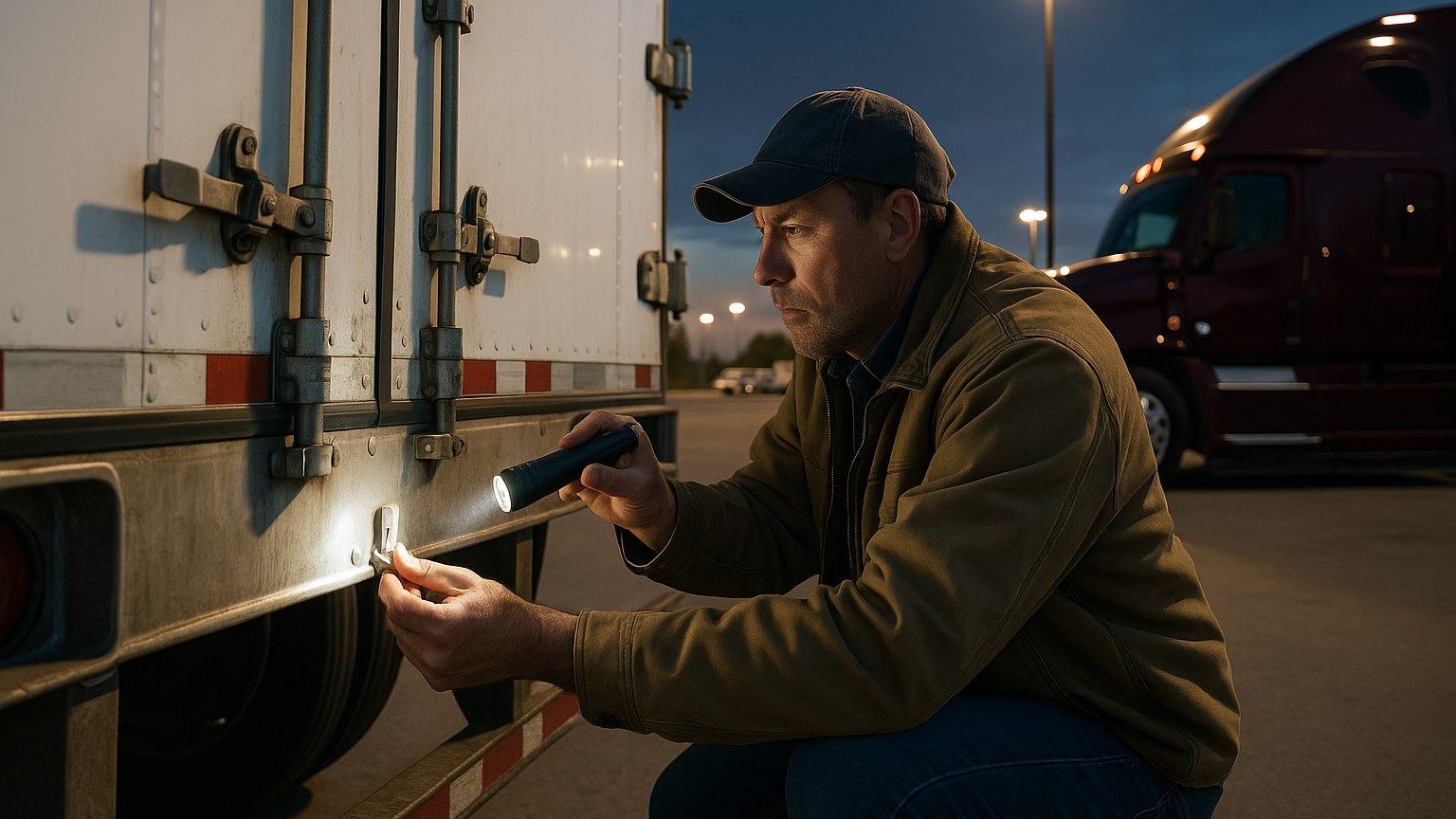
- At pickup: watch the seal go on (or apply it yourself), match the number against the bill of lading, and photograph the sealed doors with the number readable. Seal number missing from the BOL? Write it in before you sign.
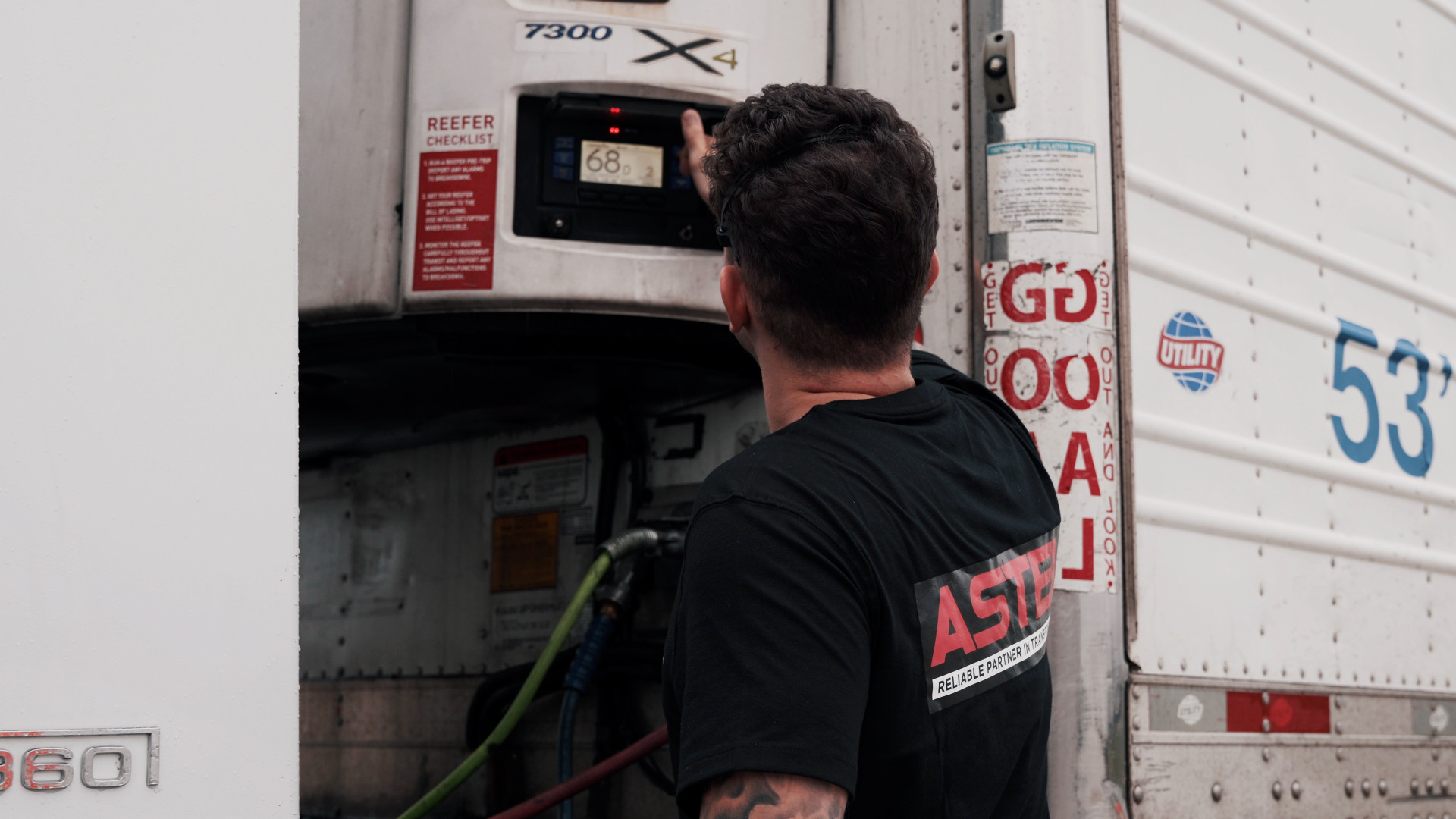
- At every stop: the walk-around includes the seal, the door hardware and the hinges. Ten seconds. Note the check with a time — a phone photo is plenty.
- At delivery: the receiver breaks the seal, not you (unless instructed). Intact seal, matching number, photos at both ends — that chain stands between you and a shortage claim, especially at grocery warehouses, where counts go case by case.
On hardware: ISO 17712 grades seals, and its "H" (high-security) class — the heavy bolt seal that takes bolt cutters to remove — is what programs such as C-TPAT require. A cable seal is a flexible steel cable for odd door hardware. Both beat the plastic band that snaps by hand — but any seal marks intrusion; none prevents it. Prevention is parking, locks and distance.
Found the seal cut or missing?
Don't open the doors wide, don't re-seal it quietly, and don't drive on hoping it works out. Photograph everything as found, call dispatch immediately, and if cargo is visibly missing, get local police involved and note time and location. A driver who reports a cut seal within minutes is a witness; a driver who shows up at the receiver with a mystery seal is a suspect.
Locks worth carrying
| Device | What it protects against | Honest limitation |
|---|---|---|
| Kingpin lock | Anyone backing a tractor under your dropped trailer | Useless in the sidebox; buy the wrench-resistant type |
| Gladhand / air-cuff lock | Locks the emergency air line so the trailer brakes can't be released | Slows a pro, doesn't stop a tow; pair it with the kingpin lock |
| Heavy padlock on door handles | Casual pilferage at truck stops | Bolt cutters exist; it buys time and noise, not immunity |
| Landing-gear lock | Cranking the gear up to steal a dropped trailer | Niche, but cheap insurance on multi-day drops |
| Backing doors to a wall | Any door attack while parked | Costs nothing; forget it once and that's the night it mattered |
None of this makes a trailer theft-proof — together it makes yours the slowest, loudest target in the lot, and crews pick easier ones.
🤫 Who are you telling about your load?
Theft crews do reconnaissance — and drivers hand them half of it for free:
- On the CB and at the counter: what's in the box, where it's going and when you're leaving are nobody's business. "Groceries, nothing exciting" is a complete answer.
- On social media: no photos of the loaded trailer with location tags, no "loaded out of Salinas, see you in Chicago" posts while you're en route. Post the sunset after delivery, not before.
- With paperwork: don't leave the BOL on the dashboard — a pickup address and a commodity line read fine through the glass.
- Around curious strangers: the friendly guy at the fuel island asking what reefer guys haul these days may just be bored. He may not be. Vague costs you nothing.
It matters double for high-value freight — electronics, meat, seafood, nuts, alcohol. You can't hide that a reefer hauls food; you never have to confirm which food, whose, or where it sleeps tonight.
🛡️ Theft scenario → your defense
| Scenario | Your defense |
|---|---|
| Crew tails you from the shipper's gate | Arrive fueled, rested and with hours; no stops for 200 miles / 4 hours; report a persistent follower to dispatch |
| Trailer stolen from a lot overnight | Lit, reviewed, busy parking; doors backed to a wall; gladhand lock; skip the dark back row |
| Pilferage while you sleep | Doors against an obstacle, padlock on handles, seal check with photo at every stop |
| Dropped trailer disappears from a customer lot | Kingpin lock every time, drop only at agreed locations, record the seal and the drop time on the paperwork |
| Text: "delivery address changed" | Verify with your dispatcher on the known number; no move without your company's confirmation |
| Stranger: "transfer the freight to another truck" | Legitimate freight doesn't do that on a parking lot; call dispatch and stay with the truck |
| Fictitious pickup / carrier identity fraud | Fought at company and broker level; your part is airtight ID at shippers and zero load details shared |
| CB or social media reconnaissance | Never name the commodity, the value, the route or the schedule; post trips after they end |
🚨 The load was stolen anyway — what now?
It happens to careful drivers too. The first hour shapes everything after:
- Stay safe. Interrupt a theft in progress — do not confront or chase. A trailer is not worth a hospital visit. Be a good witness: descriptions, plates, direction of travel.
- Call the police. 911 or the local non-emergency line, right away — recovery odds drop with every hour. Get the report number and the officer's name.
- Call dispatch. At ASTEL that line answers 24/7, and the company takes it from there: the CargoNet report, the customer, the insurer. That machinery starts when you call — so call the minute you know.
- Lock down the facts. When and where did you last see the trailer intact? When was the last seal check, and what was the number? Photos of the scene, cut locks, nearby cameras; names of anyone who saw anything.
- Keep the paperwork. BOL, rate confirmation, your ELD record and seal-check notes — that stack proves you did your job right.
- Write the timeline now, while it's fresh. Investigators will ask three times; your notes keep the answers consistent.
A driver who reports fast and documents everything has nothing to fear — that record separates a victim from a suspect.
❓ Frequently asked questions
What is the red zone in cargo theft prevention?
The red zone is roughly the first 200 miles (or about 4 hours) after leaving the shipper, where crews tail trucks from the pickup and wait for the first stop. The defense is to arrive fueled, rested and with hours available, then run those miles without stopping.
What should I do if I find my trailer seal cut or missing?
Do not re-seal it, do not drive on, and do not disturb the doors. Photograph everything as found, call your dispatcher immediately, and involve local police if cargo appears to be missing. Note the time, place and last stop where the seal was intact; reporting within minutes protects you.
Which freight gets stolen most often in the U.S.?
Food and beverage led all categories in CargoNet's 2025 data with about 708 thefts, more than one in five incidents; meat, seafood, tree nuts and alcohol are favorite targets, putting reefer loads squarely at risk. Electronics, clothing and household goods also rank high as of September 2026.
What is a fictitious pickup and how do I avoid being part of one?
A fictitious pickup is strategic theft by fraud: criminals pose as a legitimate carrier with a real-looking identity, get a load released to them at the shipper, and vanish. Company drivers meet it as strange instructions: a text about a changed delivery address, a request to hand the freight to another truck. Verify every unusual instruction with your dispatcher on the number you already know before anything moves.
Do kingpin locks and padlocks actually prevent cargo theft?
No single device stops a determined crew, but each adds time, noise and risk, and thieves pick the easiest target in the lot. A kingpin lock on every dropped trailer, a gladhand lock and a padlock overnight, doors backed against a wall, and disciplined seal checks together turn your trailer into the target nobody picks.
🚛 Haul freight that somebody's actually watching over
ASTEL is a family-owned carrier out of Chicago running refrigerated freight year-round on late-model Volvo trucks, with our own repair shop and mechanics, 24/7 dispatch and a direct line to the owner. Drivers earn $90,000–$110,000 a year — $2,400–2,700+ a week gross, a flat $0.80 per mile for drivers with 1+ year of experience, all miles paid ZIP-to-ZIP, weekly pay, plus $50/$200/$500 bonuses for clean DOT inspections.
Apply in 2 minutes →Theft figures reflect Verisk CargoNet's full-year 2025 supply chain risk analysis and Overhaul's Q1 2026 U.S. cargo theft report as of September 2026; they cover reported incidents only and may change as data is updated. Seal classes reference the ISO 17712 standard and CBP/C-TPAT guidance. Red-zone and parking practices summarize common industry security recommendations, not regulations. Pay and mileage figures describe ASTEL driver ranges, not guarantees. This article is general information, not legal or security advice; your company's security procedures take precedence.