

Reefer Washout Before a Produce Load and the Checks That Get You Loaded
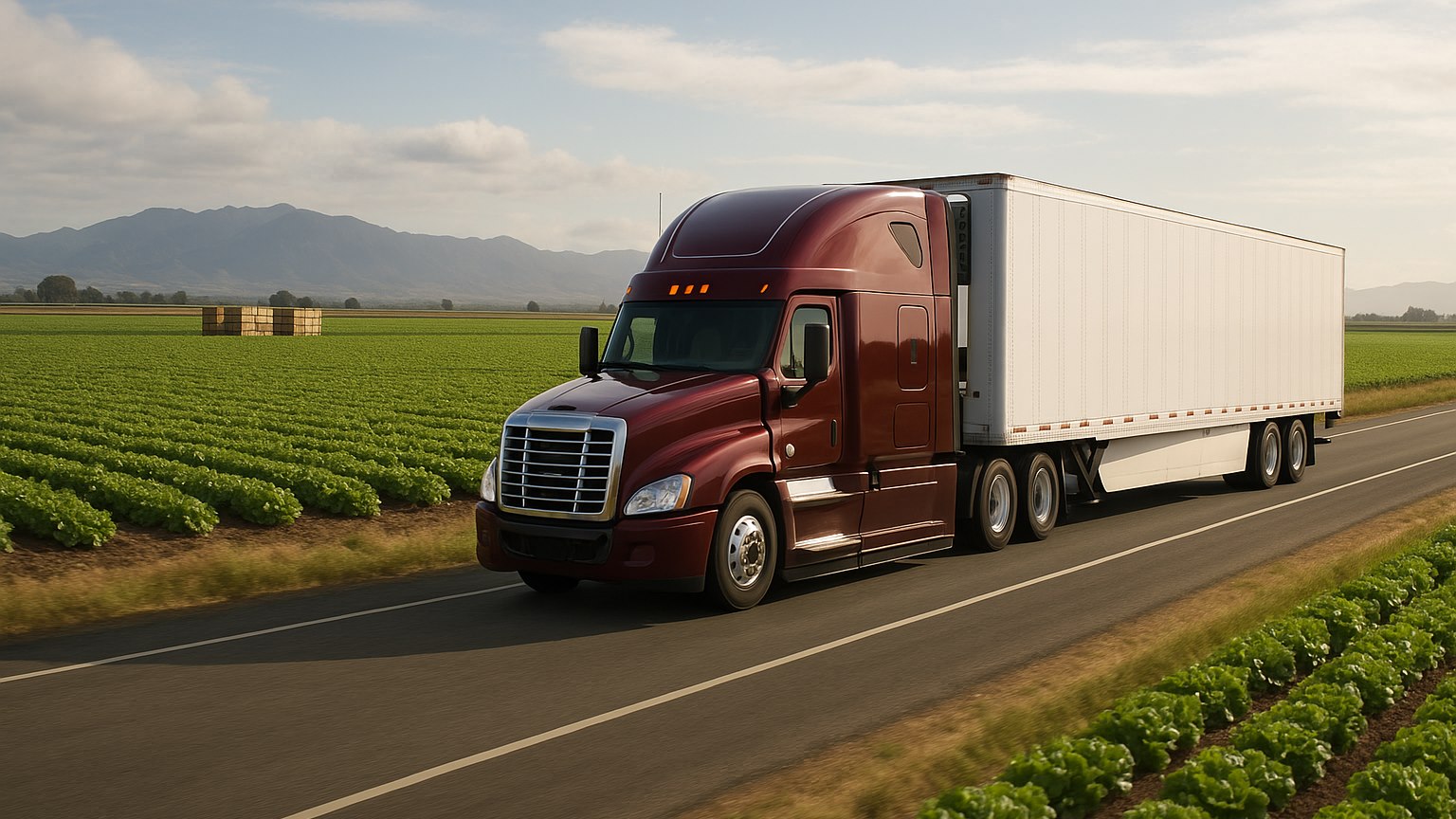
Say you check in at a salad packer in California's Salinas Valley at 2 a.m., and the QA tech opens your doors and smells the frozen chicken you delivered on Monday. The trailer is rejected on the spot. Now you need a reefer washout and a receipt that proves it, and your 3 a.m. appointment is gone. To a produce shipper, a clean, dry box with no odor is part of the load, just like the setpoint.
Eight moves that keep the trailer from being rejected
- Read the rate confirmation and the shipper's instructions before you deadhead to the pickup. Look for words like clean, odor-free, pre-cool to a set temperature and washout receipt required.
- If you didn't haul the last load in that trailer yourself, ask dispatch what it was.
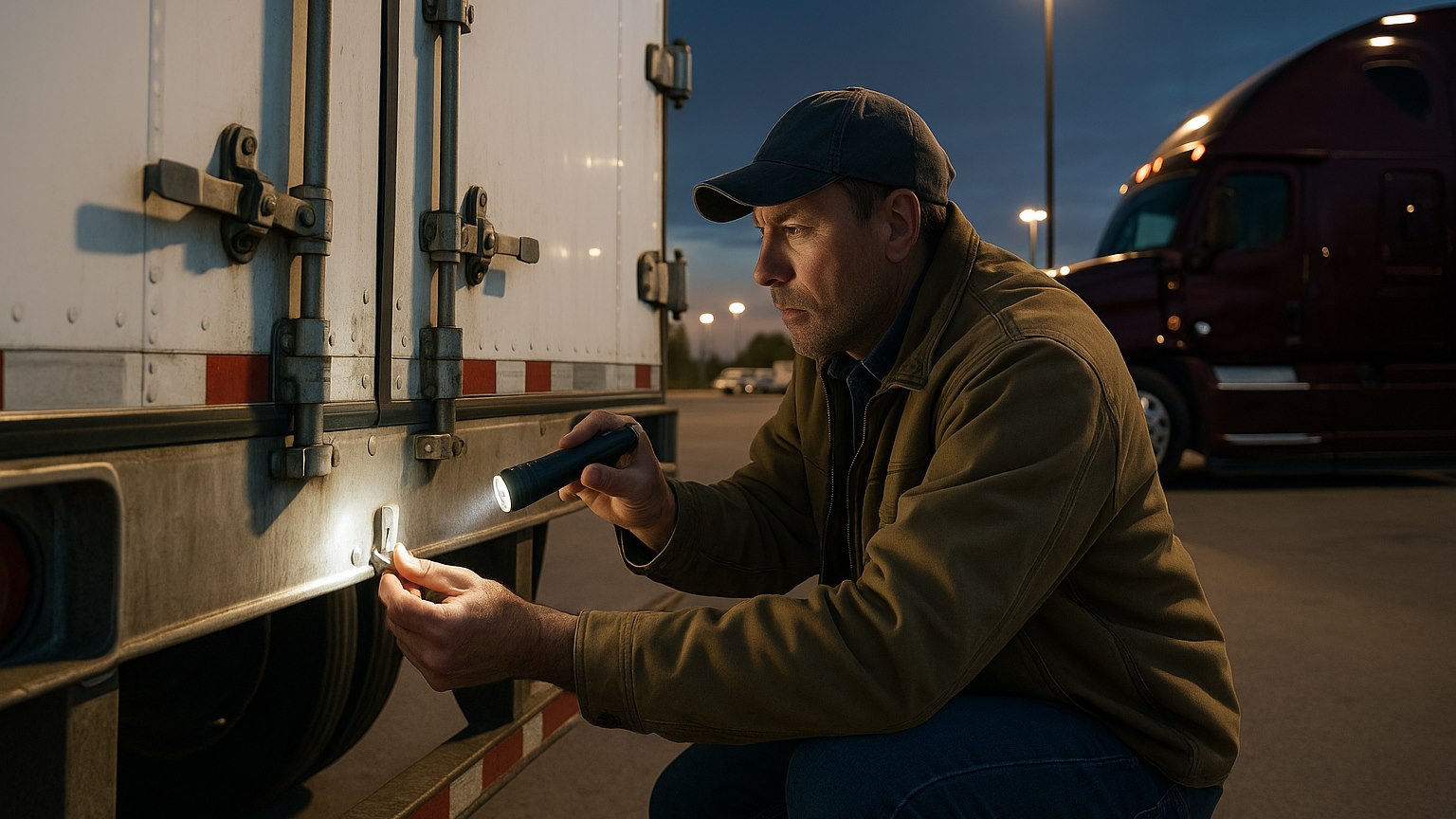
- Walk the empty box at hook with a flashlight. Floor grooves and drains come first, then the walls and ceiling, the air chute, the door seals and the rear bumper blocks.
- If the last load was raw poultry or meat, or you find residue or a smell, plan a washout before the pickup and message dispatch now, not at check-in.
- At the wash, ask what the package includes and get a receipt with the date, time, location and trailer number.
- Let the floor drain and dry. Handle the floor drains the way the shipper or your carrier tells you.
- Pre-cool to the temperature on the rate con, long enough for the walls and floor to get cold.
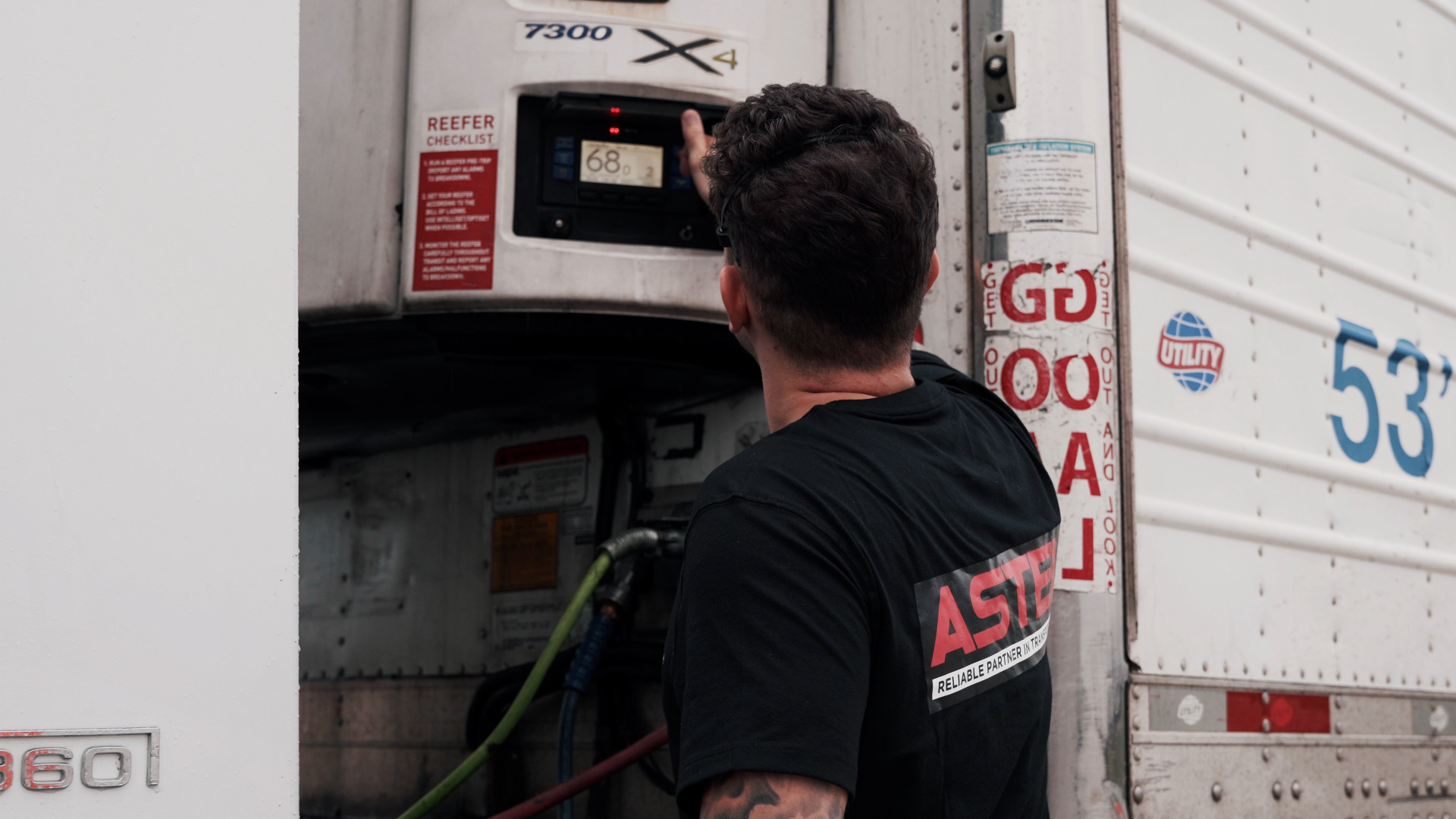
- Photograph the clean, empty box and the reefer display before the first pallet goes on.
The FDA sanitary transportation rule sets the standard the shipper checks
The rule is 21 CFR Part 1, Subpart O, Sanitary Transportation of Human and Animal Food, which FDA published as a final rule on April 6, 2016 (81 FR 20092) under the Food Safety Modernization Act. Larger businesses had to comply by April 6, 2017. Small ones got another year. For a motor carrier that isn't also a shipper or receiver, small means less than $27.5 million in annual receipts. Businesses averaging under $500,000 a year in revenue, adjusted for inflation, aren't covered at all.
The legal hook is the word "adulterated," the Food, Drug, and Cosmetic Act's term for food that can't legally be sold. Under section 402(a)(4) of that law, food is adulterated if it was held under insanitary conditions where it may have been contaminated. Section 402(i) adds food transported in violation of the sanitary transportation rule. A load can be adulterated without anyone getting sick.
| Section | What it says | What it means at the dock |
|---|---|---|
| 1.906 | Vehicles and equipment must be adequately cleanable and kept in sanitary condition. For temperature-controlled food they must be able to hold temperature. | A dirty or smelly box is an equipment problem first |
| 1.908(b) | The shipper gives the carrier written sanitary specs, including cleaning procedures, and a written operating temperature that can include pre-cooling. | Those specs reach you through the rate con or the shipper's instructions |
| 1.908(c) | Before loading food in open or vented packaging, the loader checks the box for visible pests and previous cargo that could make it unsafe. For food that needs temperature control, the loader verifies the pre-cool. | This is the QA tech with the flashlight |
| 1.908(d) | The receiver of temperature-controlled food checks for temperature abuse, including a sensory inspection for off-odors. | The box gets smelled again at delivery |
| 1.908(e) | When a written agreement makes the carrier responsible, the carrier meets the shipper's specs, pre-cools as specified and keeps written cleaning procedures. | Your carrier's procedures set your wash and pre-cool routine |
| 1.910 | Under such a contract the carrier trains its people on hire and as needed after. Each session goes on record. | Training is the carrier's job and the carrier's record |
| 1.912 | Written agreements and procedures are kept 12 months after they stop being used. Training records stay 12 months after the trained person leaves those duties. | Shipper specs stay on file long after your load |
The written duties belong to companies, and the fine print matters
The rule's duties land on companies in four roles: shipper, loader, carrier and receiver. The carrier's duties under 1.908(e) apply when the carrier and shipper have a written agreement that the carrier is responsible for sanitary conditions in whole or in part. You're the person who carries those duties out at 2 a.m., so in practice you work by your carrier's written procedures. Section 1.908(e)(6) requires the carrier to write down its practices for cleaning, inspecting and, if necessary, sanitizing the trailers it offers for food.
The rule's duty to tell the shipper what the previous cargo was and when the vehicle was last cleaned applies to bulk vehicles, and only when the shipper asks. Under 1.904 a bulk vehicle is a tanker, a hopper or similar equipment where food touches the vehicle itself. A reefer full of palletized cartons isn't one. A shipper can still write the same questions into its own specs, and some produce shippers ask for a washout receipt at the gate.
Boxed freight has a carve-out with a big exception. The rule's definition of transportation operations leaves out food completely enclosed by a container, except food that needs temperature control for safety. That exception covers most of a reefer's work. Produce in vented cartons doesn't get the carve-out in the first place, because the rule names a vented cardboard box with a top as an example of food not completely enclosed. For that freight, 1.908(c)(1) has the loader look for previous cargo and pests. For food that needs temperature control, 1.908(c)(2) adds the pre-cool check.
Walk the empty box with a flashlight before you sign for it
Michigan State University Extension published guidance on evaluating refrigerated trucks in 2012. It asks for a clean floor free of debris, unobstructed floor drains and air chute baffles in good repair. Weather stripping on the rear and side doors should be undamaged, and the box should be free of the odor of rot or manure. A J.J. Keller pre-trip list from March 2024 adds interior walls without holes or cracks that expose insulation.
Start at the nose and work back. The grooves in a reefer floor hold whatever leaked on the last trip: purge from meat cases, juice from produce, broken pallet wood, shrink wrap. Shine the light along the grooves, not across them, because residue hides in the bottom of the channel. Find each floor drain and make sure it isn't packed with debris.
Then look up. Walls and ceiling near the unit collect black spots and grime first. A torn or sagging air chute means uneven airflow down the box, and that can show up as a hot spot at delivery. Cracked bumper blocks and a bent door frame get noticed from the dock.
Smell counts too. Section 1.908(d) lists sensory inspection, such as off-odors, among the steps a receiver takes on temperature-controlled food, so the box gets judged by nose at both ends of the trip. Damage like a torn chute or a split gasket goes on your DVIR. Residue and odor go to dispatch before you leave the yard. The rest of the trailer is covered in our pre-trip inspection checklist.
After raw poultry, plan the wash before the next produce pickup
CDC says raw chicken can carry Campylobacter, Salmonella or Clostridium perfringens, and it estimates that about 1 in 25 packages of chicken at the grocery store contains Salmonella. A crushed case leaks even when it's frozen, and the purge dries into the floor grooves. Bagged salad is ready to eat. Nobody cooks it after you deliver, so a QA tech who finds a pink stain has nothing to negotiate about.
Other loads leave smell rather than germs. Onions or seafood can leave odor in the walls and the chute even when the floor looks clean, and a produce shipper will notice it the moment the doors open.
Not every load needs a wash. Clean boxed produce followed by more boxed produce often goes with a sweep, as long as the box passes the shipper's specs. The written requirements decide. When you're unsure, call dispatch before you pull into the wash bay, because the wash, the out-of-route miles and the hour in line all change the trip plan. More on the habits that keep reefer loads from bouncing is in reefer freight tips.
What a trailer washout covers and what the receipt proves
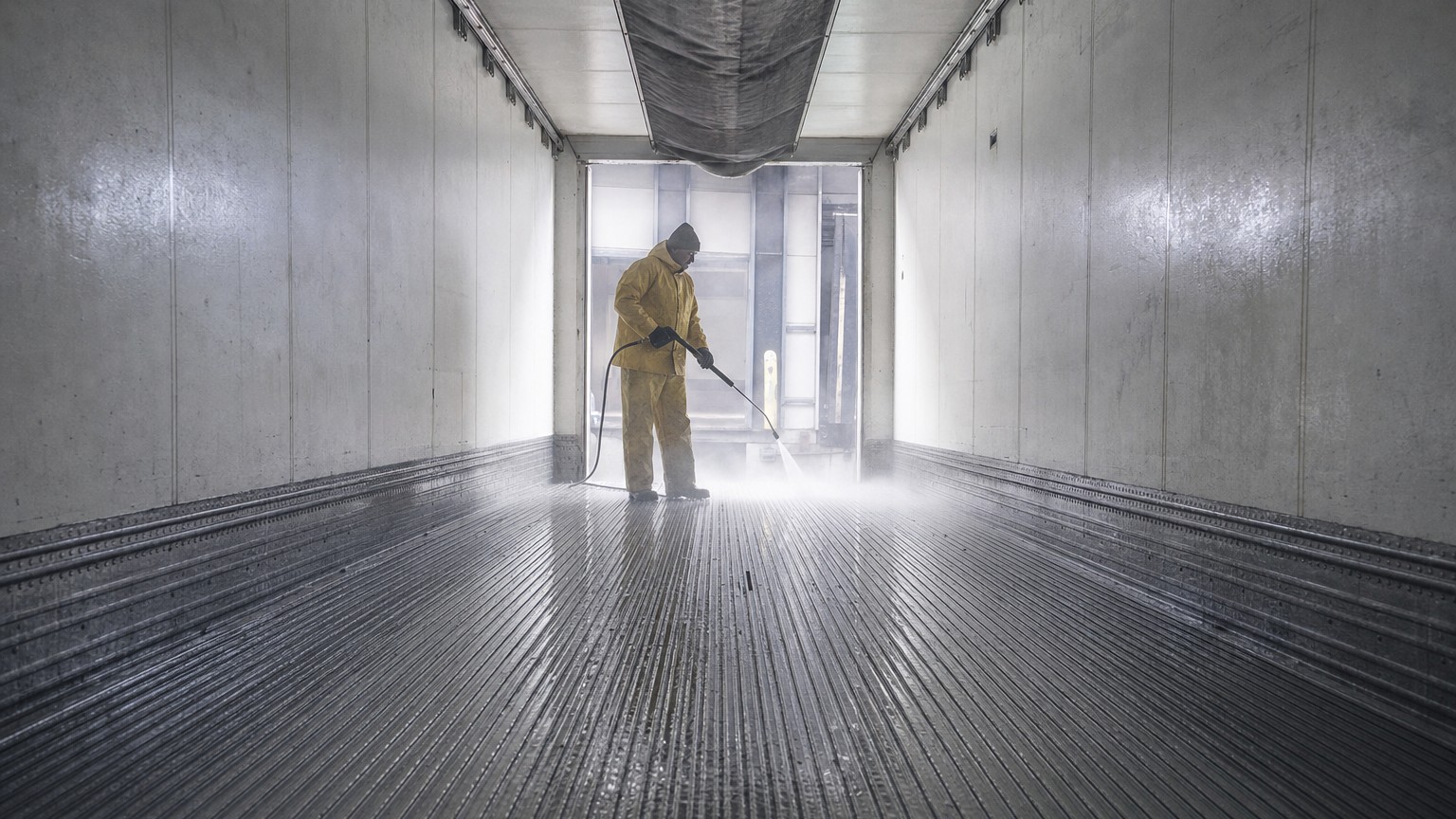
Trailer washouts are done at truck washes along the interstates and at some truck stops, and a basic one rinses the interior and pushes debris out the back. Many add a sanitizer or steam package. Ask the price first. A wash won't fix a torn chute, a cracked wall or a broken drain. A box that still smells after one wash may need a second, or a different trailer, and that's a call to make with dispatch.
The receipt is your evidence. Check that it shows the date and time, the wash location, the trailer number and the type of wash. Ask whether the shipper wants the original at check-in or a photo will do. Keep a copy with the load paperwork, and send a picture to dispatch before you leave the wash. Where it fits with the BOL and the rest of the file is covered in trucking paperwork, BOL and POD.
Dry the floor before you pre-cool for a frozen load
Water freezes at 32°F (0°C). If the next load ships at 0°F (−18°C) and the floor is still wet, pre-cooling turns puddles into ice on the floor and in the drains. Ice under a pallet jack is a fall waiting to happen for whoever unloads.
If the lot allows it, leave the doors open for a while, sweep standing water out the back and give the box time to dry before you pre-cool to a frozen setpoint. Many reefer floors have rubber drain valves, often called kazoos, that let water out and keep it from coming back in. A kazoo packed with debris or frozen shut traps water in the box. Check them after the wash, and follow your carrier's procedure or the shipper's instructions on drains.
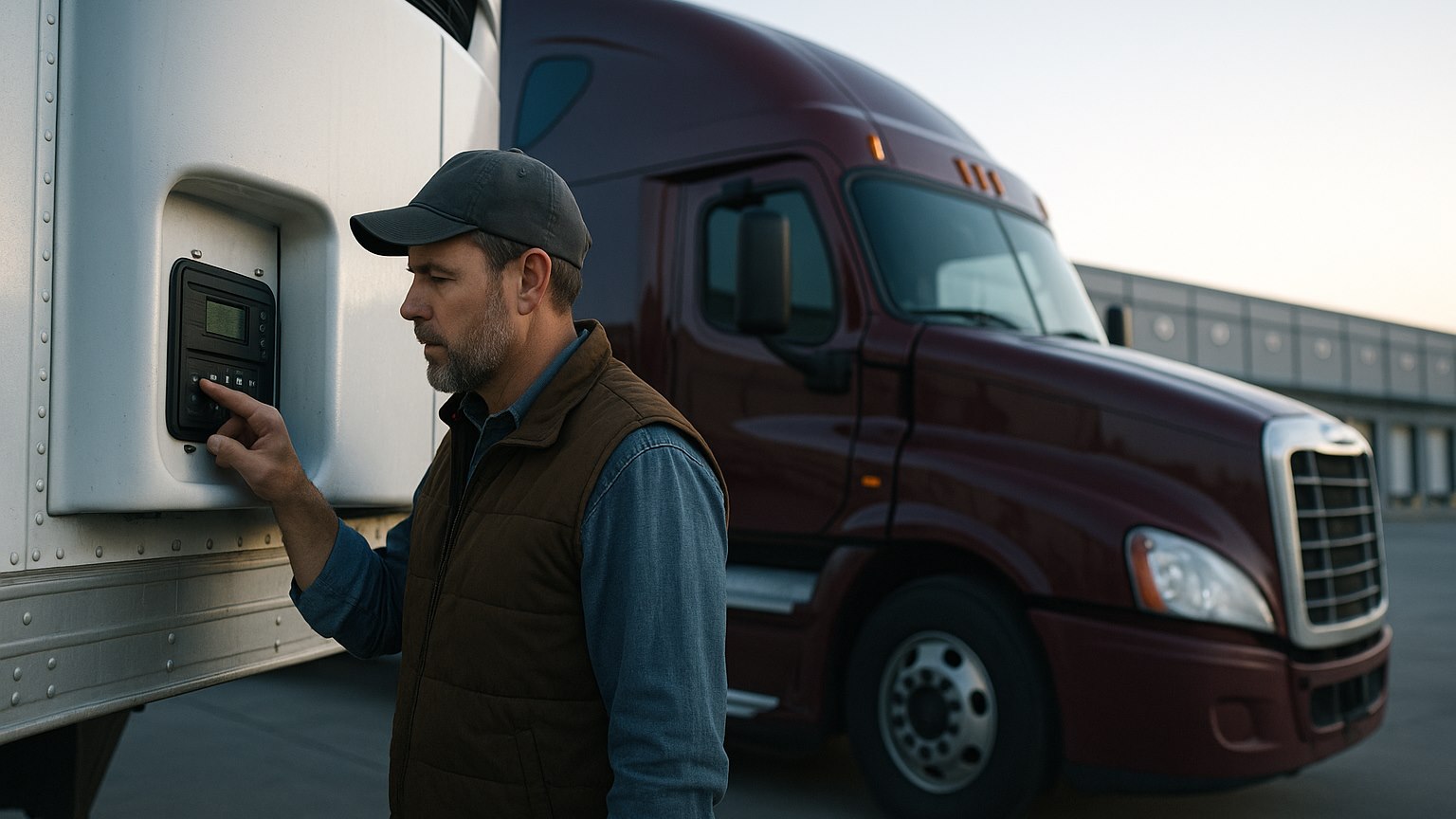
Then pre-cool. Section 1.908(e)(3) says the carrier must pre-cool each refrigerated compartment as the shipper specifies before offering the trailer for temperature-controlled food. The box is ready when the walls and floor are cold, not when the display first shows the setpoint. Mode, pre-cool time and defrost are explained in how to run a reefer unit.
Photos of the empty box belong in the same file as the BOL
Take four pictures before loading. Shoot the clean box from the doors, the floor grooves at the nose, the reefer display with setpoint and box temperature, and the washout receipt. Phone photos carry a time stamp. If a receiver claims an odor or a stain three days later, you can show what the trailer looked like when the shipper loaded it.
A rejected trailer costs hours all the way to the receiver
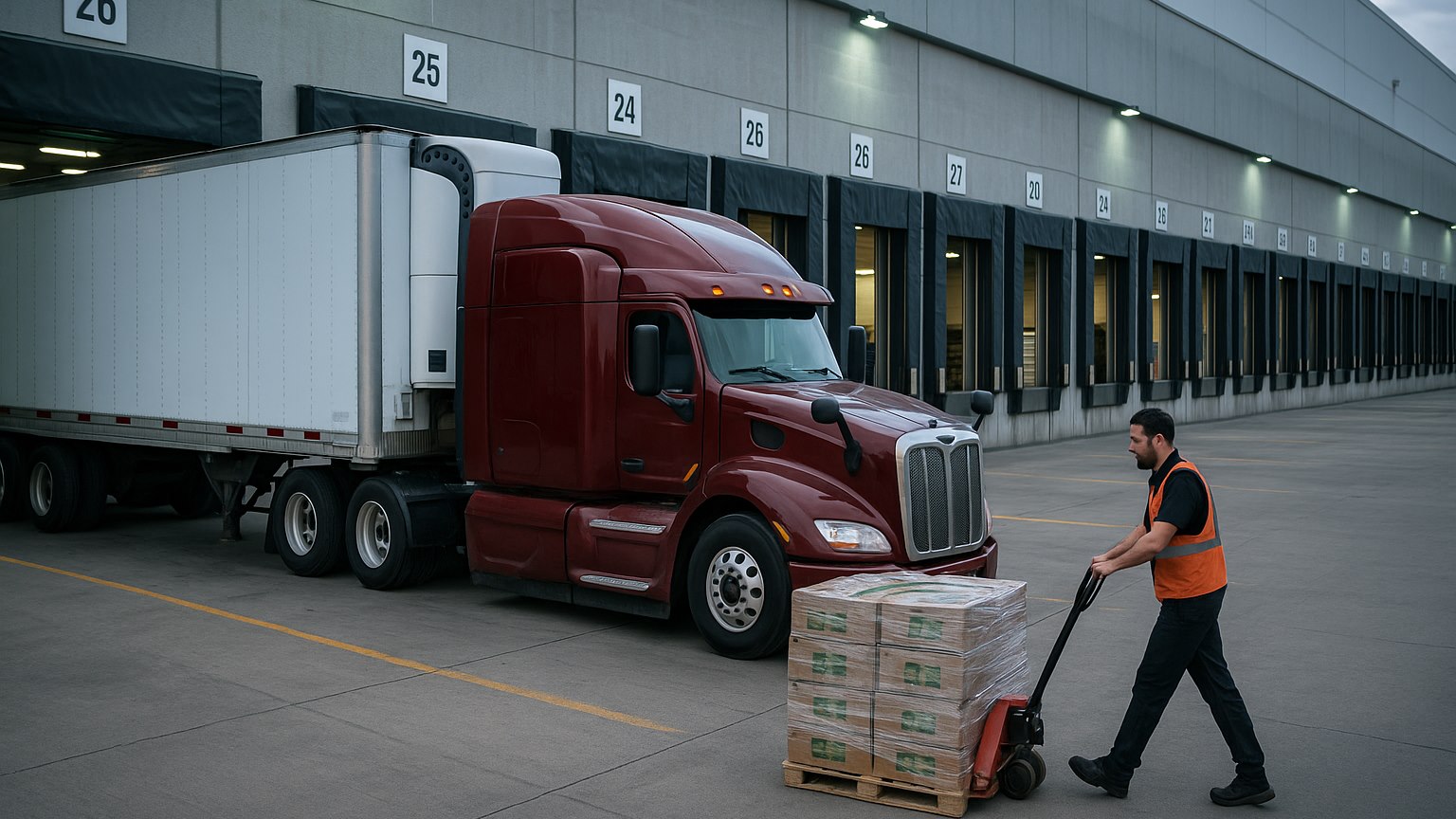
The wash itself takes part of a morning. The bigger cost is the appointment. A shipper that live-loads works you in when a door frees up, and that can be hours on a busy day. Why live loads and drop-and-hook play out so differently is in live load vs drop and hook. A late pickup at a produce shed often becomes a late delivery at a grocery DC with its own tight window, as described in grocery warehouse deliveries.
Trailer sanitation is one of the jobs that separates reefer work from a dry van, where a sweep usually does it, and the rest of that comparison is in reefer vs dry van. If clean-box checks at every pickup sound like a hassle, that's a fair read of the work, and a minus to weigh before you choose reefer.
At ASTEL the freight is reefer year-round, and drivers check load temperature and the unit 2–3 times a day. Dispatch is on the line 24/7, so at 2 a.m. there's someone to call when the trailer gets rejected and the wash, the new slot and the receiver all need sorting out at once.
Frequently asked questions
Does the FDA require a reefer washout after every load?
No. 21 CFR Part 1, Subpart O doesn't set a wash schedule. It requires trailers kept in sanitary condition, written sanitary specs from the shipper and written cleaning procedures from a carrier that has agreed to be responsible. You wash when the shipper's specs, your carrier's procedures or the condition of the box call for it.
Can a shipper refuse to load my trailer because it smells?
Yes. Under 1.908(c) the loader must confirm before loading that the trailer is in sanitary condition. For produce in open or vented cartons, that includes no previous cargo that could make the food unsafe, and the shipper's own written specs can be stricter. Receivers check temperature-controlled food for off-odors under 1.908(d). Tell dispatch, get the box washed and come back with the receipt.
Do I need a washout after hauling frozen chicken?
Before produce or any other ready-to-eat food it's usually the safe call, and if a case leaked, plan on it. CDC says raw chicken can carry Salmonella, Campylobacter or Clostridium perfringens. The shipper's written specs and your carrier's procedures have the final word.
What should a trailer washout receipt show?
The date and time, the wash location, the trailer number and the type of wash, such as water rinse or sanitizer. Keep a copy with the load paperwork and send a photo to dispatch before you leave the wash.
Does the trailer floor have to be dry before pre-cooling?
For a frozen load, get it as dry as you can. Water freezes at 32°F (0°C), so a wet floor pre-cooled to 0°F (−18°C) turns into ice on the floor and in the drains. Follow your carrier's instructions on the floor drains.
Haul reefer freight year-round with dispatch on the line 24/7
ASTEL is a family-owned carrier out of Chicago running refrigerated freight year-round on late-model Volvo trucks, with our own repair shop and mechanics, 24/7 dispatch and a direct line to the owner. Drivers earn $90,000–$110,000 a year — $2,400–2,700+ a week gross, a flat $0.80 per mile for drivers with 1+ year of experience, all miles paid ZIP-to-ZIP, weekly pay, plus $50/$200/$500 bonuses for clean DOT inspections.
Apply in 2 minutes →Sources: 21 CFR Part 1, Subpart O, sections 1.900–1.912, Sanitary Transportation of Human and Animal Food (eCFR, current as of October 21, 2026); final rule, 81 FR 20092 (April 6, 2016; regulatory text at 81 FR 20166); FDA, FSMA Final Rule on Sanitary Transportation of Human and Animal Food (compliance dates and small-business definition); Federal Food, Drug, and Cosmetic Act section 402(a)(4) and 402(i), 21 U.S.C. 342; Phil Tocco, Michigan State University Extension, Evaluating refrigerated trucks to minimize foodborne illness risks (September 2012); trailer manufacturer service bulletin on reefer floor drain valves (2019); J.J. Keller, Additional inspection steps for a refrigerated trailer (March 20, 2024); CDC, Chicken and Food Poisoning (updated April 29, 2024). Current as of October 2026; federal rules, shipper requirements and wash services may change. Temperature-check and dispatch details describe ASTEL driver terms. General information, not legal advice.