

Truck Tire Blowout at Highway Speed and the First Minute After the Bang
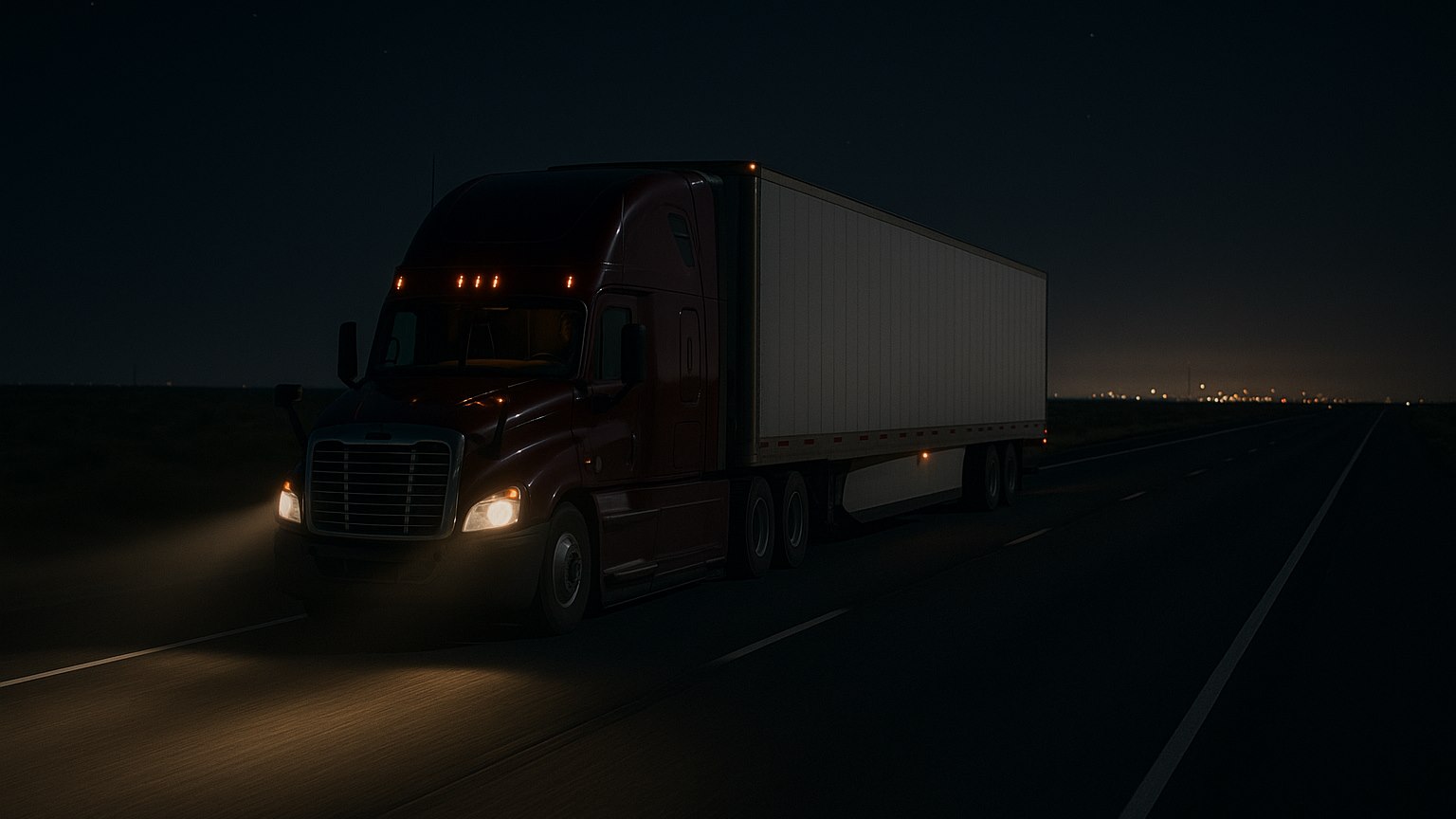
"What do I do if a tire blows on my semi at highway speed?" New drivers ask it in the first week, and the answer is short. In a truck tire blowout you grip the wheel with both hands, stay off the brake while the truck slows on its own, then brake gently and steer onto the shoulder. That's the order printed in state CDL manuals, which explain the middle step plainly: braking when a tire has failed could cause loss of control.
The hard part is your right foot. Every habit you built in a car says brake, and on an 80,000-pound rig with a dead steer tire that habit is exactly what the manual warns against. The wheel pulls. The cab shakes. For two or three seconds you won't even be sure the bang was yours, so keep your hands at nine and three and let the speed come down.
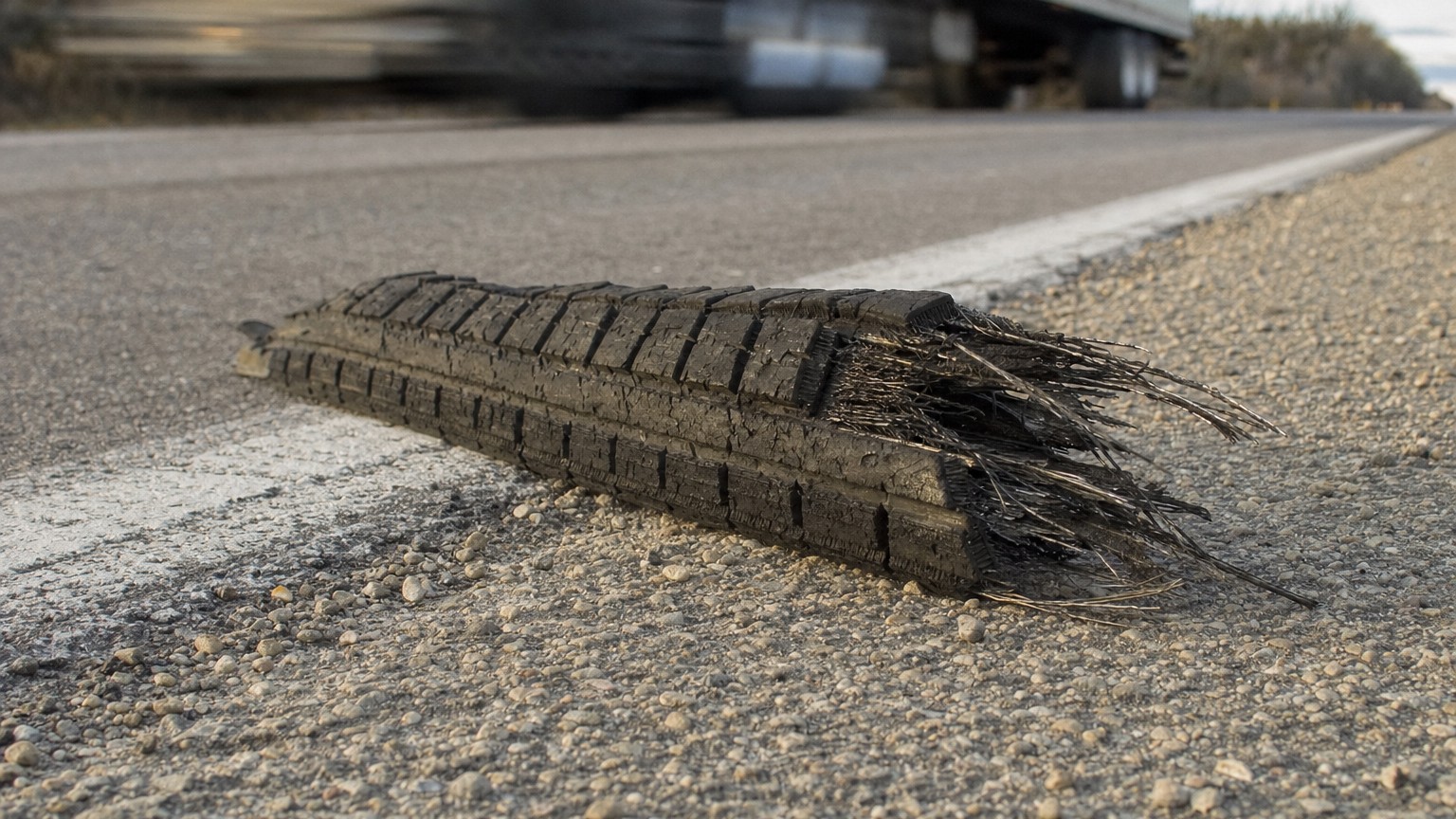
Most blowouts end on the shoulder with a shredded tire and a call to road service. What's left of the tire becomes the next driver's hazard. The AAA Foundation for Traffic Safety, in a study published in November 2025, put road debris behind about 53,000 crashes and 72 deaths a year in 2018–2023, and tires are among the vehicle parts most often found in that debris.
Sound, shake or a heavy wheel tells you which tire went
State CDL manuals follow a national model, and Georgia's Commercial Driver's Manual, section 2.17.4, is a typical text. It lists three signs of tire failure. The first is sound. Since the truck can take a few seconds to react, you may think the bang came from another vehicle, so the manual says to assume any tire you hear blow is yours.
The second sign is vibration, and with a rear tire it may be the only warning you get. The third is feel. A steering wheel that suddenly turns heavy usually means a front tire failed.
A steer tire fights you for the wheel
The steer axle has one tire per side. When one goes there's no partner to share the load, and the manual warns that the wheel can be twisted out of your hand, which is why it wants both hands on the wheel at all times. Hold your lane. A lane change at 65 mph on a dead steer tire is how trucks end up in the median.
A drive or trailer tire can fool you
A tandem tractor runs eight drive tires in duals. Losing one usually means a thump through the seat, and the partner tire keeps the truck tracking straight. That's the trap. A trailer tire sits even farther back and may show up only as a puff of rubber in the mirror or a car flashing its lights. The Georgia manual says that if one of your duals goes, the only way you may know is by getting out and looking.
Flashers go on at once and triangles within 10 minutes
Once you're stopped, 49 CFR 392.22 runs the clock. The hazard flashers go on immediately and stay on until the three reflective triangles are out, which has to happen within 10 minutes.
On an interstate or any divided highway, all three go behind you toward approaching traffic: one within 10 feet of the rear on the traffic side, one at 100 feet and one at 200 feet. On a two-lane road it's 10 feet and 100 feet behind, plus one 100 feet ahead. Stopped within 500 feet of a curve or a hill crest? The triangle on that side goes 100–500 feet out. The full roadside routine is in our truck breakdown plan.
The manual adds one habit worth keeping: carry the triangles between yourself and oncoming traffic, so drivers see the red before they see you.
Then call dispatch. Give the mile marker or the last exit, your direction of travel and the tire by position, like left steer or trailer front axle inside. A tread coming apart at speed can tear up a fender, an air line or wiring, so look before you say the rest of the truck is fine. Photos help road service bring the right size on the first trip.
At ASTEL dispatch answers 24/7, and the company has its own mechanics and a replacement truck when a breakdown takes yours off the road. If the blowout ended in contact with a car or a guardrail, follow the steps in what to do after a semi-truck accident.
Three moves that turn a blown tire into something worse
- Changing a truck tire yourself on an interstate shoulder. Road service brings the jack and a crew that works beside traffic every day. Your job is the triangles and standing well away from the lanes.
- Driving on the rim. Under 49 CFR 393.75(a) no vehicle may run on a tire that is flat or has an audible leak.
- Nursing a flat dual to the truck stop. Rule 396.7(b) lets an unsafe vehicle keep going only to the nearest place where repairs can safely be done, and only if that's less hazardous than staying put. The next safe exit can pass that test. A truck stop 40 miles away usually won't.
The flat dual is the dangerous one, because it doesn't feel dangerous. A tire engineer quoted by Transport Topics in 2012 pointed out that when one tire in a dual fails, the other is overloaded, and both usually get replaced. An overloaded tire flexes and heats up. Under the hazmat rule, 49 CFR 397.17, a driver who finds an overheated tire must have it removed and placed at a safe distance from the vehicle. A trailer of lettuce isn't covered by Part 397, but the rubber heats up just the same.
Most blowouts start days earlier with low air, overload or a road hazard
The main federal study of failed truck tires is NHTSA's Commercial Medium Tire Debris Study, dated December 2008. In the summer of 2007 a contractor collected tire fragments and discarded casings at five interstate locations around the country. Road hazards came out as the most common cause of failure, ahead of maintenance and operating problems. Third came what the report calls over-deflection, which means running a tire with too little air for the load.
Low air and heat are one problem. A soft tire flexes more on every turn of the wheel, the flexing makes heat, and heat weakens the casing until the tread lets go. Kevin Rohlwing of the Tire Industry Association told Transport Topics in 2012 that studies by ATA's Technology & Maintenance Council tied about 90 percent of failures to underinflation, overloading or both.
Overloading is the cause drivers notice last. Under 49 CFR 393.75(g), no tire may carry more weight than the load marked on its sidewall, and 393.75(i) bars running below the cold pressure specified for that load. A grocery load that's legal on gross can still be heavy on one axle. How axle limits work is in weigh stations and axle weights.
Gators on the interstate are rarely a retread problem
Drivers call the strips of tread lying along the shoulder alligators, and an old theory blamed cheap retreads. The NHTSA study didn't back it up. The share of retreads in the debris was similar to their share of tires in service, with no evidence that retread fragments were over-represented.
A gator is still a hazard. In the 2025 AAA Foundation study, crashes where a driver swerved or braked hard to avoid debris tended to be worse than crashes where the vehicle simply hit it, and AAA said such evasive moves contributed to nearly half of the deaths. Keep enough following distance to slow down or straddle a gator, and leave more room after dark, when black rubber on black asphalt is hard to see. More in our night driving tips for truck drivers.
A gauge on a cold tire is the only pressure check that counts
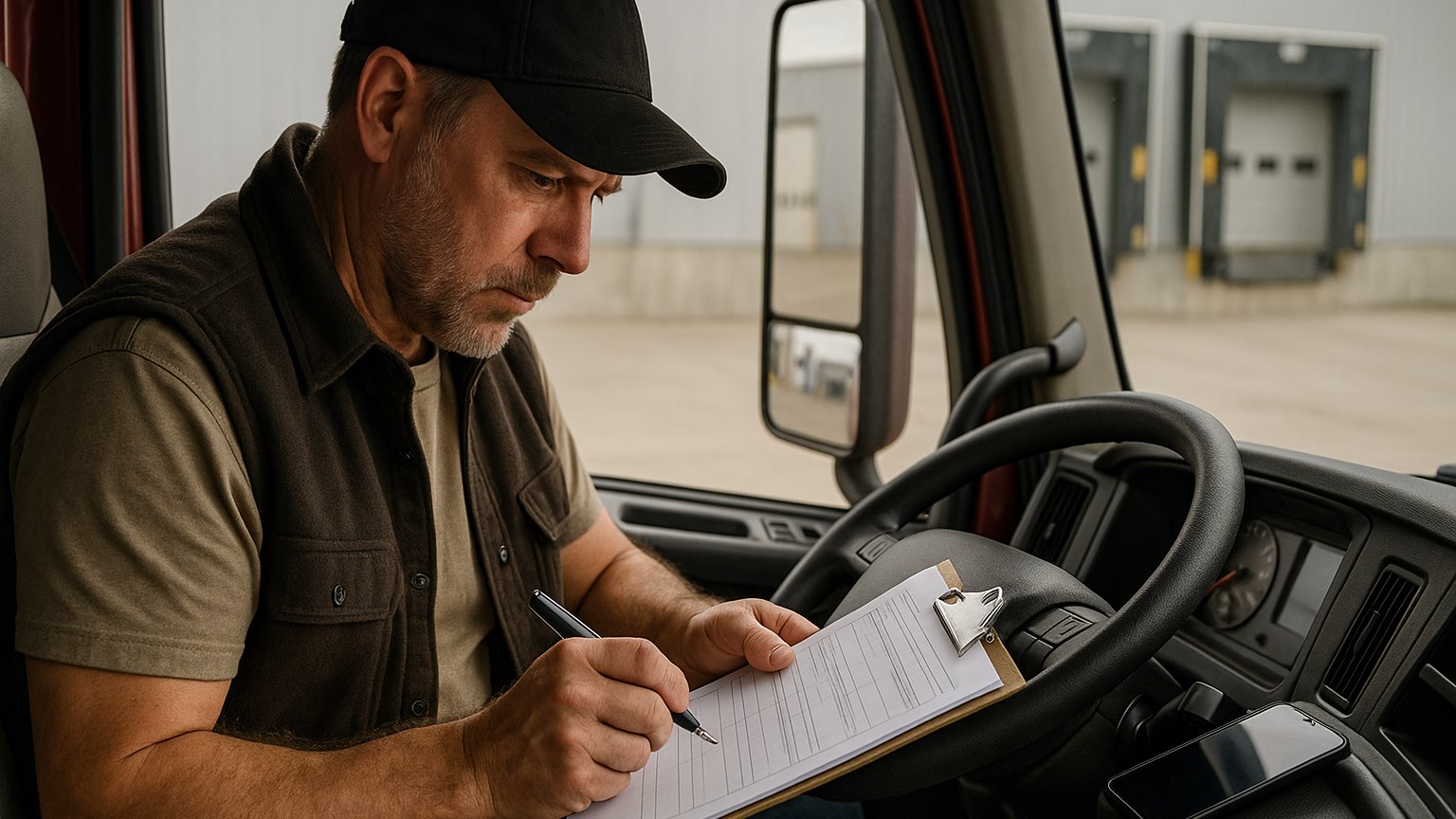
Under 49 CFR 392.7 you can't drive until you're satisfied the tires, wheels and rims are in good working order. A thumper tells you a tire is flat or close to it. It won't tell you that a steer tire set for 110 psi is sitting at 90. In a June 2024 FleetOwner column, Rohlwing told drivers to use an air gauge instead of a thumper or the "boot-o-meter."
Check before the truck rolls, because hot tires read high. The federal rule's own correction table assumes a heavy truck tire builds at least 15 psi above its cold pressure after an hour at 41–55 mph. So a tire reading 100 psi after a long run may be closer to 85 cold, and bleeding a hot tire down to the cold spec leaves it low once it cools.
Tread gets measured in a major groove, not on the tie bars, under 393.75(b) and (c): at least 4/32 of an inch on steer tires and 2/32 on the rest. While you're down there, look for what 393.75(a) bans outright, from ply or belt showing through the rubber to a tread or sidewall separation.
The CDL manual's inspection list adds the dual checks. The two tires shouldn't touch each other or any part of the truck, sizes shouldn't be mismatched, radial and bias-ply tires shouldn't be mixed, and valve stems shouldn't be cut or cracked. Look between the duals while you're there. A rock wedged in that gap takes ten seconds to pull out at a fuel stop. The full order is in our pre-trip inspection checklist.
Retreads on the steer axle come up a lot. The federal rule bans recapped or retreaded front tires only on buses, under 393.75(d). For trucks and tractors, 393.75(e) bans regrooved front tires with a load capacity of 4,920 pounds or more. A retreaded steer tire on a tractor is legal federally, though your carrier's tire policy can be stricter.
| What you see or feel | What it can mean | What to do |
|---|---|---|
| Bulge on the sidewall | The casing is separating inside | Don't drive on it; call dispatch for road service |
| Cord or steel belt showing | Ply or belt exposed, banned by 393.75(a) | Replace it before the truck moves |
| Low reading on the gauge | Underinflation and the start of heat buildup | Air up cold to the spec for the load and look for a nail or a bad valve |
| One dual lower than its partner | The fuller tire carries more load and runs hotter | Match the pressures and find the leak |
| Wear on one shoulder or cupping | Alignment or suspension trouble, or long running at low pressure | Write it on the DVIR and get a shop to look |
| New vibration or thump at speed | Tread separating, a flat dual or a wheel problem | Stop at the next safe spot and walk around |
| Hot rubber smell or smoke at a wheel | An overheated tire or a dragging brake | Stop and stay clear; call 911 if you see flames |
The manual's trip-inspection section puts tires on the list for every stop and says that if you see, hear, smell or feel anything that might mean trouble, check it out. A low tire also burns fuel long before it fails, as covered in fuel-efficient truck driving.
Summer heat finds weak tires faster and winter cold drains pressure
In the same 2012 Transport Topics piece, Rohlwing estimated that an underinflated tire might take weeks to fail in winter and only days in summer. Hot pavement adds heat to a tire that's already making too much of its own. Say you're crossing Arizona on a 105°F (41°C) afternoon with a drive tire 20 psi low. That tire is running out of time.
Winter works the other way, because pressure drops as the air cools. Tire makers' rule of thumb is 1–2 psi for every 10°F. A tire aired up in a 70°F (21°C) shop and parked overnight at 0°F (−18°C) can lose somewhere between 7 and 14 psi by that rule, with no leak at all. Put the gauge on every tire after the first hard freeze. The rest of the cold-weather list is in winter driving for truck drivers.
Tires were the second-biggest out-of-service item at Roadcheck two years running
CVSA's International Roadcheck ran May 12–14, 2026. Inspectors in Canada, Mexico and the US did 54,575 inspections and found 13,924 vehicle out-of-service violations. Tires accounted for 2,914 of them. Only brake systems produced more. In 2025, when tires were one of the event's two focus areas, the count was 2,899, or 21.4 percent of vehicle out-of-service violations.
At ASTEL a clean inspection pays: a $500 bonus for a clean Level I, $200 for Level II and $50 for Level III. Level I and Level II both include a walk-around of the vehicle, so the morning gauge check is part of that money. What each level covers is in our guide to DOT roadside inspections.
Frequently asked questions
Can I drive on a blown trailer tire to the next exit?
Only to the nearest place where the repair can be done safely, and only if moving is less hazardous than staying put, under 49 CFR 396.7(b). The next safe exit can meet that test. A truck stop an hour away usually doesn't, because the partner tire now carries the load of two and heats up. If the wheel is smoking or the truck won't track straight, stay where you are and call dispatch.
Are retread tires legal on the steer axle of a semi?
Under the federal rule, yes on a truck or truck tractor. 49 CFR 393.75 bans recapped or retreaded front tires on buses, and regrooved front tires with a load capacity of 4,920 pounds or more on trucks and tractors. Your carrier's tire policy can be stricter.
What causes most semi truck tire blowouts?
NHTSA's truck tire debris study, dated December 2008, found road hazards were the most common cause, followed by maintenance and operating problems and running a tire with too little air for the load. Tire industry trainers put underinflation and overloading behind most failures. Retreads were not over-represented in the debris.
How often should I check my truck's tire pressure?
With a gauge at every pre-trip on cold tires, and with a look at every stop during the trip. 49 CFR 392.7 requires you to be satisfied the tires are in good working order before you drive. Hot tires read high, by at least 15 psi on heavy truck tires after an hour at 41–55 mph.
Own mechanics, a replacement truck after a breakdown and dispatch on the line 24/7
ASTEL is a family-owned carrier out of Chicago running refrigerated freight year-round on late-model Volvo trucks, with our own repair shop and mechanics, 24/7 dispatch and a direct line to the owner. Drivers earn $90,000–$110,000 a year — $2,400–2,700+ a week gross, a flat $0.80 per mile for drivers with 1+ year of experience, all miles paid ZIP-to-ZIP, weekly pay, plus $50/$200/$500 bonuses for clean DOT inspections.
Apply in 2 minutes →Sources: 49 CFR 392.7, 392.22, 393.75, 396.7 and 397.17 (eCFR, October 2026); Georgia Department of Driver Services, Commercial Driver's Manual, sections 2.1 and 2.17.4; NHTSA, Commercial Medium Tire Debris Study (December 2008), as reported by Modern Tire Dealer (January 2009) and FleetOwner (September 2014); Transport Topics, "Underinflation Seen as Main Cause of 'Road Gators'" (November 21, 2012); AAA Foundation for Traffic Safety, "The Safety Impact of Road Debris," 2018–2023 (November 2025), and AAA release of January 6, 2026; CVSA International Roadcheck results for 2025 (cvsa.org) and 2026 (FleetOwner, August 26, 2026; J.J. Keller, September 10, 2026); Kevin Rohlwing, FleetOwner (June 17, 2024); tire maker winter guidance as reported by Trucknews (December 2006). The winter pressure range is a rule of thumb, not a measurement. Current as of October 2026; federal rules and carrier procedures may change. General information, not legal advice.