

Trucking Company Bankruptcy and What a Driver Does in the First 24 Hours
You're 900 miles from home with a loaded reefer when dispatch sends two words: park it. That is how a trucking company bankruptcy usually reaches a driver. This fall it reaches more of them. FreightWaves counted at least 16 carriers and other transportation companies that went into bankruptcy court between late August and September 21, 2026. That same Monday the EIA weekly diesel average set a record at $6.529 a gallon, and on September 28 it was still $6.382. What you do in the first 24 hours decides how much of your last pay you see and whether a load you don't own turns into your problem.
Your first 24 hours after the company goes dark
- Get it in writing. Reply to the message and ask three things: where to park, what to do with the loaded trailer, and who your contact is now. If the answer comes by phone, text a summary right after the call: "Per our call at 4:10 p.m., you told me to park at this truck stop and leave the trailer sealed."
- Look after the load, but leave the decisions to the carrier. The freight belongs to the carrier's customer, and what happens to it is up to the carrier, or to a trustee if the court appoints one. On a normal ASTEL run a driver checks the load temperature and the reefer 2–3 times a day. In a shutdown, check more often and photograph every reading with the set temperature visible.
- Photograph everything with timestamps: the seal and its number, the reefer display, the fuel gauge, the odometer, each page of the BOL, and the truck inside and out. Photos settle arguments about damage and missing fuel months later.
- Don't walk away, and don't hold the truck hostage. Leave only after a written handoff that says where the truck is parked, where the keys are, and the trailer and seal numbers. If nobody answers, the message you sent is your handoff. After a filing the truck belongs to the bankruptcy estate, often with a lender's lien on it, and 11 U.S.C. § 362(a)(3) bars acts to take control of estate property. Before you do anything with the truck beyond parking it where you were told, talk to a bankruptcy attorney.
- Download your records tonight. Driver apps and portals can be the first thing shut off. Save settlements for at least the last six months, since that is the 180-day window for the priority claim. Also save pay stubs, trip sheets, texts with dispatch and receipts for fuel, lumpers or scales you paid yourself.
- Plan the ride home around your own money. Ask the company in writing for a bus or plane ticket. If nobody answers, pay for it, keep every receipt and list the cost in your claim. Take everything personal out of the cab before you go.
Brokers and receivers will call you looking for their freight. Tell them where it sits, send them the same written handoff and point them to whoever at the company still answers the phone. Don't make a side deal to deliver it for a new rate. You drive under the carrier's operating authority.
Your logs are yours to ask for. Under 49 CFR 395.36 the carrier has to give you copies of your own ELD records for as long as § 395.8(k) makes it keep them, which is six months. Ask in writing.
The fuel card problem isn't new. Celadon filed Chapter 11 in December 2019 and shut down, and its fuel cards were cut off over the weekend before the filing. Reports at the time put its driver count at 2,500–3,000, many of them mid-route, and other carriers and truck stops ended up helping stranded drivers get home. Carry enough on your own card for one fill-up and a ticket home.
Chapter 11 tries to keep trucks running, Chapter 7 sells them
Chapter 11 is reorganization. The company usually keeps running as a "debtor in possession," keeps dispatching trucks and tries to cut its debts under a plan the court approves. Xoco Transport, a Hidalgo, Texas, produce hauler with more than 40 tractors and about 70 trailers, filed on September 16, 2026, and told Trucking Dive it was still operating. Chapter 11 is no promise of a job, though. Celadon filed under it too and closed anyway.
Chapter 7 is liquidation. A trustee takes over, the trucks and trailers are sold, and the money goes out in the order the Bankruptcy Code sets. Most of the Chapter 7 cases on the FreightWaves list were small fleets of one to six trucks.
Some companies never file at all. The phones stop, the lender repossesses the trucks, and no court is involved. Then the route for unpaid pay is a wage claim with your state labor department or a lawsuit, and an employment attorney can tell you which fits.
Unpaid wages get priority, up to a cap
Pay you earned in the 180 days before the filing, or before the business stopped if that came first, is a priority claim under 11 U.S.C. § 507(a)(4). The cap is $17,150 per person. That figure applies to cases filed on or after April 1, 2025, and it covers wages and commissions as well as vacation, severance and sick pay. Anything above the cap or older than 180 days becomes a general unsecured claim, paid only if money is left after the priority claims.
Priority is a place in line. Secured lenders, such as equipment lenders and factoring companies, get paid from their collateral first, and the costs of running the case come ahead of you. In a small Chapter 7 case, the money can run out before the line reaches the drivers.
Chapter 11 is friendlier to drivers. The company often files a first-day motion asking the judge to let it pay wages owed from before the filing, up to the cap. Work you do after a Chapter 11 filing is an administrative expense of the case under 11 U.S.C. § 503(b), and those costs get paid ahead of the old debts.
The claim goes on Official Form 410
Official Form 410, the proof of claim, is filed with the clerk of the bankruptcy court that has the case. Many courts take it online. No lawyer is required. Attach your settlements, pay stubs and trip sheets. The case number and the court are on the notice of bankruptcy; Globemaster of Bolingbrook, Illinois, for example, filed its Chapter 11 on September 15 in the Northern District of Illinois.
Deadlines differ by chapter. In Chapter 7 the deadline is 70 days after the filing under Bankruptcy Rule 3002(c). Many Chapter 7 notices, though, say not to file yet because there may be no money to pay, and if assets turn up, the court sends a new deadline. In Chapter 11 the court sets a deadline called the bar date. Miss it, and the claim can be lost. If the notice confuses you, the clerk's office can confirm the date, and a bankruptcy attorney can tell you what to claim.
The federal WARN Act requires 60 days' notice before a plant closing or mass layoff. It covers only employers with 100 or more employees and events that hit 50 or more workers at one site. Some states set the bar lower; Illinois starts at 75 employees. Globemaster runs 51 power units and the Chapter 7 fleets on the list were far smaller, so for most of their drivers WARN won't apply.
Seven situations and the move for each
| Situation | Risk | What to do |
|---|---|---|
| Dispatch says park it, load on board | Load spoils or goes missing, and you get blamed | Written instruction, reefer running, photos, written handoff |
| Fuel card declined on the road | Stranded with a loaded trailer | Tell dispatch in writing, spend your own money only on essentials, keep receipts |
| Company filed Chapter 11 and still dispatches | Old pay stuck while new work continues | Keep checking each settlement; work after the filing is paid ahead of old debts |
| Company filed Chapter 7 | Last settlement unpaid | Proof of claim on Form 410 with settlements attached |
| Company closed without filing | No court, no trustee | Wage claim with your state labor department or an attorney |
| You're a lease operator with escrow | Escrow held by a carrier with no cash | Written demand for an escrow accounting, then a claim for the balance |
| Next carrier can't reach your old one | Gap in your safety history check | Your own copies of settlements and dates of employment |
Lease operators have a 45-day rule on escrow
If you lease your truck on to the carrier, the escrow it holds is your money, minus only what the lease allows. Under 49 CFR 376.12(k) you can demand an accounting at any time, and the escrow has to come back no later than 45 days after the lease ends. Send the demand in writing the day the carrier stops dispatching you. A carrier in bankruptcy may not have the cash. Then the unpaid balance goes into your claim, and whether any of it gets priority is a question for a bankruptcy attorney.
A lease purchase through the carrier or its affiliate adds a second problem, because the truck lease is a separate contract with its own default terms. Talk to a bankruptcy attorney before you hand back the keys or stop the payments. How that money picture differs from a company seat is laid out in company driver vs. owner-operator.
Records your next carrier will pull
Your next employer has to ask every DOT-regulated employer you drove for in the past three years about your safety history (49 CFR 391.23). If your old company is gone, the new carrier documents its good-faith attempts within 30 days, and your own settlements help the recruiter confirm your dates of employment.
Pull three reports before you apply. The PSP report from FMCSA costs $10 and shows five years of crashes and three years of roadside inspections. The MVR comes from your state DMV, and the DAC report from HireRight is free once every 12 months under the Fair Credit Reporting Act. Check each one and dispute any error before a recruiter sees it. What each report means is covered in CSA, PSP and MVR explained.
A carrier's shutdown isn't a mark against you
Tell recruiters the plain facts: the company filed, here is the case number, here are your last settlements. Ask how settlements are paid, which miles count and what happens to your pay when a truck breaks down; our list of questions to ask a trucking recruiter covers the rest. The timing, from application to orientation, is in how to switch trucking companies.
Once you're hired, check your first settlement line by line against your trip sheets. How to read a trucking settlement shows where short pay hides.
Signs a carrier is running out of money
- Settlements arrive late, come in short or carry new deductions nobody explains.
- Fuel cards get declined, or you're told to fuel on your own card and wait for reimbursement.
- Repairs get pushed back: worn tires, a check-engine light that stays on, a reefer that "can wait until next week."
- Miles drop fast while trucks sit on the yard.
- Dispatchers and payroll staff quit, and calls go to voicemail.
- An insurance cancellation shows up on the carrier's FMCSA Licensing and Insurance record.
One sign alone proves little. Two or three together, with diesel still near $6.40 at the end of September, mean it's time to save your records and start calling. What that fuel price does to a small fleet's margin is in our piece on diesel prices for truck drivers.
Check the carrier on SAFER before you sign
Every interstate carrier has a USDOT number. Put it into the FMCSA SAFER Company Snapshot and read the page top to bottom. USDOT Status comes first, and OUT-OF-SERVICE or INACTIVE there means stop. The same goes for NOT AUTHORIZED under Operating Authority Status. Then compare the power units and drivers with what the recruiter told you, and look at inspections and out-of-service rates for the last 24 months. Last, open the Licensing and Insurance page and see whether insurance is on file or shows a cancellation date.
ASTEL pays weekly for every mile, loaded and empty
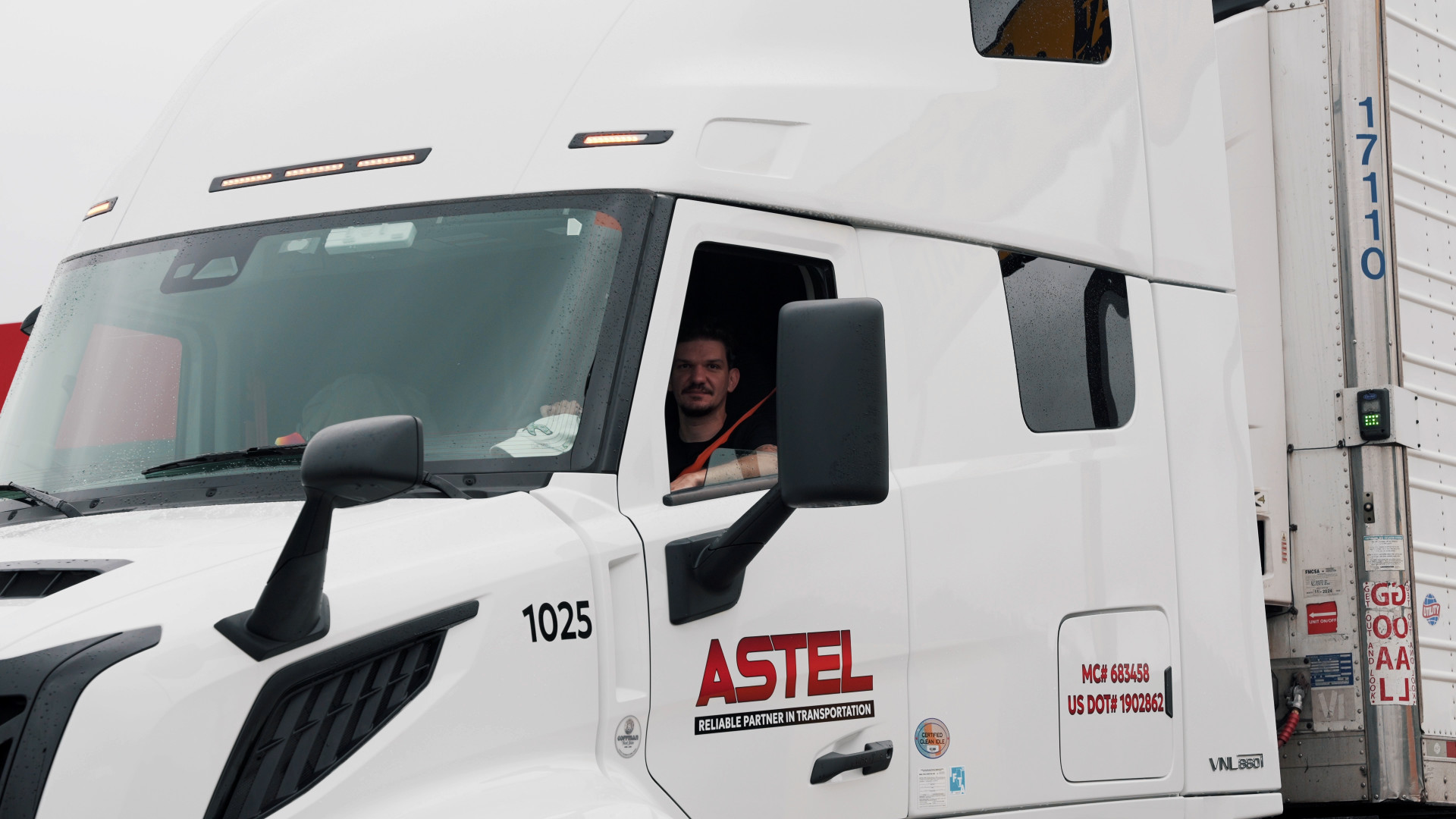
ASTEL is a family-owned reefer carrier with a yard in Chicago. Pay goes out weekly: request it before noon and the money arrives the same day, while a Friday evening request lands on Monday. Every mile of the trip is paid, loaded and empty, counted ZIP-to-ZIP by PC*Miler. The owner is on the yard. Bring a pay question straight there. The rest is on our page for drivers.
Frequently asked questions
What happens to truck drivers when a trucking company goes bankrupt?
In Chapter 11 the company usually keeps operating and paying drivers while it reorganizes. In Chapter 7 a trustee shuts it down and sells the trucks, and drivers lose their jobs. Either way, pay earned in the 180 days before the filing is a priority claim up to $17,150 per person, which moves you up the line but doesn't guarantee payment.
Will I get paid for my last loads if my carrier files for bankruptcy?
Possibly, but rarely right away. Unpaid pay from the 180 days before the filing is a priority claim up to $17,150 under 11 U.S.C. § 507(a)(4), paid after secured lenders and the costs of the case. In Chapter 11 the court often lets the company pay those wages early. File Official Form 410 with your settlements attached.
What should I do with the load if my trucking company shuts down mid-trip?
Get written instructions from the company, keep the reefer running while you have fuel, and photograph the seal, the temperature display and the BOL. Don't abandon the truck or keep it to force payment. Hand it off in writing, with the location, the keys and the seal number.
How do I file a wage claim in a trucking company bankruptcy?
File a proof of claim, Official Form 410, with the bankruptcy court handling the case. Many courts accept it online. In Chapter 7 the deadline is usually 70 days after the filing, and in Chapter 11 the court sets a bar date. If the company closed without filing, go to your state labor department.
How can I tell if a trucking company is about to go under?
Watch for late or short settlements, declined fuel cards, pushed-back repairs and a sudden drop in miles. Before you sign on, look up the USDOT number in the FMCSA SAFER system for operating status, fleet size and out-of-service rates, and check whether insurance is on file.
Weekly pay and a direct line to the owner
ASTEL is a family-owned carrier out of Chicago running refrigerated freight year-round on late-model Volvo trucks, with our own repair shop and mechanics, 24/7 dispatch and a direct line to the owner. Drivers earn $90,000–$110,000 a year — $2,400–2,700+ a week gross, a flat $0.80 per mile for drivers with 1+ year of experience, all miles paid ZIP-to-ZIP, weekly pay, plus $50/$200/$500 bonuses for clean DOT inspections.
Apply in 2 minutes →Sources: FreightWaves, "16 trucking companies hit bankruptcy court in less than a month" (September 22, 2026); Trucking Dive on the Xoco Transport Chapter 11 filing (September 18, 2026); EIA weekly on-highway diesel prices for September 21 and 28, 2026; FMCSA SAFER Company Snapshot; 11 U.S.C. §§ 362, 503(b) and 507(a)(4), with the Judicial Conference dollar adjustment effective April 1, 2025; Federal Rule of Bankruptcy Procedure 3002(c) and Official Form 410; 49 CFR 376.12(k), 391.23, 395.8(k) and 395.36; FMCSA Pre-Employment Screening Program; U.S. Department of Labor WARN Act guidance and the Illinois WARN Act; FreightWaves and Arkansas Democrat-Gazette coverage of the Celadon filing (December 2019). Current as of September 2026; dollar limits, deadlines and fuel prices may change. Pay and mileage figures describe ASTEL driver ranges, not guarantees. General information, not legal or financial advice; talk to a bankruptcy attorney or your state labor department about your own case.