

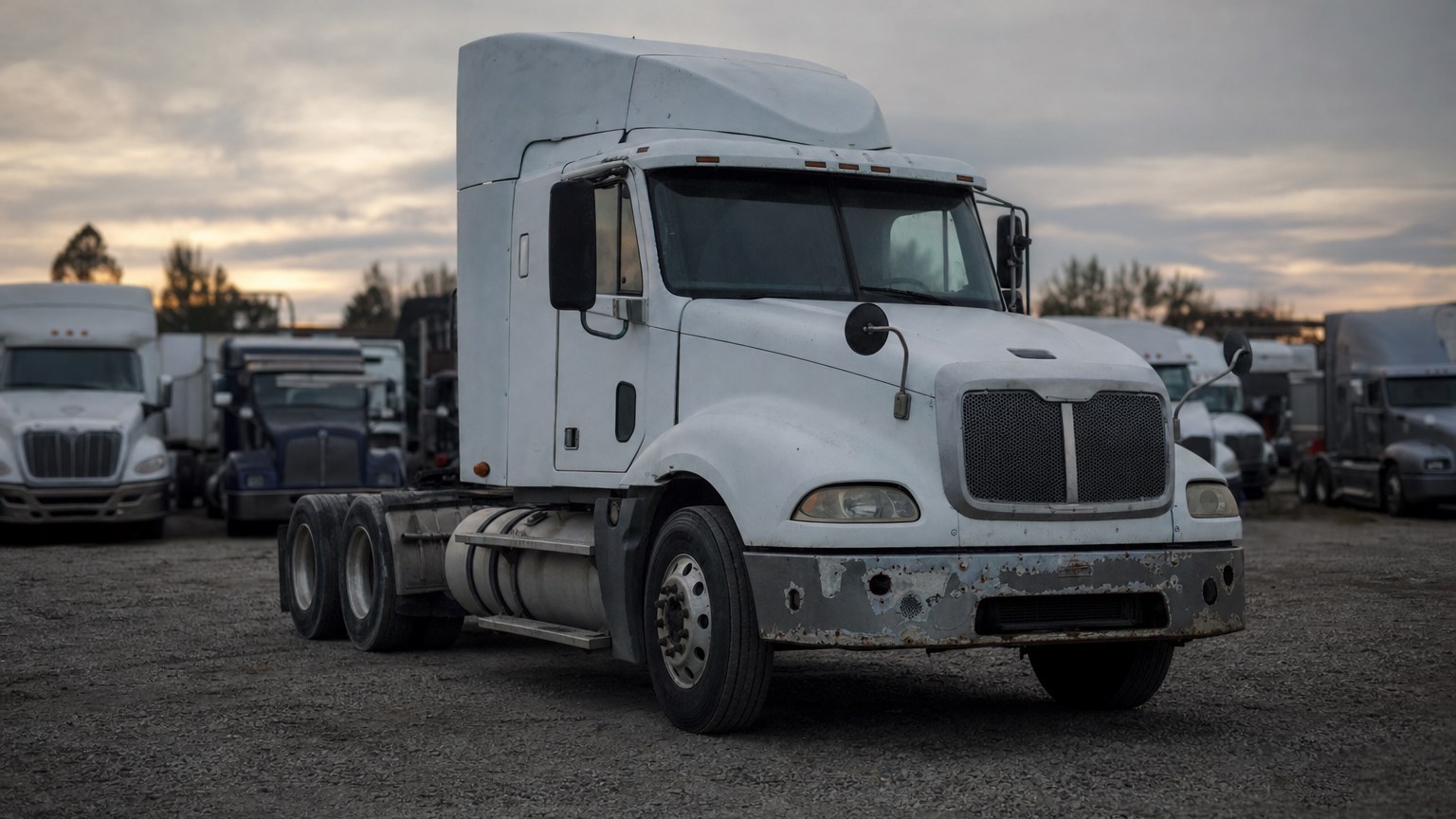
Lease Purchase Trucking and the Real Math Before You Sign for a Truck
Lease purchase trucking is sold as the shortcut to "your own truck": no bank, no credit check, start next week. But in January 2025 a federal Truck Leasing Task Force told Congress that carrier lease-purchase programs should be banned, estimating that 90% or more end in default and fewer than 1 in 100 drivers end up owning the truck. Add diesel at a record $6.53 a gallon (EIA, week of September 21, 2026), and the weekly math is tighter than any recruiter will show you.
Lease purchase trucking is two deals stapled together
The truck lease: the carrier, or a leasing company tied to it, owns the tractor and rents it to you with an option to buy. The operating agreement: you lease that same truck, with yourself as driver, back to the carrier and haul its freight. The same company becomes your landlord, your lender, your dispatcher and your paymaster. Every week runs the same way.
- The carrier credits your revenue: a rate per mile or a percentage of the load, often plus a fuel surcharge.
- It deducts the truck payment, the same amount whether you ran 3,000 miles or sat three days waiting on a load.
- It deducts everything else: fuel on the company card, insurance bought through them, maintenance escrow, plates, ELD and admin fees, advances.
- You get what's left, and taxes and life on the road come out of that.
- At the end of the term, you pay the buyout or balloon and get the title. Leave or default before that, and the truck goes back while the payments stay with the carrier.
Reading those deductions is its own skill; see how to read a trucking settlement.
Lease purchase vs. company driver vs. owner-operator
| Question | Company driver | Lease purchase | Owner-operator (own truck) |
|---|---|---|---|
| Who owns the truck | The carrier | Carrier or its affiliate, until the buyout | You (and your lender) |
| Fuel, repairs, truck insurance | Carrier pays | You pay, through deductions | You pay |
| Slow week | Smaller check, no debt | Less revenue, same truck payment | Less revenue, same loan payment |
| Who picks your loads | Carrier | Usually the carrier that holds your lease | You, or a carrier you choose |
| If you quit | You leave with your last check | Truck goes back, usually no equity | You leave with your truck |
Lease purchase sits in the middle: most of the owner-operator's costs, little of his control. The full comparison is in company driver vs. owner-operator.
What the federal Truck Leasing Task Force found
Congress created the task force in the 2021 Infrastructure Investment and Jobs Act (section 23009) to review the fairness of truck leasing arrangements. Its report went to Congress and the Secretaries of Transportation and Labor in January 2025.
- Ban them. Members unanimously recommended that Congress prohibit lease-purchase agreements offered under the control of motor carriers, calling them "irredeemable tools of fraud and driver oppression."
- Default is the norm. The task force estimated that these agreements end in default 90% or more of the time and that fewer than one in 100 participating drivers end up owning the truck.
- No equity. Drivers make payments and often accrue no equity; some reported owing the carrier money at the end of a pay period.
The Consumer Financial Protection Bureau, a technical adviser to the task force, flagged no comprehensible financial disclosures, broad default provisions, expansive carrier remedies, escrow accounts and personal guarantees. It also flagged how easily a driver can be pushed to give the truck back so it can be leased to the next one.
Why most drivers never reach the buyout
1. The payment is fixed, the miles are not
A company driver's slow week is a smaller check. A lease operator's slow week is a smaller check minus the same payment, plus insurance and fees on top. Two slow weeks, a winter shutdown or a week in the shop, and the settlement goes negative; some contracts carry that balance forward as a debt to the carrier.
2. The company holding your debt also controls your freight
That's the core conflict. The carrier decides which loads you get, how many miles you run and how long you sit, and in some contracts refusing a load is a breach. Check how miles are counted, too: paid on shorter household-goods miles, you run miles nobody pays for (see practical vs. household miles).
3. It's a used truck, and the repair bill is yours
Lease-purchase trucks are frequently used units, some already returned by earlier drivers. When the turbo, injectors or aftertreatment go, the bill hits your escrow first, then your settlement, and the truck payment keeps running while it sits in the shop.
4. Escrow and deductions you can't audit
Escrow, deposits, reserve accounts, advances, admin fees: each is legal if disclosed, but together they eat the margin, and you can't audit what you can't match to a document.
5. Leaving means losing what you paid
Under many contracts, payments work like rent. Quit after 18 months, get terminated or fall behind, and the truck goes back. Some contracts let the carrier end your operating agreement on short notice, which can put you in default on the truck lease the same day.
What a lease purchase week really looks like
Illustrative example, not typical or average figures. Contracts vary widely, so this uses round, stated assumptions: revenue of $2.00 per paid mile including fuel surcharge, a $700 weekly truck payment, $300 a week of insurance, escrow of $0.10 per mile, $100 of other fees, diesel at $6.50 and 6.5 mpg. Swap in your contract's numbers.
| Line | Good week | Slow week | Repair week |
|---|---|---|---|
| Paid miles | 2,500 | 1,800 | 2,000 (2 days in the shop) |
| Revenue credited | $5,000 | $3,600 | $4,000 |
| Fuel | −$2,500 | −$1,800 | −$2,000 |
| Truck payment | −$700 | −$700 | −$700 |
| Insurance | −$300 | −$300 | −$300 |
| Maintenance escrow | −$250 | −$180 | −$200 |
| Other fees | −$100 | −$100 | −$100 |
| Repair beyond escrow | — | — | −$1,800 |
| Left before taxes | $1,150 | $520 | −$1,100 |
In this example the first roughly 1,220 miles of every week go to the payment, with insurance and fees on top of that, before you earn a dollar. One mid-size repair wipes out a good week. Fuel is the biggest line. At the EIA average of $6.53 on September 21, 2026, diesel was $2.78 a gallon higher than a year earlier, or about $1,070 more per 2,500-mile week at 6.5 mpg. How much comes back depends on your contract's fuel surcharge formula: base price, mpg divisor, and whether it's paid on every mile or only loaded ones.
And the $1,150 isn't take-home. Taxes, health insurance and road expenses still come out of it.
What federal law (49 CFR Part 376) requires in your lease
FMCSA's Truth-in-Leasing rules apply when you lease equipment to an authorized carrier. They don't cap your payment, but they give you enforceable rights.
| Rule | What it means for you |
|---|---|
| Written, signed lease (§ 376.11, § 376.12(l)) | Both sides sign; keep your own copy of every page and addendum |
| Pay clearly stated (§ 376.12(d)) | Your rate or percentage is on the face of the lease or an addendum |
| Paid within 15 days (§ 376.12(f)) | Payment is due within 15 days after you submit the required delivery paperwork |
| Rated freight bill (§ 376.12(g)) | Paid a percentage of revenue? You get a copy of the rated freight bill |
| Every chargeback listed (§ 376.12(h)) | Each deduction is spelled out with how it's computed, and you get documents to verify it |
| No forced purchases (§ 376.12(i)) | You can't be required to buy or rent products, equipment or services from the carrier as a condition of the lease |
| Insurance (§ 376.12(j)) | You can get a copy of any policy bought through the carrier; cargo-damage deductions need stated conditions |
| Escrow (§ 376.12(k)) | Amount and allowed uses stated; accounting on settlements or monthly, and on demand; interest at least quarterly; returned no later than 45 days after the lease ends |
One catch. The truck lease itself (the financing side) can be a separate contract with its own default terms. Read both, and look for "cross-default" language tying them together.
Red flags in a lease purchase contract
- No written total cost: all payments plus the balloon, versus what the truck is worth.
- A balloon or buyout that is large, vague or "to be determined."
- A default clause that triggers on any missed payment or when the carrier ends your operating agreement.
- No minimum miles or revenue in writing, while you can't haul for anyone else.
- Forced dispatch: refusing a load counts as a breach.
- An old truck sold "as is," with no warranty or independent inspection.
- Escrow with vague uses, no interest, no return timeline.
- Insurance or services you're required to buy from the carrier.
- A personal guarantee that makes you liable beyond the truck.
- Pressure to sign today, or no copy to take home.
Ask these questions before you sign
- What do all payments plus the buyout add up to, and what are the truck's year, mileage and market value?
- What happens to my payments and escrow if I leave in month 6, 12 or 24?
- How many drivers started this program in the last three years, and how many paid it off?
- Is there a written minimum of miles or revenue per week? Can I refuse a load?
- How is the fuel surcharge calculated, and is it paid on all miles?
- Can my own mechanic inspect the truck, and can an attorney review the contract before I sign?
More questions that separate honest carriers from sales pitches: questions to ask a trucking recruiter.
When lease purchase can make sense, and the better paths
Rarely, and only if all of these hold: the total cost and buyout are written and fair for the truck; the truck is newer, under warranty and independently inspected; the contract commits to minimum miles or revenue; you can refuse loads and exit on stated terms; an independent attorney has read both documents; and you have several months of expenses saved. For most drivers who want their own truck, this order works better.
- Drive as a company driver first and learn what a truck really costs per mile while someone else pays for fuel and breakdowns.
- Build a cushion: a down payment plus a repair and slow-season reserve.
- Buy through normal financing. A bank, credit union or dealer loan puts the title in your name and builds equity with every payment.
- Lease on with your own truck to a carrier you choose; if it doesn't work out, you leave with your truck and your equity.
Getting out of a lease purchase you already signed
Read the termination and default sections first. Request a written escrow accounting (§ 376.12(k) gives you that right at any time) and note the date: escrow must come back within 45 days after the lease ends, minus only the items the lease allows. Keep every settlement, and line up a company seat so there's no gap in pay; see how to switch trucking companies.
A company seat is the smarter move for most drivers in 2026
With diesel above $6.50, a company driver's edge is simple: fuel, the truck payment and the repair bill aren't his problem. That's why many future owners spend a few years in a strong company seat first. Compare employers as carefully as lease terms, starting with our top 20 trucking companies.
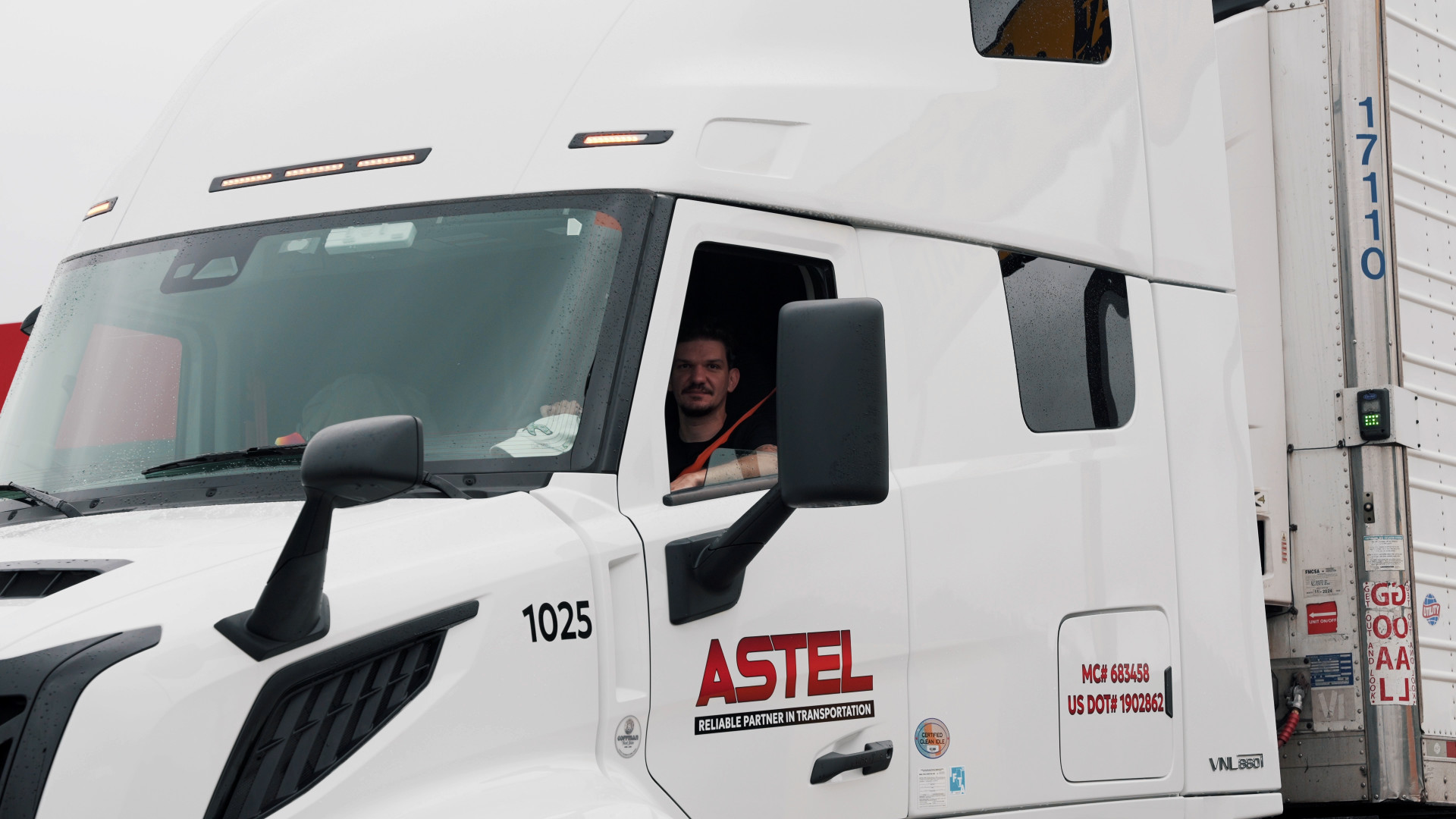
At ASTEL, drivers run refrigerated freight year-round on new Volvo trucks with automatic transmissions. Every mile is counted ZIP-to-ZIP by PC*Miler and paid every week, loaded and empty alike: a flat $0.80 per mile with a year or more of experience, two raises in the first year, 90¢ for top drivers. Our own mechanics handle repairs, and a breakdown means a replacement truck, not a repair bill in your settlement. More on our for drivers page.
FAQ about lease purchase trucking
What is lease purchase trucking?
A carrier or its affiliated leasing company leases you a truck with an option to buy, and you haul for that same carrier. A fixed weekly payment, insurance, escrow and fees come out of your settlement, and at the end of the term you may owe a balloon or buyout before the title is yours.
Why do most lease purchase drivers never own the truck?
The weekly payment stays the same when miles drop, the carrier that holds the lease also controls your freight, used trucks bring repair bills, and leaving early usually means losing what you paid. The federal Truck Leasing Task Force estimated in January 2025 that 90% or more of these agreements end in default.
Is lease purchase better than being a company driver?
For most drivers, no. A company driver has no truck payment, fuel bill or repair costs, so a slow week means a smaller check rather than a debt. Lease purchase can make sense only with a transparent contract, a newer inspected truck, written minimum miles or revenue, and an independent attorney review.
How long does a carrier have to return my escrow?
Under 49 CFR 376.12(k), the lease must state that escrow will be returned no later than 45 days after the lease ends, minus only the items the lease allows. While the carrier holds it, the carrier must account for it on your settlements or monthly, on request, and pay interest at least quarterly.
Can I walk away from a lease purchase agreement?
Usually yes, but the truck goes back to the carrier, the payments you made typically stay with them, and some contracts add fees or a remaining balance. Read the termination and default sections, request a written escrow accounting, keep every settlement, and line up your next job before you turn in the keys.
Drive for a paycheck, not a truck payment
ASTEL is a family-owned carrier out of Chicago running refrigerated freight year-round on late-model Volvo trucks, with our own repair shop and mechanics, 24/7 dispatch and a direct line to the owner. Drivers earn $90,000–$110,000 a year — $2,400–2,700+ a week gross, a flat $0.80 per mile for drivers with 1+ year of experience, all miles paid ZIP-to-ZIP, weekly pay, plus $50/$200/$500 bonuses for clean DOT inspections.
Apply in 2 minutes →Sources: Truck Leasing Task Force report to Congress and the Secretaries of Transportation and Labor (January 2025) and CFPB staff observations for the task force; 49 CFR Part 376 (§ 376.11, § 376.12); EIA weekly on-highway diesel price for September 21, 2026; BUILD America 250 Act (H.R. 8870) status as reported in August–September 2026. Current as of September 2026; rules, legislation and fuel prices may change. The weekly math is an illustrative example on stated assumptions, not typical figures. Pay and mileage figures describe ASTEL driver ranges, not guarantees. General information, not legal or financial advice; have an independent attorney review any lease before you sign.