


Team truck driving splits the pay and doubles the miles
A team truck barely stops. While one driver sleeps, the other drives, and the urgent freight that can't afford to sit still rides with them, at premium miles. Team driving is the highest-mileage job in trucking. It is also the fastest way to find out how much you really like your co-driver. The breakdown below is the honest one.
Hours-of-service rules explain why a team truck barely stops
Hours-of-service rules limit every driver to 11 hours of driving within a 14-hour window. A solo truck therefore sits still half the day. A team truck doesn't. Each driver runs their own logbook. While driver one is behind the wheel, driver two logs sleeper berth time, and when the clocks swap, so do the seats. The truck keeps moving up to 20+ hours a day.
That's why teams get the freight that can't wait: expedited loads, coast-to-coast runs, high-value goods on tight appointments. A load that takes a solo driver five to six days crosses the country with a team in about three. For an OTR refresher on how mileage work is structured, see our guide to what OTR trucking really means.
- Each driver keeps their own HOS clock: 11 hours driving, 14-hour window, 70-hour cycle. Nothing about teaming changes the rules; it changes how much of the day the truck is earning.
- The truck is the home for both. One bunk is in use around the clock; drivers alternate between the driver's seat, the passenger seat and the sleeper.
- Freight is usually drop-and-hook heavy. Teams are hired for speed, so shippers keep them moving, not waiting at docks.
Team pay is a combined rate split between two drivers
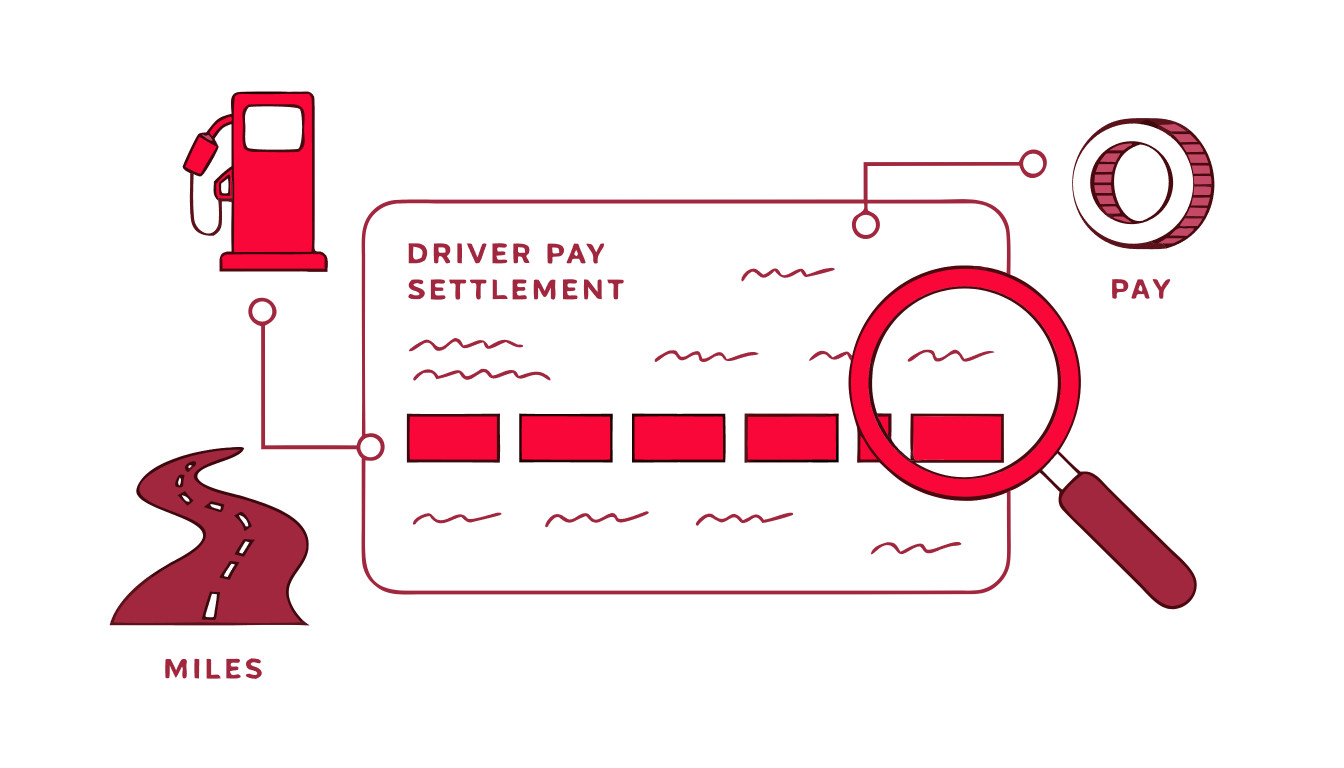
Team pay is quoted as a combined rate per mile for every mile the truck travels, split between the two drivers, most commonly 50/50. Each driver earns their half on every mile the truck runs. Because the truck barely stops, the weekly mileage behind each paycheck is far higher than a solo truck can log.
| Metric | Solo OTR | Team (per truck) |
|---|---|---|
| Miles per week | 2,500–3,000 | 5,000–6,500 |
| Pay basis | Your miles only | All truck miles, split between two drivers |
| Typical freight | Standard OTR loads | Expedited, long coast-to-coast runs |
| Truck utilization | ~11 driving hours/day | Up to 20+ hours/day |
Industry-wide, team drivers typically gross roughly $68,000–$90,000+ per driver per year depending on the combined rate and how consistently the truck stays loaded. The math only works when miles are real. A team on 4,000 shared miles a week earns less than a strong solo driver. Before you commit, ask exactly two questions: what is the combined rate, and how many miles does the average team actually run. Our driver pay guide explains how per-mile pay is built.
Team driving trades privacy and dependence for the highest mileage ceiling
| Pros | Cons |
|---|---|
| Double the truck miles — the highest earning ceiling in company driving | Income depends on a partner: their slow week is your slow week |
| Premium expedited freight, less dock waiting | Sleeping in a moving truck takes weeks to learn |
| Never alone with a breakdown, a hard backing job or a snowstorm | Two people in one cab: privacy is a curtain |
| Perfect fit for couples and relatives — shared home time, shared budget | A random-match partner is a lottery; conflicts end teams fast |
| Faster experience: more miles, more regions, more situations per month | Chores double: two schedules, one fridge, one microwave |
Trust decides whether a team works, more than driving skill does
Teams built on existing trust work. Married couples, siblings, longtime friends, people who already know how to share a small space and a budget, report the best team experience and stay together for years. The income for a two-driver household is hard to beat anywhere in trucking without becoming an owner-operator (compare that path in our company driver vs owner-operator breakdown).
Teams built by a recruiter matching two strangers can work. Honestly, it's a coin flip. If you go this route, agree on the ground rules before the first load: smoking, music, temperature, food, guests, money. Most team breakups are not about driving; they're about everything else.
Skip team driving if you value solitude. It's the main reason many drivers choose trucking. Also skip it if you're a light sleeper who can't rest in motion, or you want full control over your own schedule and income.
Sleeping in a moving truck takes a fixed rotation, not luck
- Give it two to three weeks. Almost nobody sleeps well the first nights; almost everybody adapts. Earplugs, a sleep mask and a heavy blanket speed it up.
- Protect your partner's sleep like your paycheck, because it is. Smooth driving, no hard braking, phone calls on the headset, volume down.
- Keep a fixed rotation. Random swap times wreck both body clocks. Most teams settle into a stable rhythm, for example six hours driving, six off, and defend it.
- Use the passenger seat deliberately. Off-duty time riding shotgun is for winding down, not for backseat driving.
Frequently asked questions
How many miles does a team truck run per week?
A working team typically covers 5,000–6,500 miles a week, roughly double a solo driver's 2,500–3,000. The truck moves up to 20+ hours a day because one driver rests while the other drives.
How is team truck driving pay split?
Companies quote a combined cents-per-mile rate for every mile the truck runs, and the two drivers split it, most commonly 50/50. Each driver is paid their share on every mile the truck runs, and a team truck logs far more weekly miles than any solo schedule allows.
Do team drivers follow the same HOS rules as solo drivers?
Yes. Each team driver keeps a personal logbook with the same 11-hour driving limit, 14-hour window and 70-hour cycle. The advantage is utilization: the truck earns while each driver rests, not because anyone gets extra hours.
Is team driving good for married couples?
It's the single best fit for teams: shared home, shared home time, two paychecks from one truck, and the trust problem is already solved. Many couples run teams for years.
Can a new CDL driver start in a team?
Yes. Teaming with an experienced partner is one of the fastest ways to build real skills, because you cover more miles and more situations per month than any solo rookie. What matters most is a partner you can genuinely live with.
Have a partner? Bring them.
ASTEL runs reefer teams at 5,500–6,000 miles a week in season — and you can always reach the owner directly, not a ticket queue. Solo drivers earn $90,000–$110,000 a year, paid weekly; a team household takes home substantially more.
Apply in 2 minutes →Mileage and pay figures are industry ranges as of 2026 and vary by company, freight and season; hours-of-service limits per 49 CFR Part 395. Verify current terms with any carrier before signing on. This article is general information, not an offer of specific terms.