

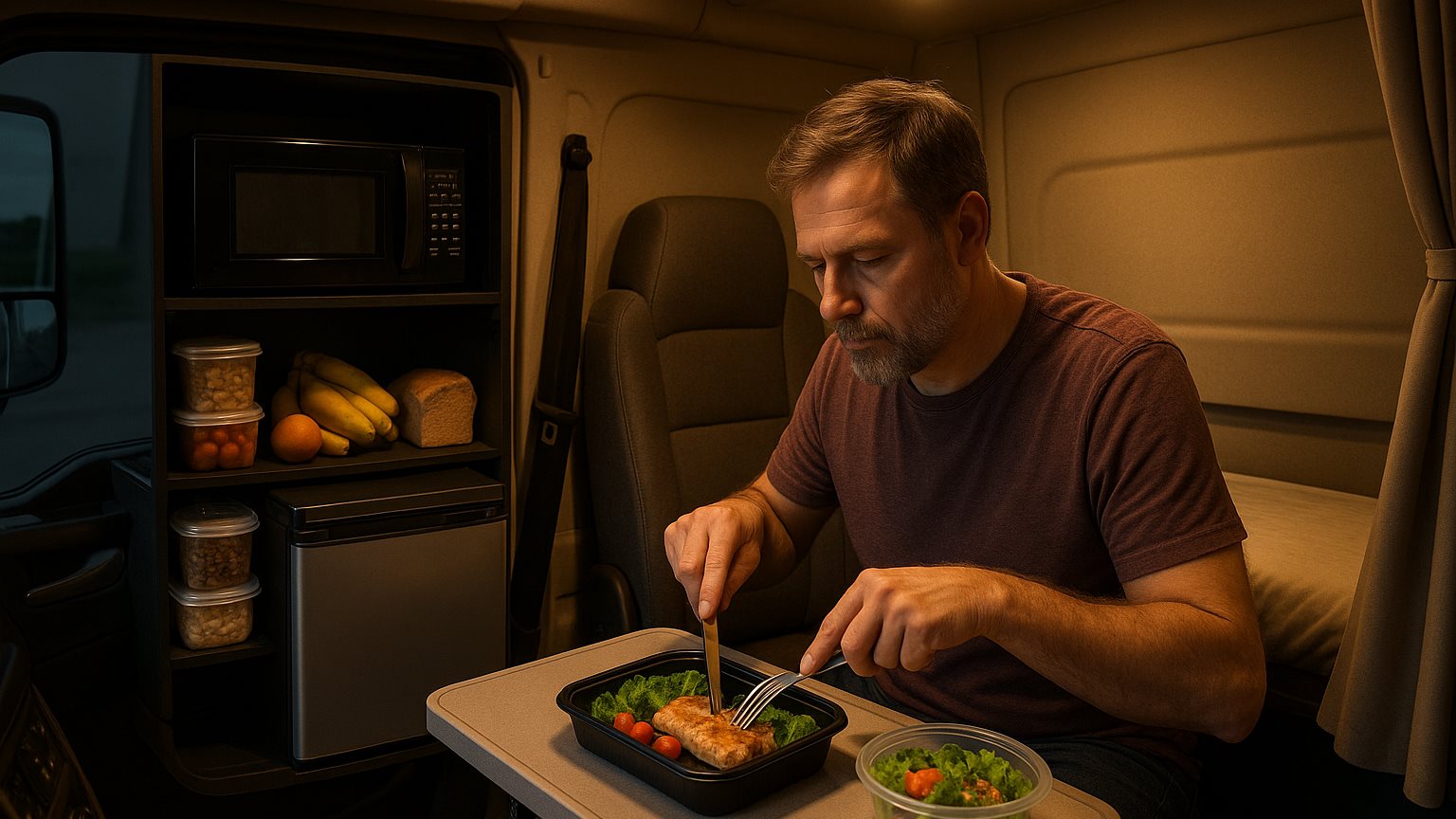
Truck driver expenses on the road, and where the money actually leaks
Two drivers earn the same paycheck. One brings $500 a week home in cash that the other one leaves at truck stops, same miles, same freight, different habits. Here is an honest map of road expenses in 2026: what things cost, which costs are optional, and how experienced drivers cut the bill in half without living on crackers.
What a week on the road actually costs
| Expense | Careless week | Smart week | How the smart number happens |
|---|---|---|---|
| Food | $150–200 | $60–100 | Fridge + microwave in the cab, grocery runs instead of counter food |
| Showers | $40–70 (3–5 × $12–18) | $0 | Free shower credits with fuel purchases on loyalty cards |
| Parking | $30–75 (reserved spots) | $0–25 | Arrive earlier, plan stops; pay only where it's genuinely worth it |
| Laundry | $10–15 | $5–10 | $4–8 per wash+dry load at truck stop laundromats |
| Phone / internet | $15–25 | $15–25 | Unlimited plan $60–90/month, not the place to save |
| Coffee & small stuff | $25–40 | $5–10 | A $30 12V kettle pays for itself in two weeks |
| Total | ~$270–$425 | ~$120–$180 |
The numbers are 2026 ballparks. Coastal states and big metros run higher, the Midwest lower. The pattern holds everywhere: food and showers are the two big leaks, and both are fixable.
Food is the $5,000-a-year decision
Truck stop counter food runs $15–25 per hot meal in 2026. Three of those a day is a $300+ week. That's the single biggest controllable expense in OTR life. The standard professional setup:
- 12V fridge ($150–400 one-time). The highest-ROI purchase in the cab.
- Inverter (1,500W+, $100–300). Runs a microwave, a kettle, a slow cooker.
- Weekly grocery stop. Many Walmarts and some supermarkets have truck-accessible parking; plan it like a fuel stop.
- The 50/50 rule beats heroics: cook the routine meals, enjoy a real sit-down dinner once or twice a week. Sustainable saving wins over perfect saving.
Showers should be free almost every time
Rack rate for a truck stop shower is $12–15, up to $18 in busy corridors. Nobody who fuels a company truck should pay it often. Loyalty programs at the major chains credit a free shower with a qualifying fuel purchase, typically around 50 gallons, and credits last several days. Fuel where you're told. Collect the credit. Shower on it. The routine costs zero.
Parking is the newest line in the budget
Most truck stop parking is still free, but the free rows fill earlier every year, and chains now sell reserved spots for roughly $12–25 a night ($20–40 in California and big metros). The professional approach:
- Plan the night with the route, not after it. A spot chosen at noon is free; the same lot at 7 PM sells you its last reserved row.
- Shut down earlier when you can. The driver who parks at 5 PM eats dinner; the one who hunts at 9 PM pays, or parks on a ramp that costs tickets and sleep.
- Pay deliberately, not desperately. A $20 reserved spot before a 6 AM delivery in a tight metro is a good buy. A nightly $20 habit is a $5,000-a-year subscription.
Laundry, coffee and subscriptions add up too
- Laundry: $4–8 per wash+dry load at truck stop laundromats; once a week is $250–400 a year. Bring detergent pods, since vending prices double the cost.
- Coffee: $3–6 a cup times 2 a day is $2,000+ a year. A 12V kettle and a press pay for themselves before your second home time.
- Subscriptions and games: streaming, satellite radio and in-app purchases hide in the phone bill. Audit them once a quarter, because the road makes $10 subscriptions multiply.
- Keep receipts. Whatever your pay structure, a shoebox or a scanner app of road receipts makes your money visible, and it turns "where did it all go" into a number you control. How the earnings side of the ledger works is in the pay statement guide.
Put the road budget next to the paycheck
Now the context that makes the numbers matter: an experienced OTR driver at ASTEL grosses $2,400–$2,700 a week. A smart road budget of $120–180 is 5–8% of gross; a careless $350 per week is 13–15%. Same truck, same miles. The difference is a fridge, two habits and ten minutes of planning a day. What the whole OTR lifestyle looks like beyond the wallet is in our guide to OTR trucking.
Frequently asked questions
How much do truck drivers spend on food on the road?
Buying hot meals at truck stops costs $150–200+ a week in 2026 ($15–25 per meal). Drivers who cook in the cab with a 12V fridge and an inverter spend $60–100 for the same week.
How much does a truck stop shower cost?
$12–15 standard, up to $18 in busy corridors, but loyalty programs at major chains give a free shower credit with a qualifying fuel purchase (around 50 gallons), so drivers fueling regularly rarely pay cash for showers.
Do truck drivers have to pay for parking?
Most truck stop parking remains free, but free spots fill early. Reserved spots run about $12–25 a night ($20–40 in California and big metros). Planning stops earlier in the day keeps paid parking an exception.
What should a new OTR driver buy for the truck first?
A 12V fridge, a 1,500W+ inverter, a microwave or kettle, and bedding that lets you actually sleep. The fridge alone typically pays for itself in the first month of not buying counter food.
How much can an OTR driver save per year by managing road expenses?
The gap between a careless and a managed road budget is roughly $130–250 a week. That's $5,000–$9,000 a year on the same paycheck, mostly from cooking instead of buying meals and never paying rack rate for showers.
Earn like a professional. Spend like one too.
ASTEL drivers gross $2,200–$2,700 a week ($90,000–$110,000 a year) on year-round reefer freight, paid weekly, with fueling on the Pilot / Flying J network and a fuel bonus for efficient driving.
Apply in 2 minutes →Price ranges are 2026 ballpark figures from major truck stop chains and driver-reported data; they vary by region, chain and season. Loyalty program terms (shower credits, fuel thresholds) change — check current program rules. This article is general budgeting information, not financial or tax advice.