


Trip Planning. How Professional Drivers Turn a Load Into a Plan
Two drivers get the same load: 1,100 miles, delivery Thursday 6 AM. One arrives rested, fueled, parked by 5 PM the night before. The other is hunting parking at midnight, 40 minutes from the receiver, with 20 minutes left on their clock. Same load, same truck. The difference was 15 minutes of planning before the wheels moved.
Start with the clock, not the map
The map says 1,100 miles. The HOS rules say what that number actually means once the clock gets involved. Here is the honest math.
- 11 driving hours times a real average of about 50 mph equals 500–580 miles on a good day. Mountains, cities at rush hour, or a slow shipper morning pull that down fast, sometimes by a lot.
- The 14-hour window is the real limit. A 2-hour morning at the shipper leaves 12 hours of window for 11 hours of driving, and one traffic jam drops the day's ceiling again, so plan driving blocks, not wishful totals.
- Check the 70-hour cycle first. 11 hours available today means nothing if only 4 remain in your cycle. Know your recap hours for tomorrow morning before you commit to an ETA.
Fuel needs planned stops, not gauge panic
An OTR tractor carries roughly 200–300 gallons in twin tanks, call it 1,000+ miles of range, which means fuel is a planning decision, not an emergency. The working rules:
- Fuel where the plan says. Your company already knows where diesel is cheapest on your route, because it has discount contracts with truck stop chains and software that compares prices along the way, so freelancing at a random exit costs real money, and diesel can differ by 50+ cents within a hundred miles.
- Combine stops. The professional fuel stop is 30 minutes: fuel, walk the truck (mini inspection), restroom, coffee, ETA message to dispatch, all in one stop. Four separate 20-minute stops are how a 14-hour window dies.
- Watch the quarter-tank line in winter. Out west, exits with truck diesel can be 80+ miles apart, and in a freeze, fuel is also your heater.
Parking is the decision you make at noon
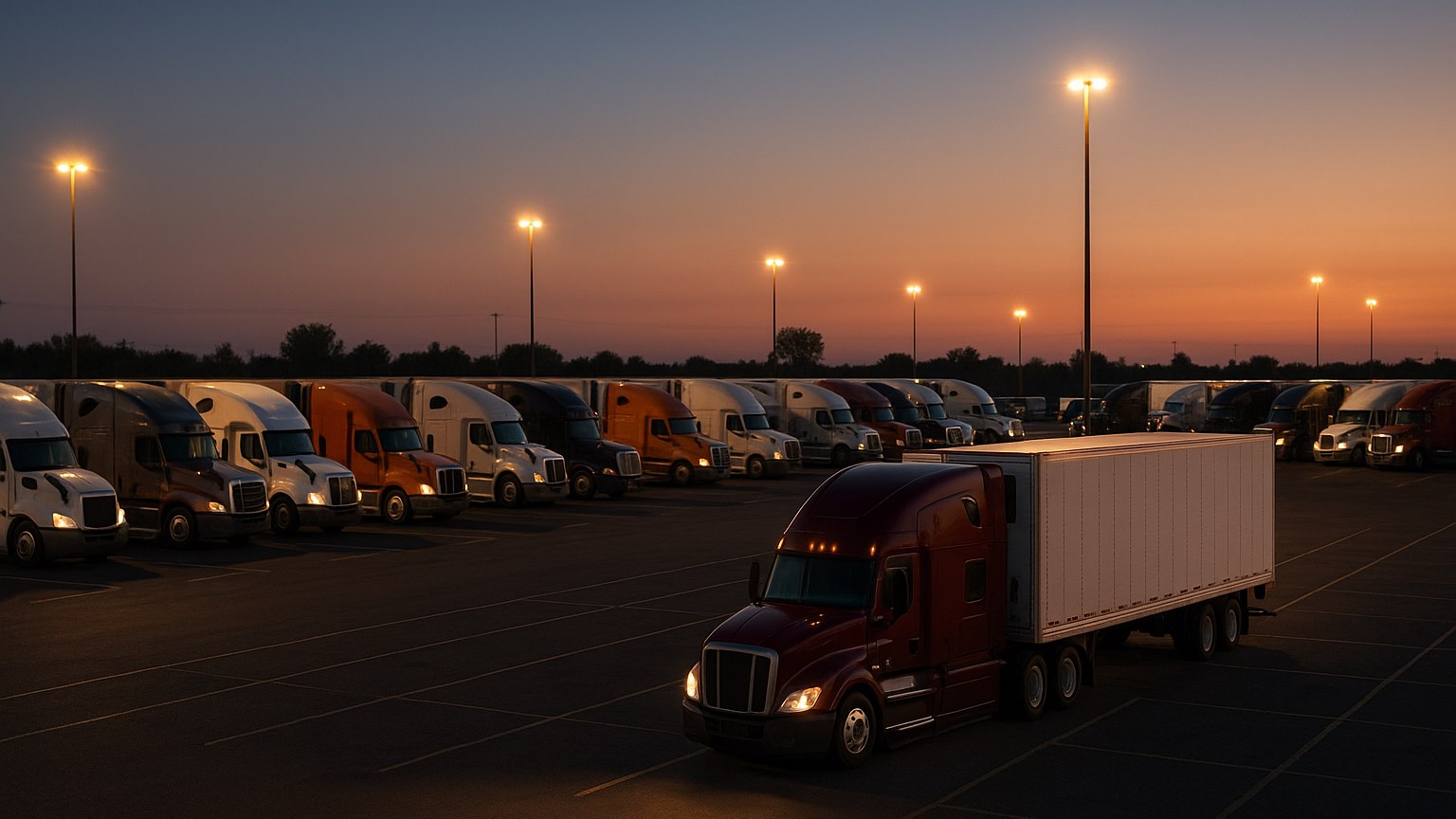
We said it in the road expenses guide, and it bears repeating as a planning rule: the night's parking is chosen with the route, not discovered at the end of it. At noon you have options: free rows, choice of lots, a backup 20 miles further. At 9 PM you have whatever's left, at reserved-spot prices, or a ramp. Pick a primary and a backup stop 30–50 miles apart. If the day runs long, you already know exactly where you're stopping short.
Appointments, buffers and the reefer factor
- Know your appointment type. FCFS (first come, first served) rewards arriving early. Strict appointments punish arriving late, and reefer docks run mostly on appointments, often at night. Miss a produce slot and the next one can be days out, as covered in Reefer vs Dry Van.
- Build the buffer in, always: +1 hour minimum for metro traffic and dock reality, more through construction season and mountain weather, and in winter, check passes and closures the night before, since the winter guide has the 511 habit.
- Reefer pre-checks are part of the plan. Unit fueled to ¾+, setpoint and mode per the rate confirmation, pre-cool scheduled before the pickup, not remembered at the gate.
- Screenshot everything at pickup: address quirks, gate hours, receiver phone. The plan lives on your phone, not in your memory at 4 AM.
The 15-minute pre-trip planning checklist
| Step | Question you're answering |
|---|---|
| 1. Appointment | When must I be there, and is it FCFS or strict? |
| 2. HOS math | How many real driving blocks is this? What's left in my cycle tomorrow? |
| 3. Route | Truck-legal route, low bridges, tolls, known chokepoints at rush hour? |
| 4. Fuel | Which network stops fall on my lane, and where do I combine fuel + break? |
| 5. Parking | Primary and backup for each night, chosen now and not at 9 PM |
| 6. Weather | Passes, wind warnings, chain requirements, heat for the reefer? |
| 7. Buffer | Where does my spare hour live, and what's the plan if a dock eats three? |
Apps do the heavy lifting: truck navigation, parking availability, fuel prices, weather radar. The toolkit worth installing is in our apps guide. The judgment stays yours.
Frequently asked questions
How many miles can a truck driver realistically cover in a day?
500–580 miles is a solid day: 11 driving hours at a real-world 48–55 mph average including fuel and breaks. Mountains, metro traffic and slow docks pull that lower, and planning on speed-limit math is how appointments get missed.
How do you trip plan around the 14-hour rule?
Plan backwards from the appointment in driving blocks, and treat anything that burns window time, such as shipper mornings, fuel, or docks, as a cost against your 11 driving hours. A 2-hour morning at a dock leaves 12 hours of window; one jam later, an 11-hour driving day no longer fits.
When should a driver pick the night's parking spot?
By midday, together with the route: a primary stop plus a backup 30–50 miles short. Free spots fill by early evening; choosing at 9 PM means paying for a reserved spot or parking somewhere you shouldn't.
How far from a morning delivery should you park?
Within 30–60 minutes when possible, since sleeping 300 miles out converts a calm morning into a race against the window, the classic self-inflicted service failure.
What extra planning does a reefer load need?
Unit fuel at three-quarters or more, mode and setpoint set per the rate confirmation, pre-cool done before pickup, and appointment discipline. Reefer docks run on scheduled slots, often overnight, and a missed slot can cost days.
Good plans need good miles to plan.
ASTEL runs year-round reefer freight — 3,500–3,700 miles a week in season — with dispatch on call 24/7 to replan around weather and docks. Drivers earn $90,000–$110,000 a year, paid weekly.
Apply in 2 minutes →Hours-of-service limits per 49 CFR Part 395; mileage and speed figures are working averages for OTR operations as of 2026 and vary by lane, season and equipment. Always follow your company's routing and fuel policies. This article is general professional guidance.