

Time Zones for Truck Drivers, From the Dock Clock to the ELD
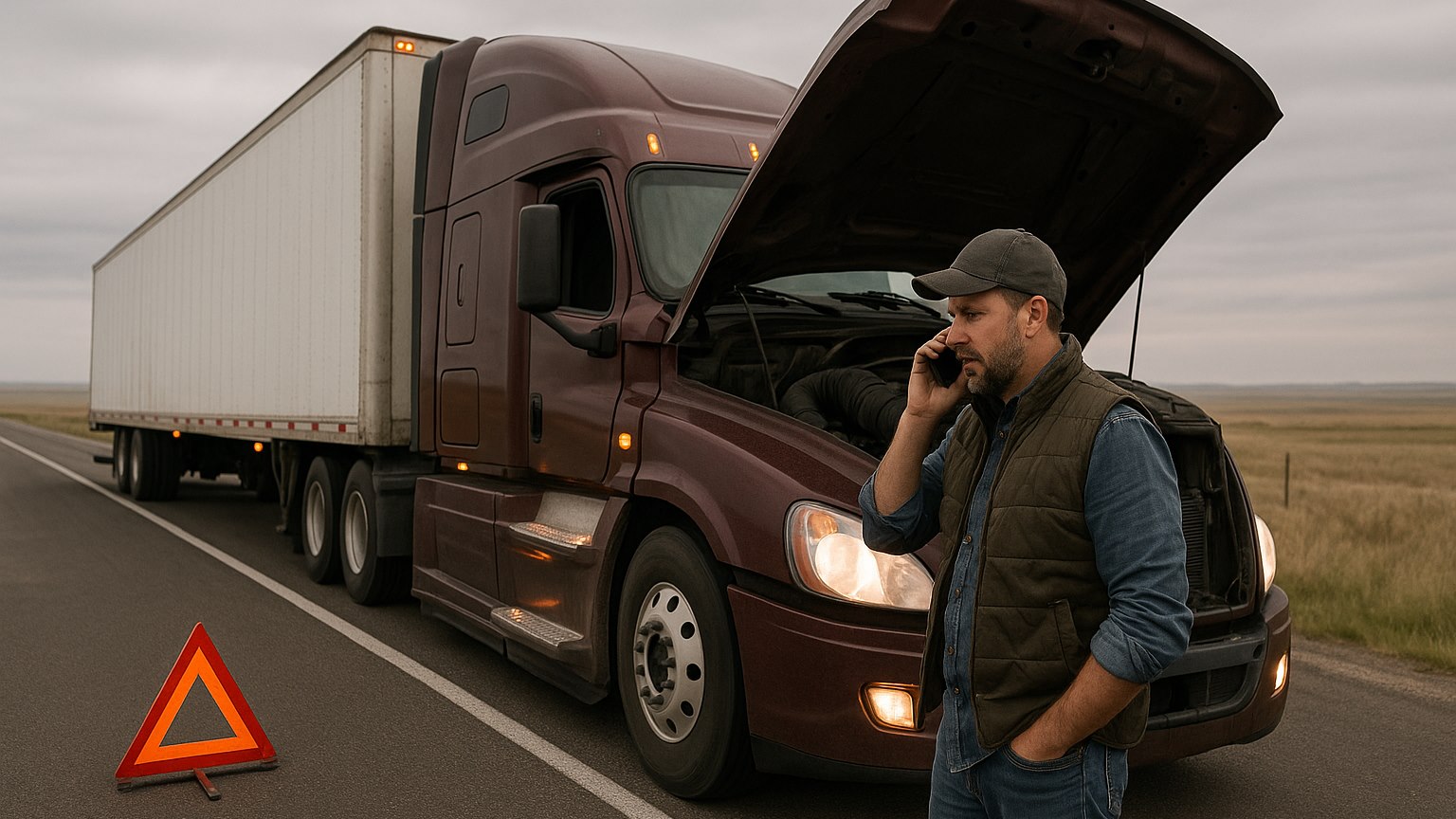
The receiver in Columbus, Ohio, wants you at door 14 at 6:00 a.m. Your ELD, set to a terminal in Illinois, will read 5:00 a.m. when you back in. Mixing up those two clocks is the oldest way to miss a reefer appointment, and time zones for truck drivers add one more twist this fall: at 2 a.m. on Sunday, November 1, 2026, clocks fall back an hour in every state that uses daylight saving time.
Plan a run across a time zone in seven steps
- Find the time zone on the paperwork. Rate confirmations and appointment emails usually list local time at the facility. If the zone isn't printed, treat it as local and confirm with dispatch before you leave.
- Convert everything to one clock. The ELD clock is the usual choice, because your hours run on it. Write both times in the trip plan, for example "06:00 ET / 05:00 CT."
- Know where the line falls on your route. Leaving Chicago eastbound, the Indiana counties along the lake are still on Central time, and Eastern time starts past LaPorte County.
- Put a second clock on your phone. A world-clock widget set to the receiver's city takes the arithmetic out of a tired 4 a.m. check.
- Plan your hours in elapsed time. If your 14-hour window opened at 6:00 a.m. Central, it closes at 8:00 p.m. Central, which reads 9:00 p.m. on a clock in Ohio.
- Check the math again at your 30-minute break, when you still have time to adjust speed or the fuel stop.
- If you will be late, call the receiver and give your arrival in their local time.
In the scenario, the 355 miles take about seven hours at a realistic average. Leave the shipper by 10:30 p.m. Central, and you reach Columbus around 6:30 a.m. Eastern, still half an hour late. The fix is leaving earlier, or a call to move the slot before you leave the dock.
Your log runs on home terminal time
The rule is written into 49 CFR 395.8(f)(8). A driver's record of duty status must be kept in the time standard in effect at the driver's home terminal, for a 24-hour period that starts at the time the carrier sets for that terminal. The "7 or 8 consecutive days" of your cycle are counted in those same 24-hour periods.
The ELD rules carry this into the device. Section 4.4.3 of the ELD appendix requires the unit to capture date and time in UTC and convert it to the home terminal's time standard, taking daylight saving changes into account. The device stores a "time zone offset from UTC" for that, a two-digit number between 04 and 11. A printout or a display shown to an officer carries the offset and the 24-hour starting time at the top.
So a driver based in Chicago who gets inspected in California shows a log in Central time, two hours ahead of the officer's watch. That is normal, and officers expect it. A log that jumps between local times as you cross the country would be the problem. Which home terminal your ELD uses is set by your carrier, so ask if you're not sure.
Paper logs keep the same clock
When an ELD fails, you switch to paper, and the paper grid uses the same home terminal time. Under 49 CFR 395.22(h) the truck has to carry blank graph-grids for at least 8 days, along with instruction sheets for data transfer and malfunctions. Under 395.34 you note the malfunction, tell the carrier within 24 hours and rebuild the current day and the previous 7 days on paper unless those records can be pulled from the device.
A grid filled in on local time, with an hour missing at the Indiana line, is the most common paper mistake. Write the zone at the top of the sheet. Use the 24-hour starting time your carrier set for the terminal.
Crossing a time zone doesn't change your hours
Hours of service count elapsed time. The 11 hours of driving, the 14-hour window, the 30-minute break after 8 hours of driving and the 10 hours off all run on a stopwatch, not on the wall clock. Because the ELD records in UTC underneath, the stopwatch keeps running through every zone line.
What changes is the clock you read. Westbound, you gain an hour on local time each time you cross into the next zone. The extra hour of daylight is real, but your 14-hour window still closes 14 hours after it opened, even when the local clock says it's earlier. Eastbound you lose the hour, which is why eastbound appointments get missed more often.
Your cycle doesn't care about zones either. The 60 hours in 7 days or 70 hours in 8 days are counted in home terminal days, whatever state you wake up in. The full set of limits, with examples, is in our guide to hours of service rules.
Appointments run on the dock's clock
Shippers and receivers schedule doors in their own local time, and their gate systems check you in by that clock. A grocery DC in Pennsylvania doesn't know or care that your ELD is on Central time. Grocery receivers are strict about windows, and how their check-in works is in our article on grocery warehouse deliveries.
Reefer freight runs on appointments more than dry van does, and a lot of it delivers overnight. A 2:00 a.m. delivery in Atlanta is 1:00 a.m. for a driver on Central time, the hours when reaction time is at its worst. The habits that help on those runs are in our piece on night driving for truck drivers.
When a time on the paperwork has no zone, ask. Dispatch can confirm with the broker or the facility in a minute. Discovering the mistake at the guard shack is too late.
Where the lines cross the interstates
The boundaries are set in 49 CFR Part 71, county by county, and several of them sit right on major freight routes.
| Area | Which zone | Where it matters |
|---|---|---|
| Northwest Indiana: Lake, Porter, LaPorte, Starke, Jasper and Newton counties | Central | I-80/90 Toll Road and I-94 east of Chicago; Eastern begins in St. Joseph County |
| Southwest Indiana: Posey, Vanderburgh, Warrick, Spencer, Gibson and Perry counties | Central | The Evansville area; most of the state is Eastern |
| Tennessee | Central in the west and middle, Eastern in the east | Nashville and Memphis are Central; Knoxville and Chattanooga are Eastern |
| Florida Panhandle west of the Apalachicola River | Central | Pensacola and I-10 west of Tallahassee |
| Idaho north of the Salmon River | Pacific | The panhandle around Coeur d'Alene and I-90; southern Idaho and Boise are Mountain |
| Most of Malheur County, Oregon | Mountain | I-84 at Ontario; Pacific time starts farther west |
| El Paso, Texas | Mountain | I-10 between Texas and New Mexico |
| Arizona | Mountain, no daylight saving | Same clock as California from March to November, same as Denver in winter |
The Navajo Nation in northeastern Arizona does observe daylight saving time, so in summer a run across that corner of the state can mean a clock change without leaving Arizona. Kentucky, Michigan and the Dakotas are split as well, with the lines through rural counties.
November 1 adds an hour to the night
Under 49 CFR 71.2, which follows the Uniform Time Act, daylight saving time ends at 2:00 a.m. on the first Sunday in November. In 2026 that's November 1. At 2:00 a.m. local time the clock goes back to 1:00 a.m., and the night is 25 hours long on paper. The next change is March 14, 2027, when clocks jump forward and the day has 23 hours.
Permanent daylight saving time is not law yet. On July 14, 2026 the House passed the Sunshine Protection Act, which would end the twice-a-year change, by a vote of 308 to 117. The Senate has not voted on it as of early October 2026. Unless that changes before November, the clocks fall back on November 1 as usual, and the rest of this section applies.
The ELD handles its side without you. The offset field has to adjust for daylight saving at the home terminal, so a Central-time terminal moves from an offset of 05 to 06. Your 10-hour break is still 10 real hours, and your 11 hours of driving are still 11.
The appointments are where people slip. A 7:00 a.m. Sunday slot booked days earlier means 7:00 on the new clock. If your phone sets its time from the network, it changes by itself; a watch or an older dash clock may not. Check both before you sleep on Saturday night. If the ELD shows something odd after the change, the steps in what to do when an ELD malfunctions apply.
Put dispatch and the ELD on the same clock
Most time zone mistakes start in a message. "Deliver 0600" from dispatch can mean their clock, your clock or the receiver's. Ask once, early: local or ours. A good dispatch board shows appointment times with the zone attached, and the way a dispatcher builds the day is in how truck dispatch works.
At ASTEL, dispatch is on the line 24/7, so the 3 a.m. "is that Eastern or Central" call gets answered. The ASTEL yard is in Chicago, on Central time. Drivers are expected to cover 600–700 miles a day in 11 hours of driving, and that pace leaves room for a lost hour only when the plan already accounts for it. The time zones go into the trip plan along with fuel and parking, as in our guide to truck trip planning.
Reefer checks follow the same rule. Our drivers check load temperature and the unit 2–3 times a day, and a note with the time and zone ("04:10 CT, 34°F, set point 34") reads the same to the receiver, the shipper and the company.
Frequently asked questions
What time zone do truck drivers use for their logs?
The time zone of their home terminal. Under 49 CFR 395.8, the record of duty status is kept in the time standard in effect at the driver's home terminal, and an ELD converts its UTC records to that time, including daylight saving changes.
Does crossing a time zone affect hours of service?
No. The 11-hour driving limit, the 14-hour window, the 30-minute break and the 10 hours off all count elapsed time. Driving east makes the local clock jump ahead, but your log keeps running on home terminal time and your remaining hours stay the same.
Are trucking delivery appointments in local time?
Usually yes. Shippers and receivers set door appointments in the local time at the facility, and rate confirmations normally list that time. If no time zone is shown, confirm it with dispatch or the facility before the trip.
What happens to an ELD when daylight saving time ends?
The ELD changes its offset from UTC automatically at the home terminal's change, so you don't edit anything. In 2026 daylight saving time ends at 2:00 a.m. on Sunday, November 1. Your 10-hour break and 11 hours of driving are still measured in real hours.
Miles planned on one clock, dispatch on the line 24/7
ASTEL is a family-owned carrier out of Chicago running refrigerated freight year-round on late-model Volvo trucks, with our own repair shop and mechanics, 24/7 dispatch and a direct line to the owner. Drivers earn $90,000–$110,000 a year — $2,400–2,700+ a week gross, a flat $0.80 per mile for drivers with 1+ year of experience, all miles paid ZIP-to-ZIP, weekly pay, plus $50/$200/$500 bonuses for clean DOT inspections.
Apply in 2 minutes →Sources: 49 CFR 395.8(f)(8), record of duty status time base; 49 CFR Part 395, Subpart B, Appendix A (ELD technical specifications), sections 4.4.3 and 7.41; 49 CFR 395.22(h) and 395.34, ELD information packet and malfunctions; 49 CFR 395.3, hours-of-service limits; 49 CFR Part 71, standard time zone boundaries, including § 71.2 on the annual advancement of standard time under the Uniform Time Act of 1966 (15 U.S.C. 260a); U.S. House vote on the Sunshine Protection Act, July 14, 2026, and its Senate status as of early October 2026. Current as of October 2026; time zone boundaries and daylight saving rules may change. Pay and mileage figures describe ASTEL driver ranges, not guarantees. General information, not legal advice.