

Truck Tolls on a 5-Axle Reefer and What They Cost in 2026
In 2026 the Pennsylvania Turnpike charges a 5-axle tractor-trailer $249.81 from the Ohio line to the New Jersey line with E-ZPass, and $500.26 when the bill comes by plate. Put every toll road and bridge of a Chicago to New York run together and truck tolls come to about $614 with a transponder and about $898 without one. That's a $284 difference on a single eastbound load, and Pennsylvania makes up most of it.
Nine toll points between Chicago and New York, priced for 5 axles
| Road | Section | 5 axles, transponder | 5 axles, no transponder | Note |
|---|---|---|---|---|
| Chicago Skyway | Full crossing, Chicago to the Indiana line | $47.20 peak (4 a.m.–8 p.m.), $33.80 off-peak | Same, cash or card | The tag gives no discount here |
| Illinois Tollway | One plaza, I-90 Belvidere mainline | $16.95 daytime, $12.70 overnight (I-PASS) | Same if paid online; an invoice adds $3 per toll | Off the example route, paid by I-90 loads coming in from the west; about 30% higher from January 1, 2027 |
| Indiana Toll Road | Through trip, Illinois line to Ohio line | $91.37 | $91.30 cash | Up 4.4 percent, or $3.88, on June 30, 2026 |
| Ohio Turnpike | Eastbound, Indiana to Pennsylvania, 241 miles | $49.75 | $62.75 cash or credit | Class 5 is a high 5-axle or low 6-axle vehicle |
| Ohio Turnpike | Westbound, Pennsylvania to Indiana | $58.75 | $74.00 cash or credit | Includes a round-trip flat toll at Eastgate |
| Pennsylvania Turnpike | Gateway (Ohio line) to Harrisburg East | $168.05 | $336.74 Toll By Plate | No cash at the road |
| Pennsylvania Turnpike | Gateway to the Delaware River Bridge (New Jersey line) | $249.81 | $500.26 Toll By Plate | 5 axles, high profile |
| New Jersey Turnpike | Exit 6 (Pennsylvania Turnpike) to Exit 18W | $62.51 | $68.60 cash | $59.38 off-peak with a New Jersey tag |
| George Washington Bridge | Into New York, upper level | $108.35 off-peak, $113.35 peak, $100.85 weekday overnight | $128.35 Tolls by Mail | Cashless; nothing charged into New Jersey |
Every figure comes from the operator's own 2026 rate table and applies to a high-profile 5-axle combination, which is what a tractor with a 53-foot reefer is. The last column of numbers shows what you pay when no tag is read. Where cash lanes still exist, that's the cash or card rate. Pennsylvania and the Port Authority bridges take no cash at all, so the alternative there is a bill mailed to the plate.
Chicago to the George Washington Bridge runs about $614 with E-ZPass
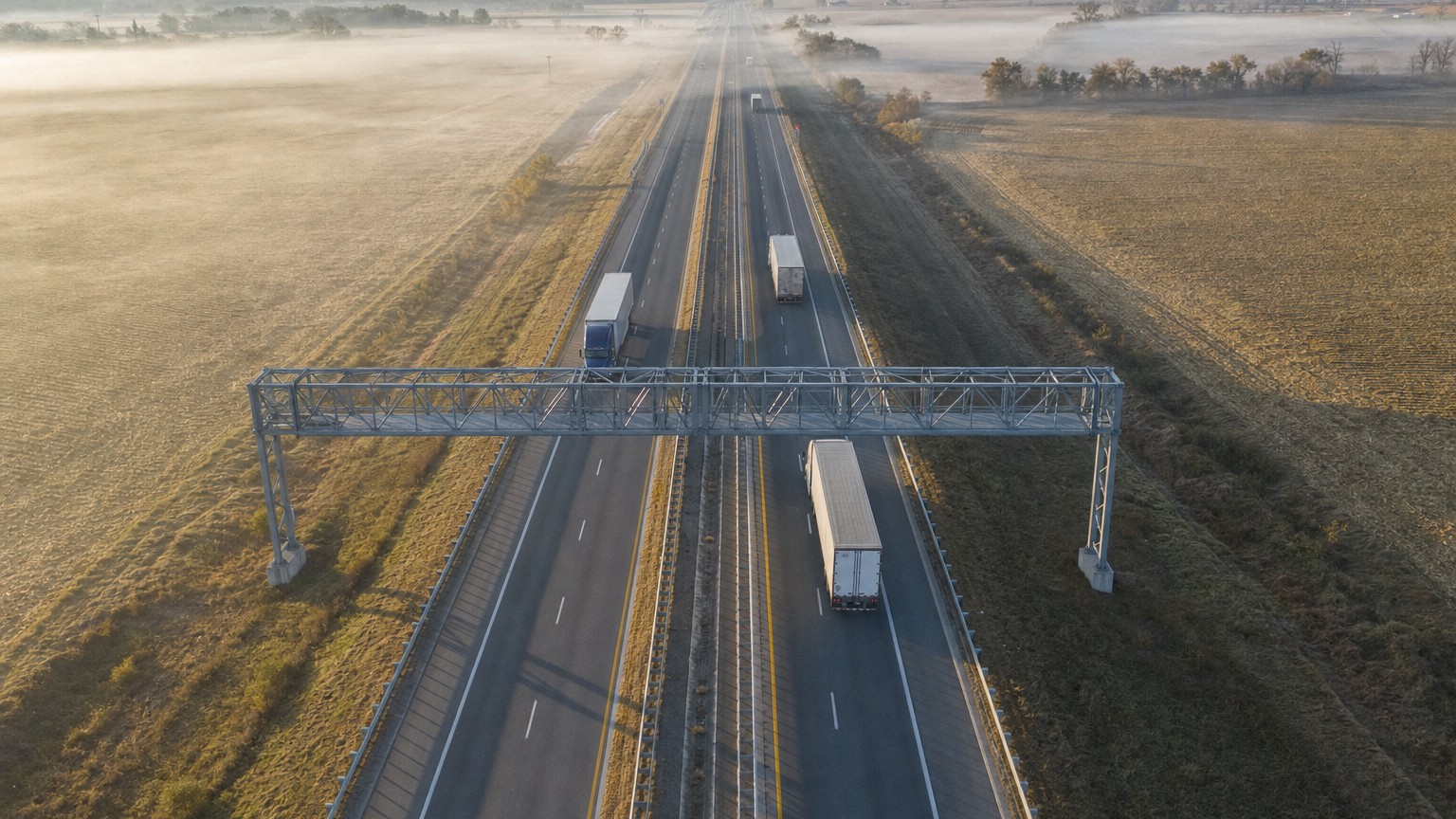
Take the all-toll route out of Chicago. The Skyway gets you to Indiana, the Indiana Toll Road runs end to end into Ohio, and the Ohio Turnpike carries you to the Pennsylvania line. From Gateway the Pennsylvania Turnpike runs to the Delaware River Bridge, the New Jersey Turnpike takes you from Exit 6 to 18W, and the George Washington Bridge puts you in New York on the upper level. That's roughly 800 miles of road.
With a working E-ZPass, a weekday daytime run and peak hours at the bridge, the tolls add up to $47.20 + $91.37 + $49.75 + $249.81 + $62.51 + $113.35 = $613.99. The same truck without a tag pays $47.20 + $91.30 + $62.75 + $500.26 + $68.60 + $128.35 = $898.46. Pennsylvania alone accounts for $250 of the $284 gap.
The clock can trim a little more. Cross the Skyway after 8 p.m., use the New Jersey off-peak rate with a New Jersey-issued tag and hit the bridge in the truck overnight window, and the total drops to $584.96. That's $29 saved, and in real life the delivery appointment and your 14-hour window pick those times, not the toll schedule.
Treat these sums as a rough example at rates as of October 2026. Westbound the math is different. The bridge charges nothing going into New Jersey, while the Ohio Turnpike costs $58.75 westbound because the Eastgate plaza near the Pennsylvania line collects a round-trip toll in one direction.
A transponder halves the bill in Pennsylvania and changes nothing on the Skyway
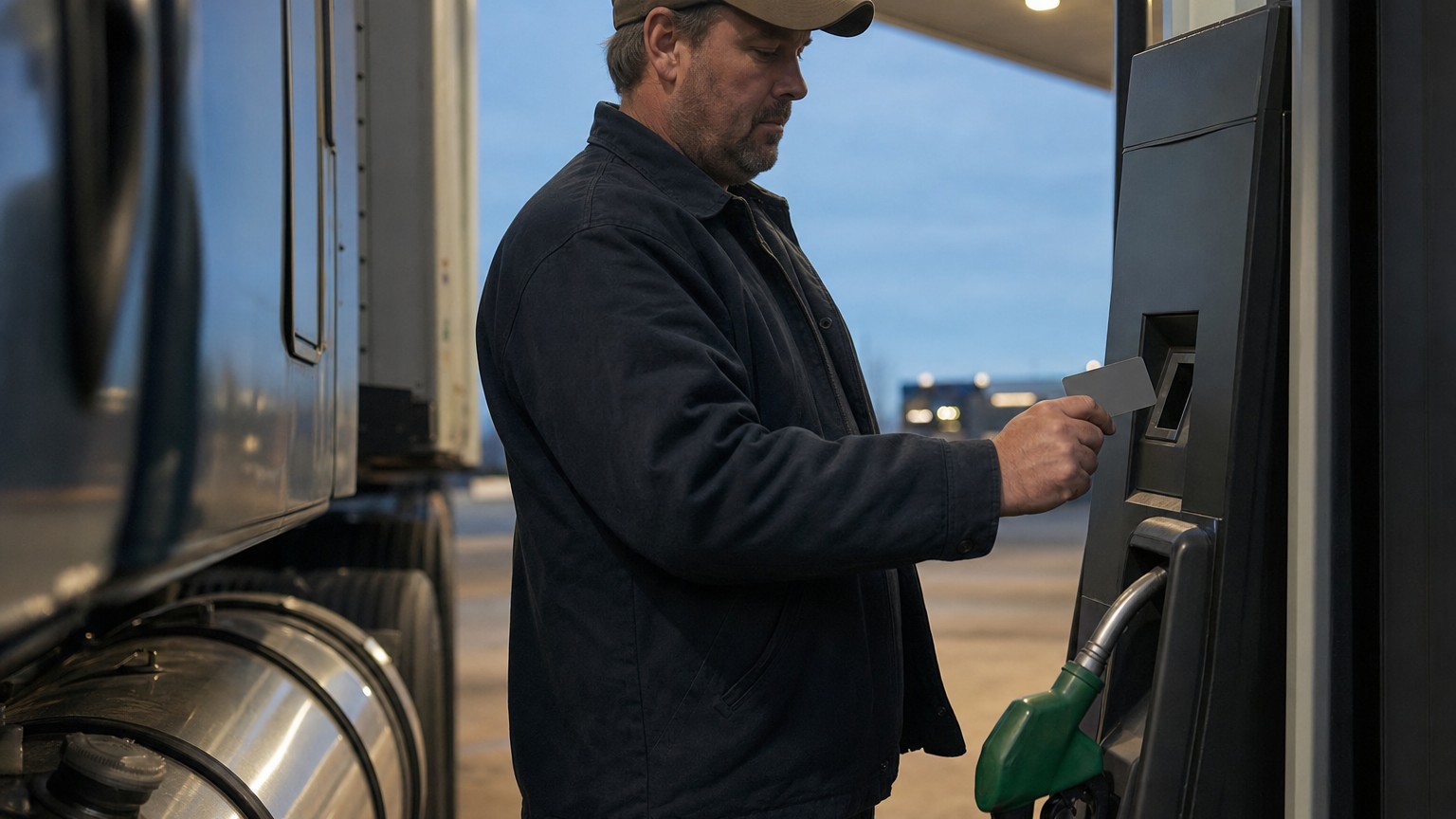
E-ZPass is a network of toll agencies in about 20 states, from Maine to Florida and as far west as Minnesota. A tag from one member works on the others' roads. The size of the discount depends on the road. The Pennsylvania Turnpike says E-ZPass saves 50 percent, and its Toll By Plate rates are about double. On the Ohio Turnpike the tag saves $13 on a full eastbound run. On the Indiana Toll Road the tag rate is 7 cents higher than cash, so there you're buying a lane without a stop.
The Port Authority has fine print of its own. Its E-ZPass discounts apply only to accounts opened at the New York and New Jersey E-ZPass customer service centers. Since July 6, 2025 it also charges a Mid-Tier rate of $120.85 for 5 axles when a tag isn't read properly and the toll has to go through the plate photo. That's $7.50 above the peak rate and $20 above the overnight rate, so the Port Authority asks truckers to mount exterior transponders correctly. A tag lying loose on the dash can cost money on every crossing.
New York's Thruway prices tags by origin too. Under its toll plan approved in 2023, New York-issued E-ZPass tags pay the lowest rate, tags from other states pay more and Tolls by Mail cost the most, according to Transport Topics.
Bills without a tag go to whoever owns the plate
A plate bill is a camera reading your license plate and an invoice mailed to the registered owner. On a company truck that owner is a carrier or a leasing company, not the driver. The Chicago Skyway spells it out: the registered owner is responsible for missed tolls whether or not someone else was driving, and there are 7 days to pay before fees start. The Skyway also tells drivers never to back out of a toll lane or run the gate.
Unpaid truck tolls are now a public fight. On April 20, 2026 the Ohio Turnpike named 315 trucking companies from 26 states that owed it nearly $5.2 million in unpaid tolls since April 2024. Tolls still unpaid 90 days after the first invoice go to collections, and vehicle registrations can be held until payment. Ohio adds $5 for missing the first invoice's due date and a $5 administrative fee on a toll left unpaid at the lane.
Pennsylvania goes after registrations too. PennDOT says a Pennsylvania registration may be suspended with four or more unpaid toll invoices or $250 or more in unpaid invoices and fees. In April 2026 the Turnpike and the Pennsylvania State Police ran their first joint enforcement month, with troopers allowed to write tickets and impound vehicles with suspended registrations. If a tag didn't beep or a lane went wrong, tell dispatch the plaza and the time that day, while somebody can still match it to an account.
Axles and height set your toll class
Every road on the table counts axles, and some add height. Pennsylvania splits each axle count into low and high profile at 7 feet 6 inches, so a reefer is 5H. Ohio's Class 5 covers high 5-axle and low 6-axle vehicles. The Illinois Tollway lumps 5 or more axles into its Large category. The Port Authority charges $100.85–128.35 for 5 axles and adds $20.17–25.67 for each axle beyond six.
Axles change the price more than distance does. A bobtail tractor has 3 axles, and from Gateway to Harrisburg East it pays $84.08 with E-ZPass against $168.05 for the full rig. If you pull equipment with a lift axle, ask the operator how a raised axle is classified, because rules are set road by road. Pennsylvania even uses two systems at once: the Gateway plaza charges by axles only, and everything east of Cranberry charges by axles and height.
Time of day changes the price on four of these roads
The Skyway's peak is long, from 4 a.m. to 8 p.m., and a 5-axle truck pays $13.40 less outside it. The Illinois Tollway counts daytime from 6 a.m. to 10 p.m., and the Belvidere plaza drops from $16.95 to $12.70 overnight. The New Jersey Turnpike sets its peak by the time you enter, on weekdays 7–9 a.m. and 4:30–6:30 p.m. Saturday and Sunday are peak all day.
The George Washington Bridge has three windows for trucks. Peak runs weekdays 6–10 a.m. and 4–8 p.m., and 11 a.m.–9 p.m. on weekends. The truck overnight rate of $100.85 applies Sunday through Thursday from 10 p.m. to 6 a.m. Off-peak covers everything else. All trucks must use the upper level.
A free route has to beat the toll on diesel and hours
Diesel is what makes a detour expensive this fall. The EIA put the U.S. average for on-highway diesel at $6.276 a gallon on October 19, 2026, $2.66 more than a year earlier, and $6.352 in the Midwest. Say your truck gets 6.5 mpg. Every mile then burns about 97 cents of fuel, and a 40-mile detour costs about $39 in diesel and 40 minutes of driving at 60 mph.
Run that against Pennsylvania. Gateway to Harrisburg East is $168.05 with E-ZPass, and I-80 crosses the state without tolls. If the free road adds 40 miles, you keep about $129. If it adds 120 miles through two-lane towns and city truck routes, the savings shrink and the hours grow. Check the actual miles both ways before you decide, because the gap changes with every pickup and drop.
Your paid miles don't move with the route. At ASTEL, miles are counted ZIP-to-ZIP by PC*Miler and every mile is paid, loaded and deadhead alike. That number comes from the load, not from your odometer. A detour you pick adds miles to the truck and the reefer tank, not to the settlement. How the counting methods differ is explained in our guide to practical vs household miles.
Time is the other cost. Under 49 CFR 395.3 you get 11 hours of driving inside a 14-hour window, and ASTEL expects 600–700 miles a day in those 11 hours. A toll road that saves 45 minutes can be what gets a frozen load to the receiver inside the appointment. The full limits are in our guide to hours of service rules.
The route is a call you make with dispatch. ASTEL dispatch is on the line 24/7, and the yard is in Chicago, the city where the example route above starts. Toll calculators and truck GPS apps show both versions of a route; the ones drivers use are in our roundup of the best apps for truck drivers, and the rest of the prep is in truck trip planning. How the dispatcher plans a load is described in how truck dispatch works.
Who pays the toll is a question for the recruiter
For a company driver, who pays tolls is the carrier's policy, and no federal rule sets it. For an owner-operator leased to a carrier, 49 CFR 376.12(e) requires the lease to spell out which party is responsible for the cost of tolls, along with fuel and permits. A $250 turnpike on a load you're paying for yourself is a very different week from the same turnpike on a company account.
Ask three things before you sign. Who pays tolls on company loads? Who issues the transponder, and what happens with a plate bill from a lane where the tag didn't read? Is a toll you pay on the road reimbursed, and on which settlement? More questions worth asking are in our list of questions to ask a trucking recruiter.
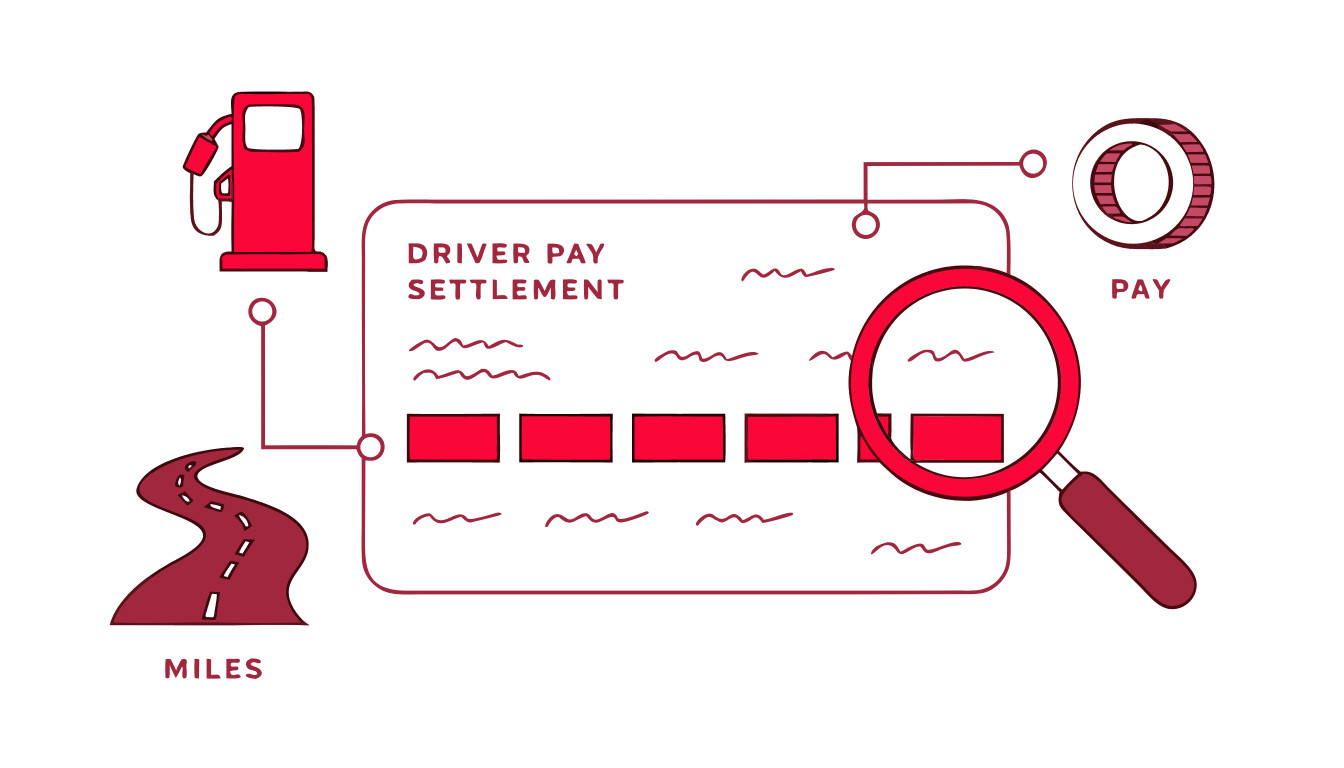
After that, read every line of the check. Toll charges and reimbursements show up as separate lines, and our guide on how to read a trucking settlement shows where. The other costs of a week out, from showers to scales, are in truck driver road expenses.
Most of these rates go up again around New Year 2027
Illinois moves the most. On August 19, 2026 the Tollway board approved new rates from January 1, 2027. Cars get their first increase in more than 15 years, while commercial rates, which already went up in January 2026, rise about 30 percent more for I-PASS users. Every other year from 2029, rates will follow the consumer price index. In the June 2026 proposal, Belvidere goes to $22.00 for 5 or more axles in daytime, and a Pay By Plate bill costs one and a half times the I-PASS rate.
Pennsylvania raised tolls 4 percent on January 4, 2026, its smallest increase since 2014. In July 2026 the Commission approved another 3.5 percent from January 3, 2027. Open road tolling west of Reading starts in January 2027. Ohio is on a 2024–2028 schedule approved in 2023, with 2.7 percent for 2026. Indiana's State Budget Committee approved a lease change in April 2026 that lets the Toll Road operator raise tolls every December 31 and June 30, by at least 1.5 percent or inflation, and the Indiana Capital Chronicle put this December's step at 1.6 percent. The New York Thruway's second 5 percent step, approved in 2023, is due on January 1, 2027.
So this table has a shelf life of about ten weeks. Before a January run, price the route again in the operator's calculator.
Frequently asked questions
How much are tolls for a semi truck from Chicago to New York?
On the all-toll route through the Skyway, the Indiana and Ohio toll roads, the Pennsylvania and New Jersey turnpikes and the George Washington Bridge, a 5-axle truck pays about $614 with E-ZPass on a weekday daytime run and about $898 without a transponder, at rates as of October 2026. Pennsylvania is $249.81 of that with a tag and $500.26 by plate.
Do truck tolls cost more without E-ZPass?
On most eastern toll roads, yes. Pennsylvania's Toll By Plate is about double the E-ZPass rate, and the Ohio Turnpike charges $62.75 cash against $49.75 with a tag for a 5-axle truck going east. The Chicago Skyway and the Indiana Toll Road charge about the same either way.
Who pays tolls in trucking, the driver or the company?
It depends on the carrier and on the kind of deal you drive under, as a company driver or as an owner-operator. A leased owner-operator's lease must spell it out under 49 CFR 376.12(e). Ask the recruiter who pays tolls, who issues the transponder and how a toll you pay yourself is reimbursed, and get the answer in writing.
What happens if a truck goes through a toll without paying?
A camera reads the plate and the bill goes to the registered owner, usually the carrier or the leasing company. In Ohio, tolls unpaid 90 days after the first invoice go to collections and registrations can be held. PennDOT can suspend a Pennsylvania registration after four or more unpaid invoices or $250 in unpaid tolls and fees.
Does E-ZPass work for semi trucks in every state?
No. The E-ZPass network covers toll agencies in about 20 states, mostly in the East and Midwest. A tag from one member works on the other members' roads, but discounts can depend on where the account was opened, as at the Port Authority crossings into New York.
Every mile counted ZIP-to-ZIP and paid, loaded or empty
ASTEL is a family-owned carrier out of Chicago running refrigerated freight year-round on late-model Volvo trucks, with our own repair shop and mechanics, 24/7 dispatch and a direct line to the owner. Drivers earn $90,000–$110,000 a year — $2,400–2,700+ a week gross, a flat $0.80 per mile for drivers with 1+ year of experience, all miles paid ZIP-to-ZIP, weekly pay, plus $50/$200/$500 bonuses for clean DOT inspections.
Apply in 2 minutes →Sources: Pennsylvania Turnpike Commission, 2026 Toll Calculation Guide, rates effective January 4, 2026; Ohio Turnpike and Infrastructure Commission, 2026 Schedule of Tolls and news releases of December 11, 2025 and April 20, 2026; Indiana Toll Road toll rates effective June 30, 2026; Illinois Tollway 2026 truck and trailer rates by plaza, proposed rates effective January 1, 2027 and August 19, 2026 news release; Chicago Skyway toll information, 2026; New Jersey Turnpike Authority 2026 toll rate schedule, Class 5; Port Authority of New York and New Jersey Truckers' Guide, rates effective January 4, 2026; E-ZPass Group; PennDOT, Suspensions Due to Unpaid Tolls; U.S. Energy Information Administration, Gasoline and Diesel Fuel Update, October 20, 2026; 49 CFR 395.3; 49 CFR 376.12(e); Transport Topics (September 26, 2023), Indiana Capital Chronicle (April 15 and 16, 2026), WPXI (July 8, 2026), CBS News, ABC27 and NBC Philadelphia reporting. Current as of October 2026; toll rates and payment rules may change, check the operator's toll calculator before a trip. Mileage and dispatch details describe ASTEL driver terms. General information, not legal advice.