

Low Clearance Bridges and the Seven Mistakes That Peel a Trailer Roof
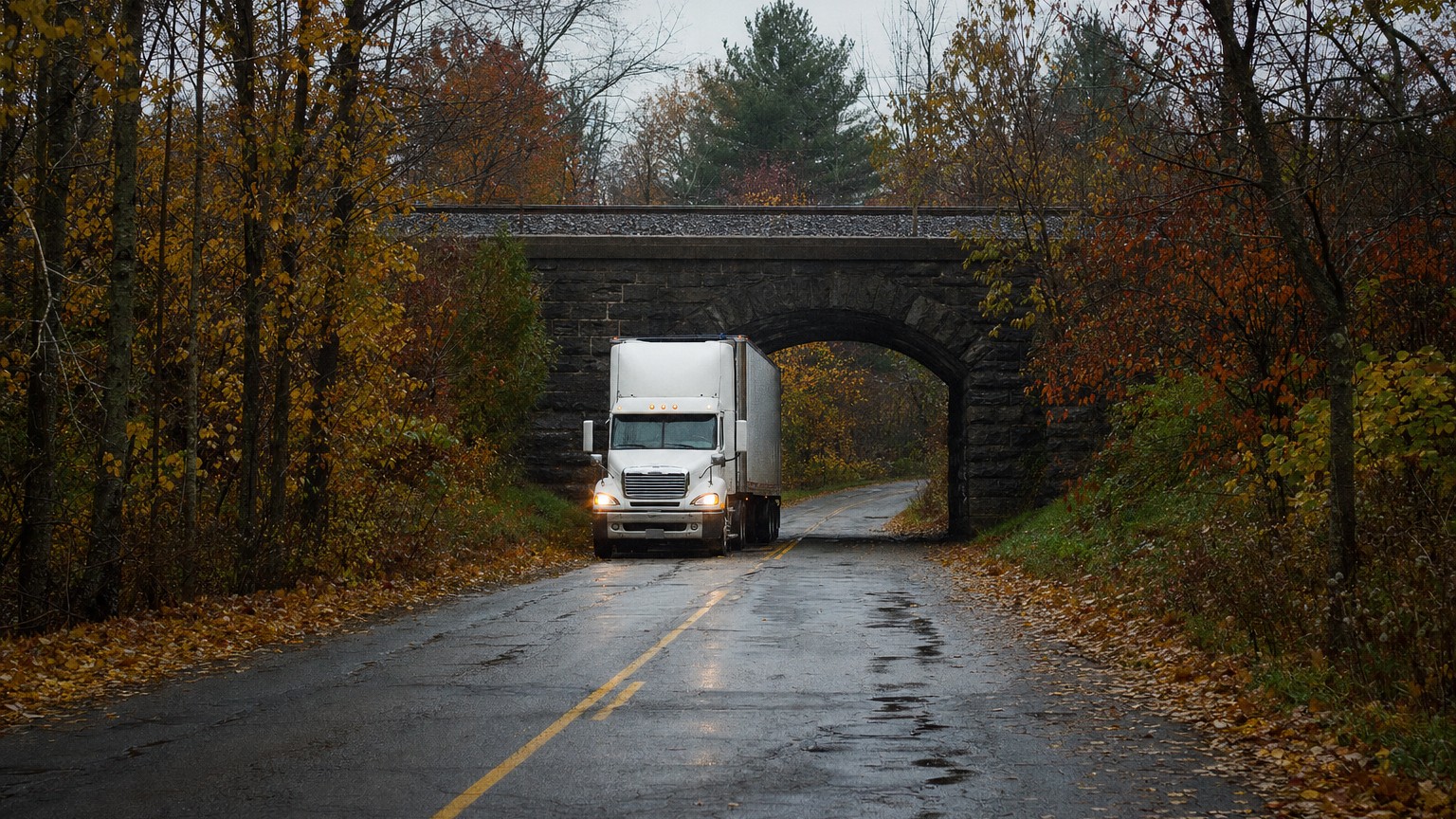
A lot of drivers who hit low clearance bridges made the real mistake miles earlier, when they let a phone app built for cars pick the road. Say you're running a loaded reefer into Westchester and the app finds a shortcut on a parkway. The first stone arch takes the roof off a 13-foot-6-inch trailer. After that come a closed road, a police report, a damaged load and, in New York since February 16, 2026, 8 points on your driving record. New York reported 310 bridge strikes in 2025, and the state says most involved commercial or large trucks whose drivers didn't know their height or ignored the signs.
Seven mistakes behind most bridge strikes
- Routing with a car app. New York State warns that consumer GPS units and phone map apps don't necessarily take low bridges into account. To a car app, a parkway is just the fastest line on the map.
- Guessing your height. Many 53-foot reefers are built at 13 ft 6 in, but makes and model years differ. "About thirteen-six" is a guess with no margin in it.
- Trusting the sign to the inch. The posted number is set when the sign goes up. Repaving and winter can take inches away later.
- "I've been under it before." Maybe you were, in a different trailer or behind a tractor with a lower fifth wheel, or before the road was repaved.
- Taking a road that's closed to trucks. Parkways in New York, Lake Shore Drive in Chicago and Storrow Drive in Boston keep trucks out because of low arches and overpasses.
- Backing or turning around blind near the bridge. Two minutes out of the cab to look costs less than a second crash with a car behind you.
- Driving off after a hit. Leaving the scene of an accident in a CMV is a major offense under 49 CFR 383.51, with a 1-year CDL disqualification on a first conviction.
On July 27, 2026, the New York governor's office named the two usual causes: drivers who didn't know their vehicle's height, and drivers who ignored warning signs. Both get fixed before the trip starts. The last mistake on the list is different, because it turns a damaged trailer into a lost license.
New York keeps the count and now adds 8 points
New York reported 808 bridge strikes across 2021 and 2022 combined. The sponsors of a federal bill cited 350 in the state in 2024, and New York counted 310 in 2025. That's fewer, but still close to one a day. Strikes cluster on low railroad bridges and on the parkways of the Lower Hudson Valley, New York City and Long Island, where the old stone arch bridges sit.
The penalty changed this year. For violations on or after February 16, 2026, an over-height or bridge strike conviction puts 8 points on a New York driving record. Before that date it carried none. In the same month the state finished work on the Onondaga Lake Parkway near Syracuse, which runs under a low railroad bridge. Sensors now detect tall vehicles and light up "No Truck" signs about 750 feet before the bridge eastbound and 950 feet westbound.
NYSDOT launched its "Check Your Height, Know It's Right!" campaign in November 2023, and it now runs as a multi-state week in late July. The 2026 round ran July 27–31, with State Troopers patrolling places where large trucks have hit bridges. By then 26 states plus Washington, D.C. had joined, Illinois among them, up from 16 a year earlier.
Two bills go after the GPS side, and neither is law. New York's A3536 would require GPS navigation systems to show the legal clearance of bridges along a proposed route. It passed the Assembly in May 2026, and its Senate twin, S6197, was still in committee when we checked.
In Congress, the Bridges Not Bumpers Act of 2025 (H.R. 6531), introduced December 9, 2025, would set up a national clearinghouse for strike data and a federal working group. Its recommendations could include a bridge-strike section on CDL tests, and DOT would have a year after them to write rules. The latest action we found is a referral to House subcommittees on February 2, 2026.
FreightWaves reported on December 16, 2025, that large carriers and freight railroads back the bill. Henry Hanscom of the American Trucking Associations said in a statement that "All drivers have a responsibility to pay attention to their surroundings, read signs, and keep our roadways safe." No law is on the books yet. The route is still on you.
Measure your height and keep the number in the cab
There's no federal height limit for trucks. FHWA leaves it to the states, and most set theirs between 13 ft 6 in (4.11 m) and 14 ft (4.27 m), with lower limits on particular roads. At a bridge, only the height of today's rig matters.
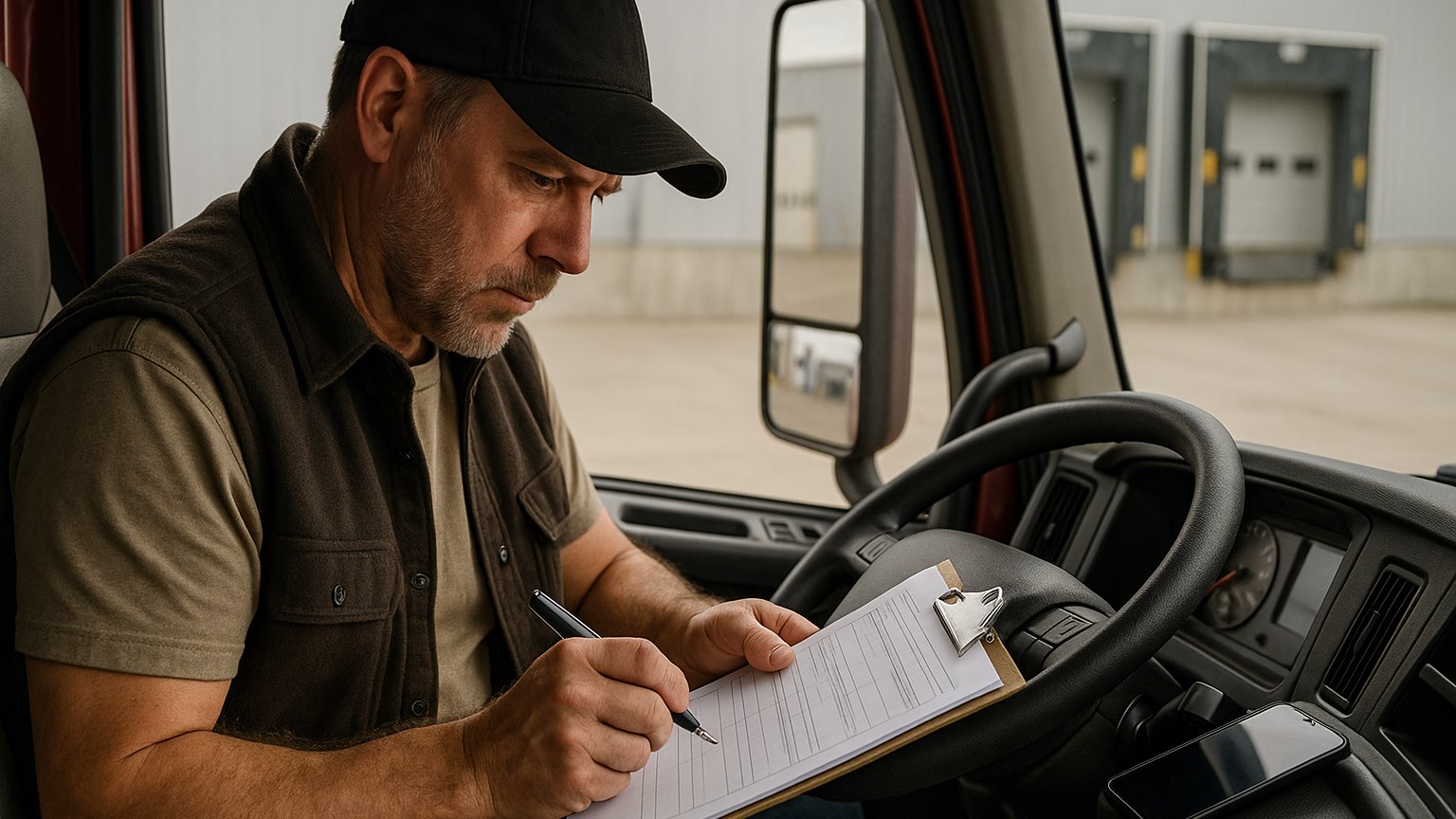
Get it from the trailer's spec plate or the paperwork, then check it with a tape. Park on level ground, hooked up, at normal ride height, and measure to the highest point of the roof or anything mounted on it. Write the result in feet and inches on a card on the dash. Swap trailers and the card is out of date. Our pre-trip inspection checklist covers the rest of the walk-around.
Enter the same number in the truck GPS. A profile that says 13 ft when you're pulling 13 ft 6 in will send you under a 13 ft 3 in bridge without a warning.
A low clearance sign gives you the most you get
The federal sign manual, the MUTCD (11th edition, Section 2C.25), tells road agencies to post the clearance rounded down to the nearest inch. Where frost heaves the road, it says the posted number should be cut by up to 3 more inches. That's a small cushion. Both lines are guidance rather than hard rules, so don't count on every sign having it built in.
The same section says clearances should be checked again, especially after resurfacing, and that's where the cushion goes. A new layer of asphalt raises the road, not the bridge, and the sign stays the same until somebody measures again. Packed snow and ice under an overpass do the same in winter, one more item for the winter driving list.
Keep your own margin on top. If the sign reads 13 ft 9 in and you're at 13 ft 6 in, you have 3 inches before any of that. Less than that is a call to dispatch and a detour.
| Where you check clearance | What it gives you | Where it falls short |
|---|---|---|
| Truck GPS with your profile | Routes around low structures and truck bans it knows about | Only as good as the height you typed in and its map data |
| State 511 site, such as 511NY Trucker Mode | Height- and weight-restricted bridges and restricted routes like parkways | One state at a time |
| Truckers' road atlas | State truck routes and posted restrictions | Goes out of date; check the edition year |
| Shipper or receiver directions | The last miles to the dock | Ask whether they were written for trucks |
| Signs on the road | The posted clearance at the structure | By the time you spot one, the exit may be behind you |
| Dispatch | A second look at the route, day or night | Can't see what you see through the windshield |
Parkways and boulevards are closed to trucks even where a bridge would fit
New York State's parkways are closed to commercial vehicles of every kind, including tractor-trailers, according to NYC DOT's truck guidance, and the city warns that GPS can still send trucks onto them. The low stone arch bridges are the reason. NYC DOT's parkway flyer says some are posted as low as 6 ft 11 in.
Chicago keeps trucks off DuSable Lake Shore Drive. City code section 9-72-020 bars vehicles designed mainly for hauling goods from any boulevard, and the city's law department has said the Drive counts as one. Trucker route guides from 2026 describe the ban the same way: trucks over 5 tons are out, and so is any vehicle with commercial plates, loaded or empty. Most residential streets in the city are closed to heavy trucks too, so get on a posted truck route and stay on it. ASTEL's yard is in Chicago, and learning which roads around the city are closed to trucks is part of getting home.
In Boston, Storrow Drive is a state parkway along the Charles River with trucks and commercial vehicles banned. For years local news has covered strikes there around September 1, when leases turn over and people move in rented trucks, though NBC Boston reported none during move-in week in 2023 or 2024.
Under 49 CFR 392.2, a CMV must be operated by the laws of the place where it's driving, so a city truck ban binds you like any federal rule.
Check the route before the wheels turn
Route planning for clearance starts at the dock, not on the highway. Before you pull out, run the trip in the truck GPS with your profile, then look at the last 20 miles on the state's 511 pages or in the atlas. The last miles are where trouble usually is. FHWA's design standard calls for 16 feet of vertical clearance on rural Interstates, while a shipper in an old industrial district may sit behind a rail viaduct.
Check the shipper's directions against the map and call dispatch when they don't match. At ASTEL dispatch is on the line 24/7, so a routing question at 2 a.m. gets a live answer. The whole trip is laid out in our truck trip planning guide, and routing apps are compared in our roundup of the best apps for truck drivers.
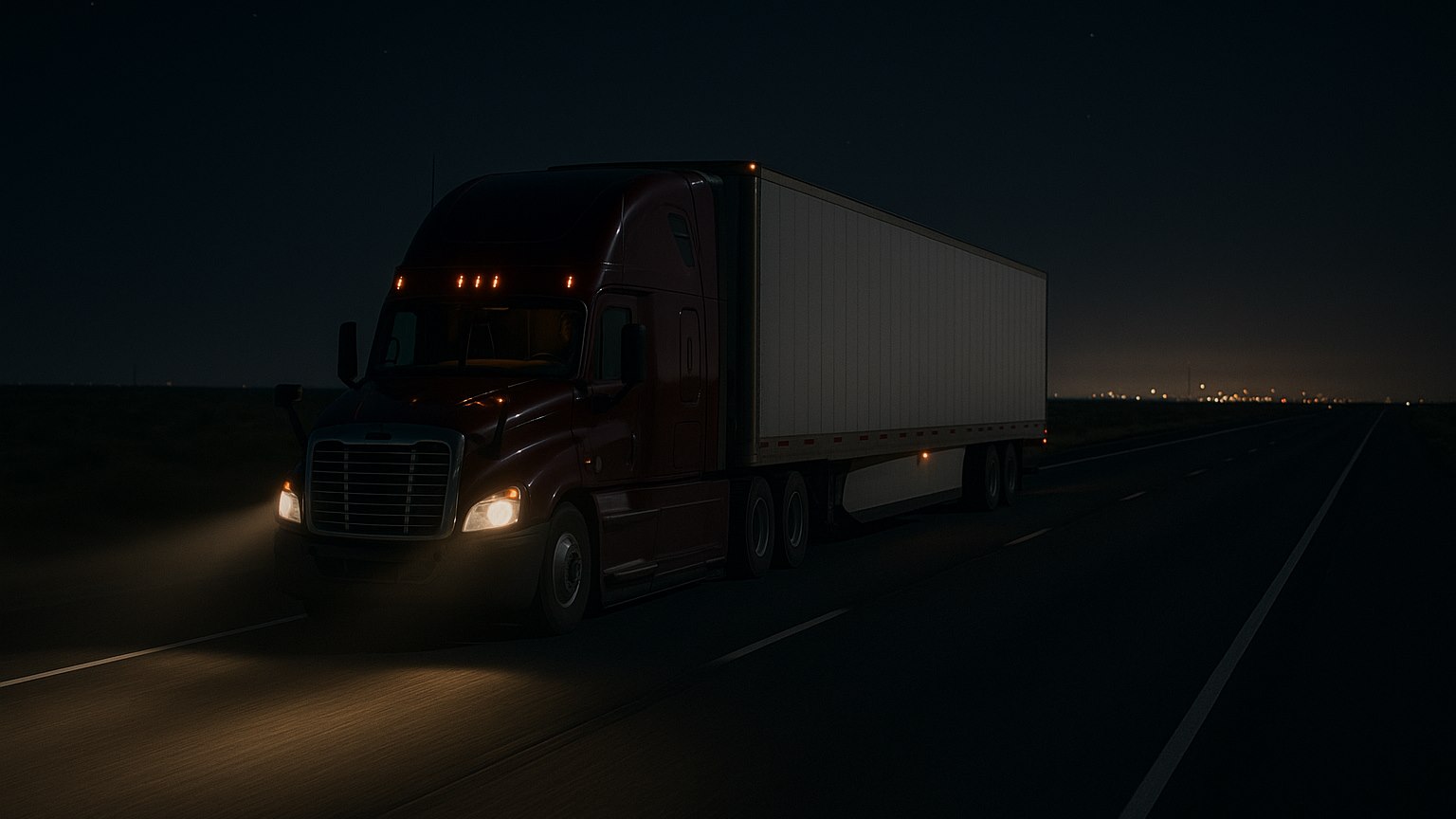
Night is harder. A low clearance sign is a yellow warning sign, and after 10 hours behind the wheel it's easy to miss one in the rain, as our night driving tips point out.
If a clearance looks wrong, stop short of the bridge
The decision belongs at the advance sign, not under the bridge. The sign manual calls for a low clearance sign with a distance plaque at the nearest road or wide spot where a vehicle can detour or turn around. That's your exit. If the posted number is within a few inches of your height, or there's no number at all, take it.
If you're already committed and can't turn, stop. Turn on the flashers, and if you're stopped on the road or the shoulder, 49 CFR 392.22 gives you 10 minutes to put out the triangles. Call 911 or local police and ask for help holding traffic while you back out. Get out and look before every few feet of reverse, the same rule as in our truck backing tips.
After a strike you stay at the scene and make the calls
- Stop. If the trailer is wedged under the structure, don't try to power out.
- Turn on the hazard flashers right away and place the triangles within 10 minutes. On a two-way road that means one about 10 feet behind on the traffic side, one 100 feet behind and one 100 feet ahead. On a divided or one-way road, all three go back toward oncoming traffic, at 10, 100 and 200 feet.
- Call 911. Say it's a bridge strike and say if it's a railroad bridge, so the railroad can be told.
- Call dispatch with your location, photos of the trailer and the bridge, and the reefer reading.
- Stay until the police release you, and photograph the posted clearance sign.
The blue Emergency Notification System signs you see at grade crossings carry a railroad's emergency number and a crossing ID. Federal rules (49 CFR 234.309) require them at crossings, not on overpasses, so at a bridge 911 is the call.
Staying is the law. In New York, Vehicle and Traffic Law section 600 says a driver who knows or has cause to know of damage to someone else's property must stop, and must report it to police if the owner isn't there. A bridge is someone else's property. If a state convicts you of leaving the scene of an accident in a CMV, 49 CFR 383.51 takes your CDL for 1 year on a first offense and for life on a second. Our page on CDL disqualification violations lists the rest.
A drug and alcohol test doesn't follow every strike. Under 49 CFR 382.303 the employer must test after a crash with a fatality, or when you get a ticket and someone is treated away from the scene or a vehicle has to be towed. A peeled roof on a truck you can still drive, with nobody hurt, doesn't meet that test even with a ticket. A company's own policy can go further, so ask. The rest of the crash routine is in what to do after a semi-truck accident.
A torn roof lets outside air into a reefer. ASTEL drivers check load temperature and the unit 2–3 times a day anyway. After a strike, send the setpoint and return-air reading to dispatch along with the photos.
How ASTEL backs you up on the route
At ASTEL you have dispatch 24/7 and a direct line to the owner, who is always at the yard. The trucks are late-model Volvos with automatic transmissions, so backing away from a bridge means mirrors and pedals, not a clutch.
ASTEL also takes drivers with no experience. If that's you, a height card on the dash is a cheap habit to start in week one. How the first months go is covered in truck driving jobs with no experience.
Frequently asked questions
How tall is a semi truck with a 53-foot trailer?
Many 53-foot vans and reefers are built at 13 ft 6 in, but makes and years differ, so measure yours. There's no federal height limit, and most states allow 13 ft 6 in to 14 ft, with lower limits on some roads.
What happens if a truck hits a bridge in New York?
For violations on or after February 16, 2026, an over-height or bridge strike conviction adds 8 points to a New York driving record. NYC DOT's parkway flyer also warns of fines, towing fees that can run past $10,000 and repair costs billed back to the state and city.
Are low clearance signs accurate?
They're meant to be conservative. The MUTCD says agencies should round the posted clearance down to the nearest inch and take up to 3 more inches off where frost heaves the road. That's guidance, not a hard rule, and repaving or packed snow can eat the cushion, so keep your own margin.
Can trucks drive on parkways in New York?
No. Commercial vehicles of every kind, including tractor-trailers, are banned from New York State's parkways, and the low stone arch bridges on them are the reason. Check the route on 511NY Trucker Mode, which shows the restricted routes.
Do I have to report hitting a bridge if I don't see damage?
Stop and check. New York's Vehicle and Traffic Law section 600 requires you to stop when you know or have cause to know of property damage and to report it to police. Bridge damage isn't always visible from the road, so tell dispatch either way.
How do I find low clearance bridges on my route?
Put your measured height into a truck GPS profile and run the trip there first. Then check the last miles on the state's 511 site; in New York, 511NY Trucker Mode shows height- and weight-restricted bridges and restricted routes such as parkways. A current truckers' atlas adds state truck routes. If the shipper's directions leave the truck route, call dispatch before you roll.
Run reefer freight with dispatch on the line 24/7
ASTEL is a family-owned carrier out of Chicago running refrigerated freight year-round on late-model Volvo trucks, with our own repair shop and mechanics, 24/7 dispatch and a direct line to the owner. Drivers earn $90,000–$110,000 a year — $2,400–2,700+ a week gross, a flat $0.80 per mile for drivers with 1+ year of experience, all miles paid ZIP-to-ZIP, weekly pay, plus $50/$200/$500 bonuses for clean DOT inspections.
Apply in 2 minutes →Sources: New York Governor's office releases of July 27, 2026 (bridge strike campaign) and February 12, 2026 (Onondaga Lake Parkway), via WNYT, CNY Central and Finger Lakes 1; Governor's office release of November 5, 2023 (strike figures for 2021–2022 and campaign launch); NY DMV point values for violations on or after February 16, 2026; NY bills A3536 and S6197, legislative record as of October 2026; H.R. 6531, Bridges Not Bumpers Act of 2025, bill text and actions on Congress.gov, and FreightWaves, December 16, 2025; FHWA federal size regulations; MUTCD 11th edition, Section 2C.25; NYC DOT truck guidance and parkway flyer; Chicago Municipal Code 9-72-020 via WBEZ, 2013, and trucker route guides, 2026; NBC Boston on Storrow Drive move-in weeks; NY Vehicle and Traffic Law section 600; 49 CFR 234.309, 382.303, 383.51, 392.2 and 392.22. Current as of October 2026; state penalties, bills and federal rules may change. Dispatch and equipment details describe ASTEL driver terms. General information, not legal advice.