

Cell Phone Rules for Truck Drivers Come Down to One Touch and No Hands
In the study FMCSA used to write its cell phone rules for truck drivers, texting made a safety-critical event 23 times more likely. The researchers at the Virginia Tech Transportation Institute watched truck drivers on real routes and found that a driver typing a message took their eyes off the road for 4.6 seconds out of every 6. At 55 mph that is about 371 feet driven blind, longer than a football field with both end zones.
The fine, the CDL and the CSA points add up
| What happens | Number | Where it comes from |
|---|---|---|
| Maximum federal civil penalty for the driver | $4,812 per violation | 49 CFR part 386, Appendix B (a)(4) |
| Maximum federal penalty for a carrier that allows or requires it | $19,246 per violation | 49 CFR part 386, Appendix B (a)(3) |
| Second conviction within 3 years in a CMV | 60 days without a CDL | 49 CFR 383.51, Table 2 |
| Third conviction within 3 years in a CMV | 120 days without a CDL | 49 CFR 383.51, Table 2 |
| Severity weight in the Unsafe Driving BASIC | 10 out of 10 | FMCSA Safety Measurement System |
The dollar amounts are maximums. FMCSA adjusts them for inflation every year. A state ticket for the same act is a separate matter with its own fine. The conviction hurts more. Texting and hand-held phone use sit in the same table as speeding 15 mph or more over the limit and following too closely, and any two serious violations from that table within three years trigger the 60-day disqualification. A phone ticket in March and a speeding ticket in October can park you for two months.
Our article on CDL disqualification lists the rest of that table.
The violation also lands on the carrier's safety record with the highest weight the system gives. That is why carriers read phone violations on your record closely at hiring, as explained in our guide to CSA, PSP and MVR.
What counts as texting under 392.80
The federal definition in 49 CFR 390.5 is broader than most drivers think. Texting means manually entering text into an electronic device or reading text from it. That covers messages and email, instant messaging, opening a web page and pressing more than one button to start or end a call.
Reading counts. Say you glance down at a text that just came in while you roll at 65, and you have violated the rule. You never touched the screen, and it still counts.
The same goes for a message on a dispatch tablet. The definition lets you use fleet management systems and dispatching devices for purposes the rules don't forbid, and reading or typing text while driving is forbidden. Wait until you stop. Every time.
Two exceptions. You may enter, select or read information on a GPS or navigation system, and you may press a single button to answer or end a call. Setting the route before you leave the shipper is still the safer habit, and some state laws are stricter about touching a navigation screen.
What counts as holding a phone under 392.82
The hand-held rule came a year after the texting rule, in December 2011. Under 390.5, using a hand-held mobile telephone means one of three things:
- Holding the phone in at least one hand to talk.
- Dialing or answering by pressing more than one button.
- Reaching for the phone in a way that takes you out of the seated driving position, restrained by a properly adjusted seat belt.
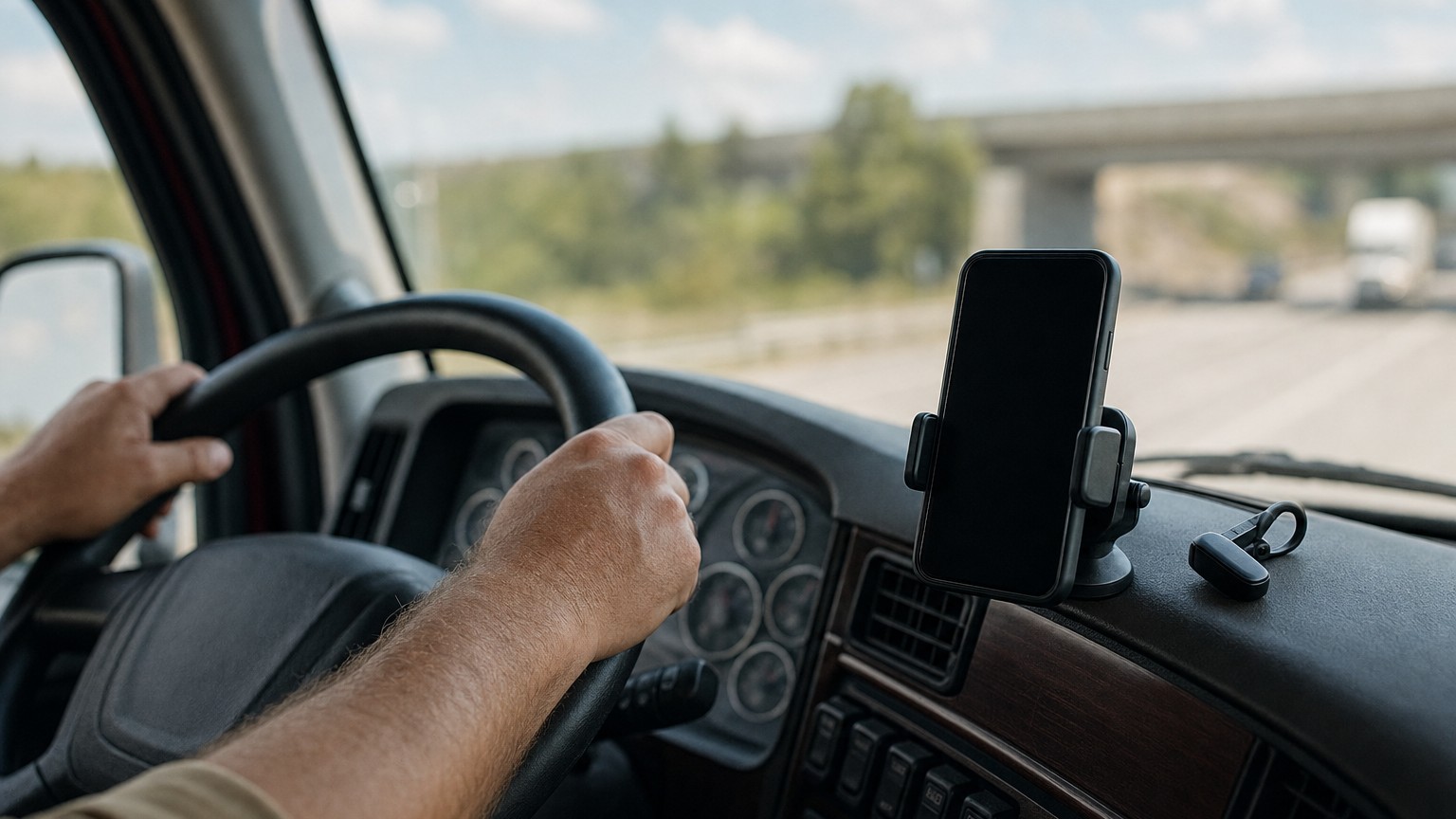
Item three catches people. A phone that slides off the dash onto the passenger seat is now out of legal reach. Leaning over to grab it is a violation. It is also dangerous, and in the 2009 study reaching for an electronic device made a safety-critical event almost 7 times more likely. Mount the phone where you can tap it with your back against the seat. Dialing a number by hand raised the risk almost 6 times, so put the numbers you call into your contacts and use voice dialing.
By the way, a CB radio is not a mobile telephone under the federal definition. The rules leave CB alone, though a hand mic you hold for a long conversation still takes a hand off the wheel.
Stopped at a red light still counts as driving
This point surprises a lot of drivers. Both rules define driving to include being temporarily stationary because of traffic, a traffic light or other momentary delays. Sitting at a red light with the engine running, you are still driving for the purposes of these rules. The same is true in a traffic jam on the interstate and in the line at a weigh station.
You are not driving once you have moved the truck to the side of the road or off it and stopped in a place where it can safely stay. A rest area qualifies. So does a truck stop or a parking spot at the receiver. Stopping on the shoulder just to answer a text does not make it safe. Shoulder stops are for emergencies, and a parked trailer on the shoulder is a crash risk of its own. Our truck parking guide lists better places to stop.
What you may do, and what you may not
| Situation while driving | Allowed? |
|---|---|
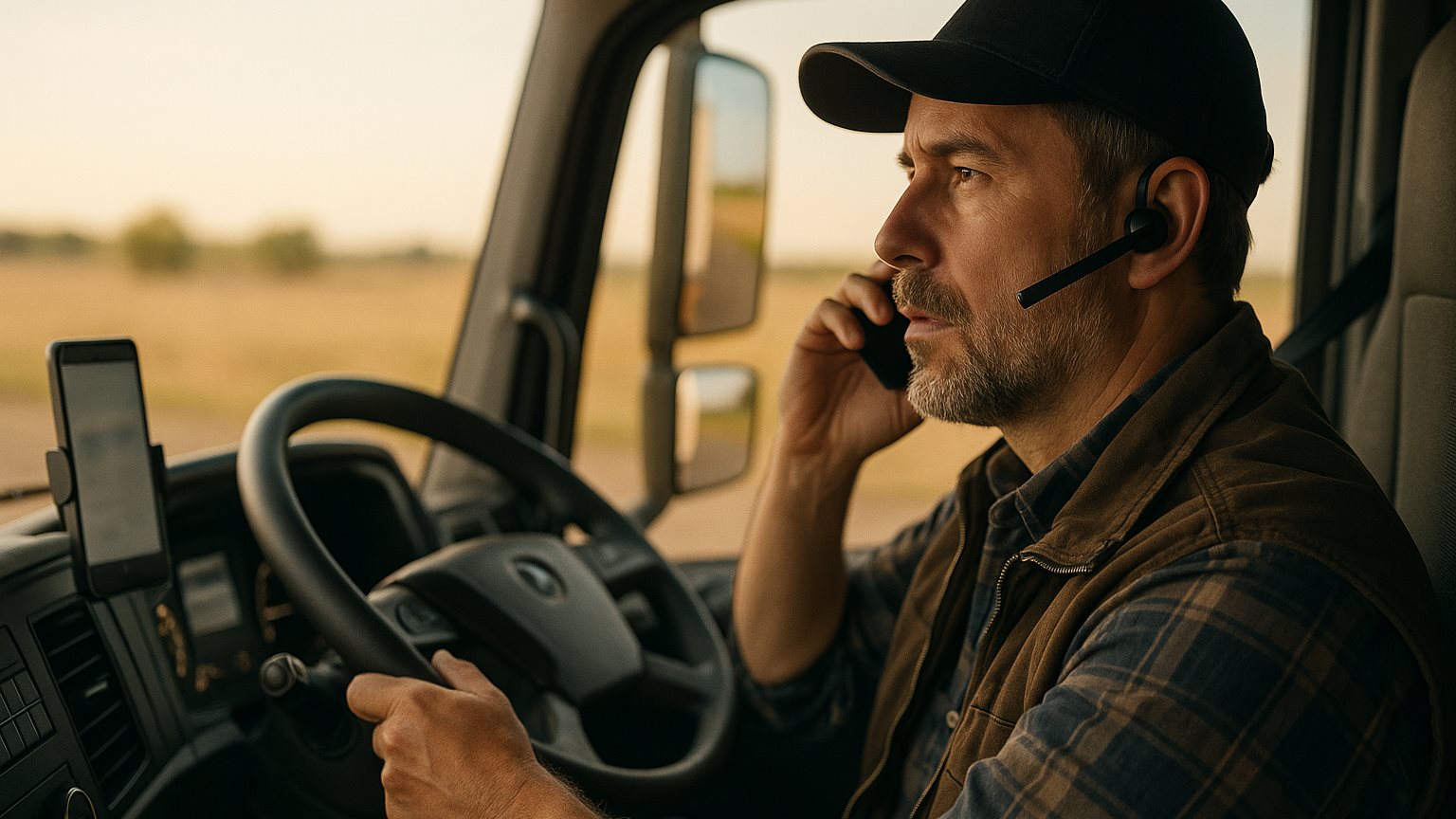
| Phone in a mount, one tap to answer, talk on speaker or headset | Yes |
| Voice command to call a contact or read a message aloud | Yes, if you do not touch more than one button |
| Entering an address in the GPS | Allowed by the federal rule, but set it before you move |
| Phone held to your ear on speaker | No |
| Reading a text or a dispatch message on the screen | No |
| Typing a number or a message | No |
| Reaching for a phone on the passenger seat | No |
| Calling 911 after a crash ahead | Yes, emergency exception |
| Texting at a red light with the engine running | No |
| Texting parked at a truck stop | Yes |
Both rules carry the same emergency exception, and it is narrow. It covers contacting law enforcement or emergency services. A call to dispatch about a late appointment is not an emergency, even if it feels urgent.
State laws add their own fines
On top of the federal rules, more than 30 states and the District of Columbia ban hand-held phone use for every driver, according to the Governors Highway Safety Association, and almost every state bans texting. A state officer can write you a state ticket under state law. The conviction then goes on your record and counts toward the federal disqualification table just like a federal violation would.
Some state laws are stricter than the federal rule. In a few states, holding the phone at all is a violation, even to look at a map. Fines differ from state to state and often rise for a second offense. If you run through many states in a week, follow the strictest version everywhere: mounted phone, one touch, voice only.
Set up the cab so you don't have to think about it
The rules are easy to follow if the cab is ready before you move. Here is what that looks like:
- A solid mount on the dash or the window, inside the reach of your right hand with your back on the seat.
- A headset with one button, charged before each shift.
- Voice assistant turned on and tested with the contacts you call most: dispatch, home, the shipper.
- Do Not Disturb While Driving with auto-replies on, so family knows you will call back.
- Route and stops loaded before you leave the dock.
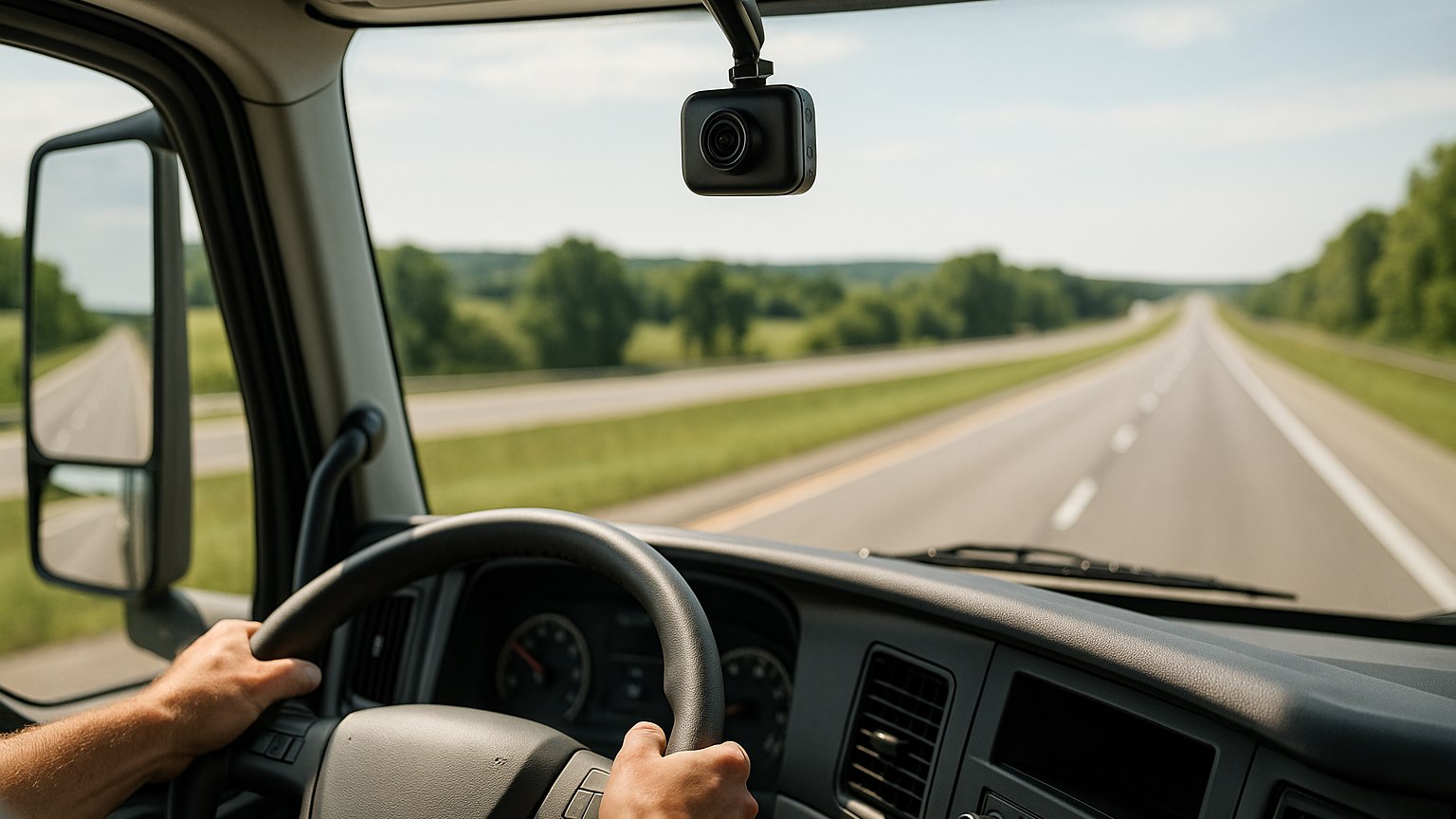
Many trucks now carry dash cams that face both the road and the cab. A driver-facing camera records a phone in your hand as clearly as an officer would see it, and many carriers review those clips after hard braking. See our guide to dash cams for truck drivers for how that footage is used.
How this works at ASTEL
ASTEL dispatch answers 24/7, and dispatchers would rather wait ten minutes for a call back than have a driver read a message at 65 mph. Messages about the next load can wait. Read them at the fuel stop. The company expects 600–700 miles a day in 11 hours of driving, and that leaves room for stops where you can read and reply. When you plan the day, put your calls into those stops, the way our trip planning guide describes.
A clean record pays in more than one way. ASTEL pays a $500 bonus for a clean full Level I inspection, and a single phone violation found during that inspection takes the bonus off the table along with the CSA points. The same inspection routine is covered in our article on the DOT roadside inspection.
Frequently asked questions
Can truck drivers use a phone while driving?
Only hands-free. Federal rules allow a mounted phone within reach, a speaker, a headset or voice commands, and pressing a single button to start or end a call. Holding the phone, dialing, texting and reading messages are banned.
What is the fine for a truck driver texting while driving?
FMCSA can assess a civil penalty of up to $4,812 against the driver per violation and up to $19,246 against the carrier, under the 2026 inflation-adjusted amounts in part 386. A state ticket can add its own fine, and two convictions in three years mean a 60-day CDL disqualification.
Can a truck driver use a phone at a red light?
No. Both federal rules count being temporarily stopped in traffic or at a light as driving. You may use the phone once the truck is off the road and parked where it can safely stay.
Is reading an ELD or dispatch message while driving a violation?
Yes. The federal definition of texting includes reading text from any electronic device, and dispatching devices are allowed only for purposes the rules don't forbid. Read the message after you stop.
Does a CB radio count as a cell phone under FMCSA rules?
No. The federal definition of a mobile telephone excludes two-way and Citizens Band radio services, so the hand-held phone rule does not apply to a CB.
Dispatch that waits until you are parked
ASTEL is a family-owned carrier out of Chicago running refrigerated freight year-round on late-model Volvo trucks, with our own repair shop and mechanics, 24/7 dispatch and a direct line to the owner. Drivers earn $90,000–$110,000 a year — $2,400–2,700+ a week gross, a flat $0.80 per mile for drivers with 1+ year of experience, all miles paid ZIP-to-ZIP, weekly pay, plus $50/$200/$500 bonuses for clean DOT inspections.
Apply in 2 minutes →Sources: 49 CFR 390.5 (definitions of texting, mobile telephone and use of a hand-held mobile telephone), 392.80, 392.82, 383.51 Table 2 and part 386 Appendix B (eCFR, November 2026); FMCSA final rules 75 FR 59136 (September 27, 2010) and 76 FR 75487 (December 2, 2011); Olson, Hanowski and others, "Driver Distraction in Commercial Vehicle Operations," Virginia Tech Transportation Institute for FMCSA (September 2009); FMCSA Safety Measurement System violation severity weights; Governors Highway Safety Association, distracted driving laws by state (2026). The 371-foot figure is a calculation from 55 mph and 4.6 seconds. Penalty amounts are adjusted for inflation each year and state laws change, so check the current rules. Current as of November 2026. General information, not legal advice.