


How Old to Get a CDL and Why 21 Is the Age That Opens OTR
"How old do you have to be to drive a semi?" Most states will issue a Class A commercial license at 18, so the honest answer to how old to get a CDL comes with two numbers. At 18 you can drive a tractor-trailer inside your home state. At 21 you can take it across a state line, and that is the age every over-the-road job starts from.
The gap between those two birthdays is where people get confused. A recruiter tells a 19-year-old that OTR has to wait, while a local fleet down the road puts a 19-year-old in a day cab. Both are following the same rules. The difference is where the freight goes.
Those three years don't have to be wasted, either. Insurers and companies usually ask for 1–2 years of experience before they hand someone a truck for long-haul work, and a driver who spends 19 and 20 hauling in-state can walk into an OTR application at 21 with that experience already on the record.
Federal law sets 21 for anything that crosses a state line
The rule is one line long. Under 49 CFR 391.11(b)(1), a person is qualified to drive a commercial motor vehicle in interstate commerce only if he or she "is at least 21 years old." The exceptions in the same part are narrow, and none of them covers a regular reefer or dry van job.
The tricky part is the definition of interstate commerce in 49 CFR 390.5. It has three tests. A trip is interstate if it goes from one state to another, if it runs between two points in the same state but passes through another state, or if it runs between two points in one state "as part of trade, traffic, or transportation originating or terminating outside the State."
That third test catches a lot of young drivers. Say you are 19 in Texas and a carrier offers you a run from the Laredo border crossing to a cold storage warehouse in Dallas. You never leave Texas. The produce came from Mexico and is still on its way to its destination, so the run can be interstate commerce, and an intrastate-only driver can't legally haul it. A carrier that hires under-21 drivers has to sort its freight with that test in mind.
At 18 you can hold a Class A CDL with a K restriction
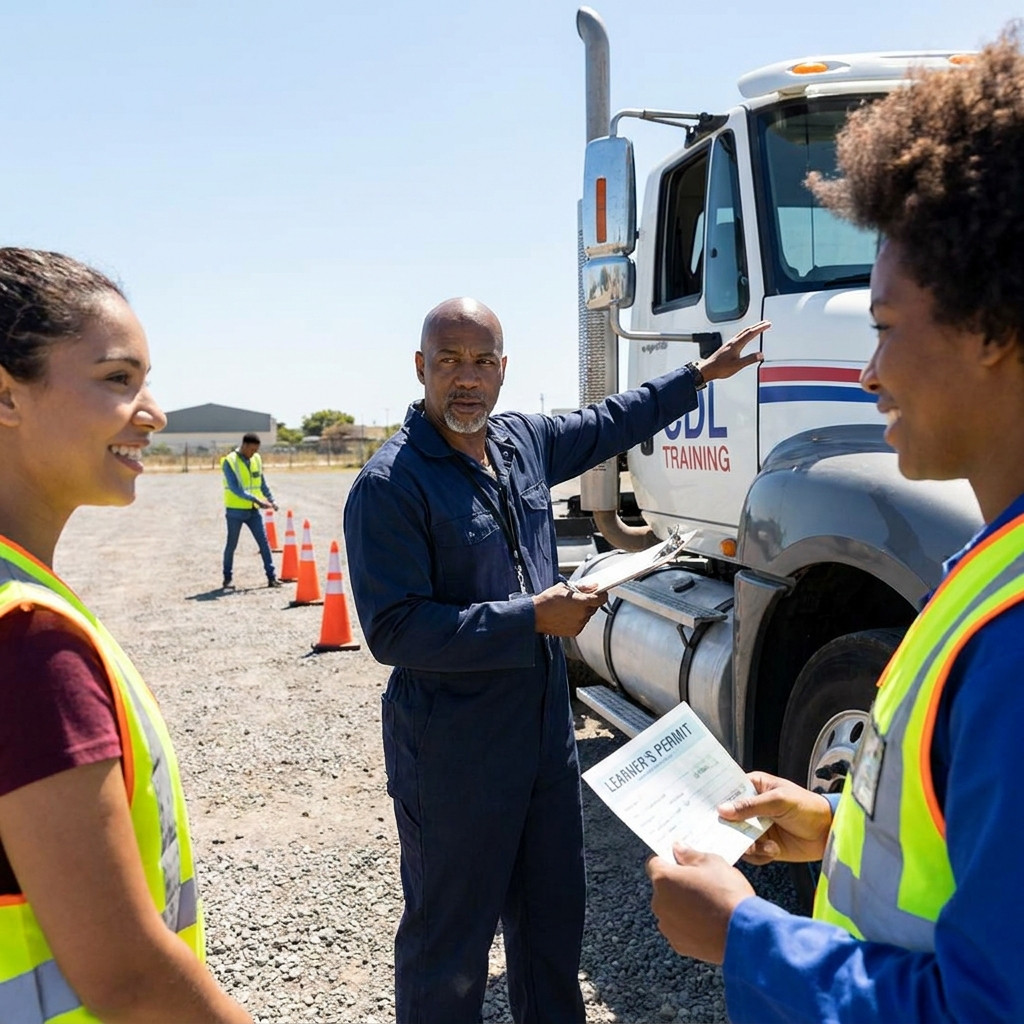
States set the age for the license itself, and most allow an 18-year-old to apply. The steps are the same at any age. You finish entry-level driver training with a provider on the FMCSA registry, which has been required since February 7, 2022. You pass the knowledge tests and get a commercial learner's permit, then wait at least 14 days before the skills test, a waiting period set by 49 CFR 383.25(e). CDL school usually takes 1–3 months. What it costs and who pays is covered in our guide to how much CDL school costs, and the whole order of steps is in how to get a CDL.
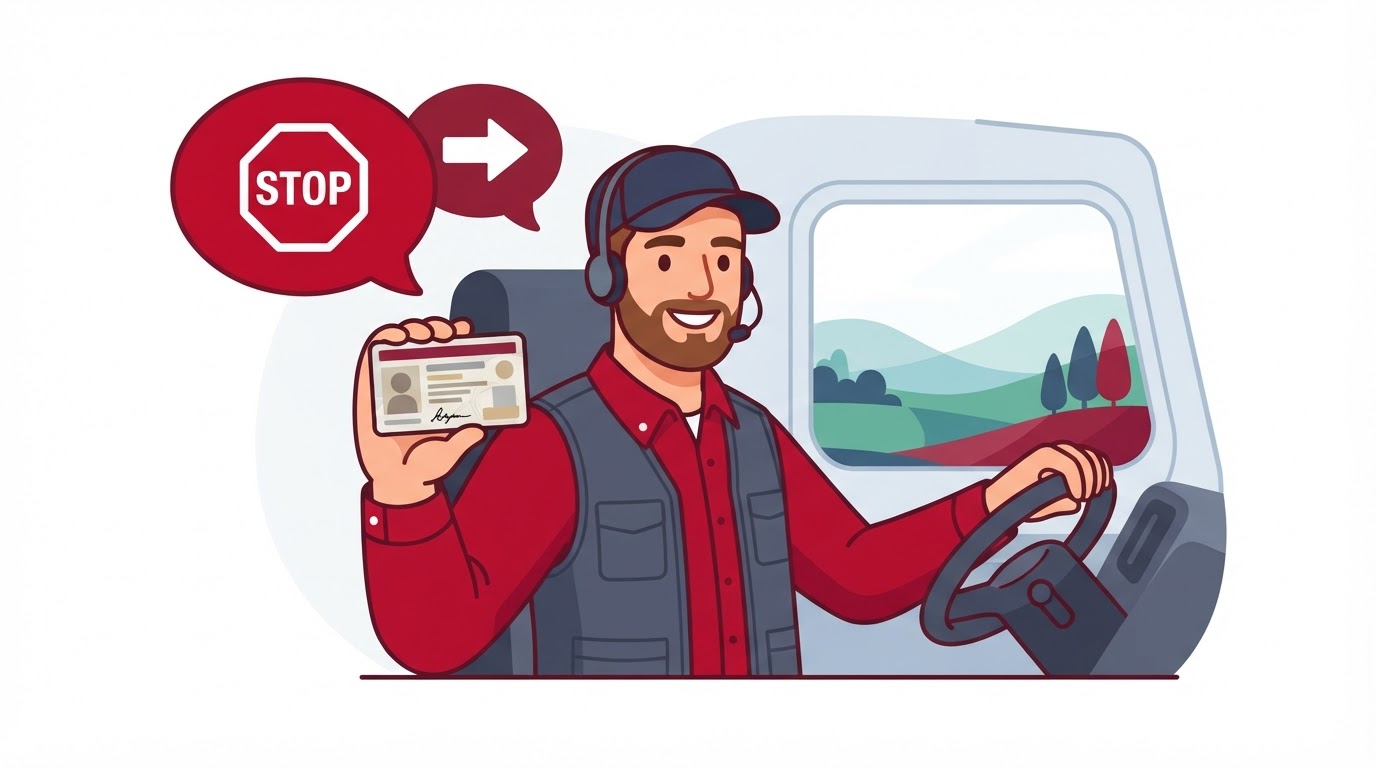
When the license comes, a driver under 21 finds a letter K on it. Federal rule 49 CFR 383.153 lists K as the code for "intrastate only." It is printed on the license and recorded on your driving record, so a carrier or an inspector sees it right away.
The medical side follows the same split. When you apply, you self-certify the type of driving you will do. An under-21 driver certifies intrastate, and the state's own medical rules apply, which can differ from the federal DOT physical standards. Ask your licensing office which medical certificate it wants. The federal exam is explained in our guide to the DOT physical exam.
The under-21 pilot ended on November 7, 2025
For a few years there was a federal path around the 21 rule. FMCSA announced the Safe Driver Apprenticeship Pilot on January 14, 2022, under the 2021 infrastructure law. Carriers approved for the program could put 18- to 20-year-old CDL holders in interstate trucks after a probation period, with an experienced driver supervising them. Data collection started in November 2022.
The terms were strict. Under the law an apprentice went through two probationary periods, 120 hours with at least 80 of them driving and then 280 hours with at least 160 driving, with an experienced driver in the cab the whole time. The truck needed an automatic or automated manual transmission, an active braking collision mitigation system, a forward-facing video event recorder and a governed speed of 65 mph. FMCSA first required an inward-facing camera as well and dropped that requirement in May 2024.
Participation stayed small. The program had room for up to 3,000 apprentices, and FreightWaves reported in January 2026 that only about 80 had applied, with 62 carriers approved. By law a pilot can run for three years, and FMCSA confirmed in the Federal Register that SDAP ended on November 7, 2025. Apprentices who had finished their training but were still under 21 got an exemption extension that lets them keep driving interstate until their 21st birthday.
The American Trucking Associations then asked for a five-year exemption so the same carriers could keep hiring and training new 18- to 20-year-old apprentices. FMCSA published the request on January 28, 2026 (91 FR 3771) and took comments until February 27. OOIDA and several safety groups opposed it. As of late October 2026 no decision had appeared in the Federal Register. If the exemption is granted, it would apply only to carriers that were in the pilot, so it would not open interstate driving to every 18-year-old.
The 21 rule has been argued over for two decades
The debate is older than the pilot. FMCSA's January 2026 notice recounts that the Truckload Carriers Association once petitioned for a younger-driver pilot, and the agency denied it in 2003 for lack of data. The FAST Act of 2015 then created an Under-21 Military Pilot Program for drivers who had operated heavy vehicles in the armed forces, and the 2021 infrastructure law followed with SDAP for civilians.
Both sides cite safety. ATA's application says the pilot's quarterly reports showed millions of miles driven by participants without reportable crashes. Safety groups and OOIDA answered that a sample of about 80 apprentices is too small to prove anything, and safety advocates argued that drivers under 21 are several times more likely to be involved in fatal crashes. Congress asked the Department of Transportation for a report comparing the apprentices with drivers 21 and older, due in March 2026. Until FMCSA acts on the exemption or Congress changes the law, the rule on your license is the one in 391.11.
Three ways to use the years between 18 and 21
The first is an intrastate Class A job. Big states have plenty of freight that starts and ends inside their borders, from building materials to farm hauls during harvest. You learn to back, couple and plan a day while still sleeping at home most nights. The miles go on your record as commercial driving experience. Watch the map, though. In metro areas that sit on a state line, such as Kansas City, a delivery a few miles across the state line is an interstate trip, and a K-restricted license can't make it.
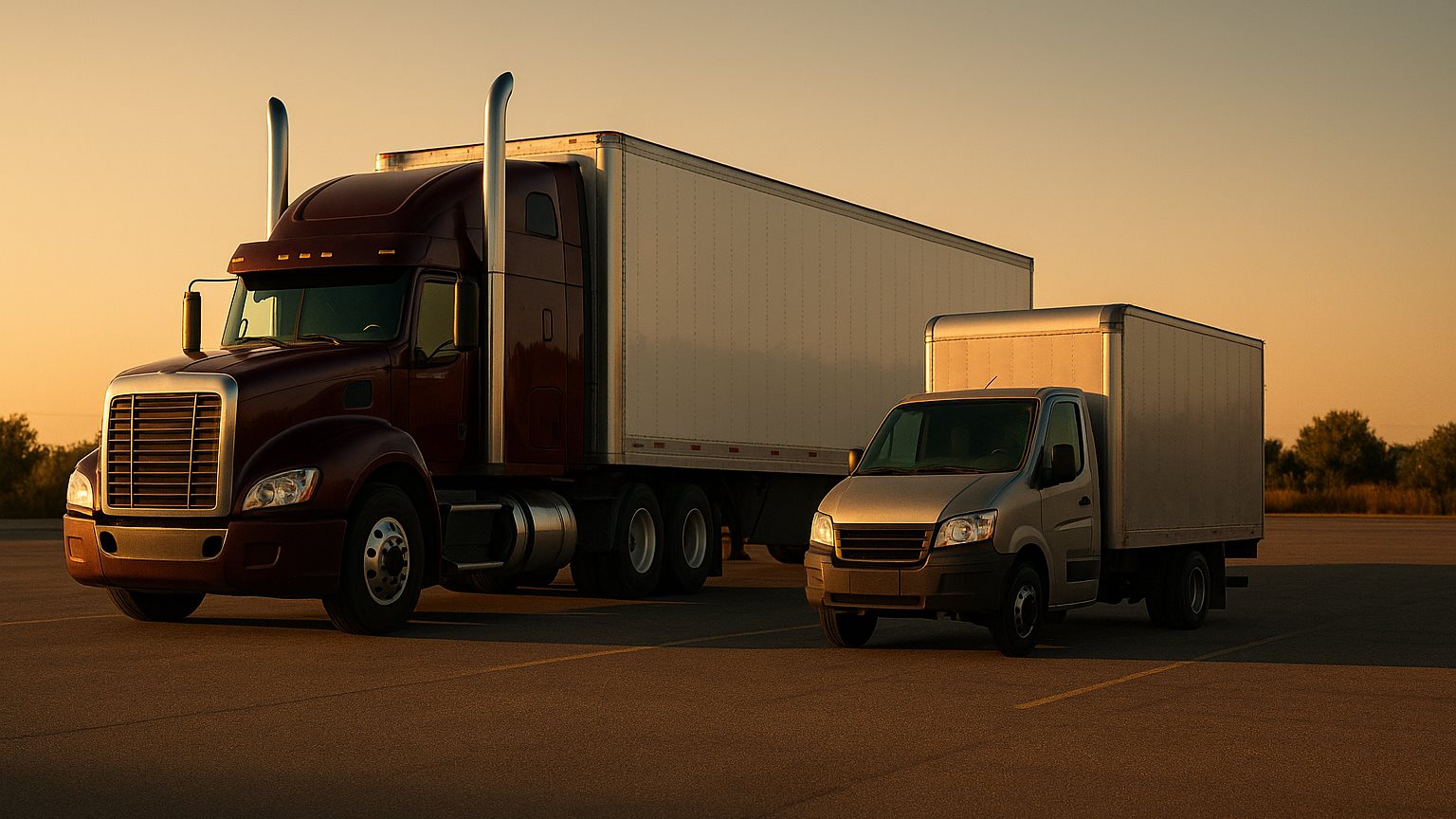
The second is a Class B license for local work, such as dump trucks, box trucks or delivery routes. Class B is cheaper and faster to get. It does not let you pull a 53-foot trailer, though, and you will need to upgrade to Class A later. The trade-offs are in our comparison of Class A and Class B CDLs.
The third is timing. If you plan to go OTR right at 21, start CDL school around 20 and a half. Training plus the 14-day permit wait plus a skills test date usually puts the license in your hands close to your birthday, and the K comes off when you are old enough. Removing it usually means a trip to the licensing office to change your self-certification to interstate and show a federal medical card.
Turning 21 doesn't make every carrier say yes
Federal law is the floor. Carriers and their insurers add their own rules on top. Insurance for a young driver with a fresh CDL costs more, and some fleets set their own minimum hiring age above 21 or ask for months of verifiable experience before they assign a truck. That is why the same 21-year-old can get a no from one recruiter and a yes from another.
Ask the question directly when you call. ASTEL hires drivers without experience, and because its loads run OTR across state lines, any driver in its trucks has to meet the federal 21 rule. How a first job without experience usually goes, including the first-year pay of $55,000–$75,000 the industry sees, is in our guide to truck driving jobs with no experience.
There is no maximum age for a CDL
The other end of the range is open. No federal rule sets an upper age limit for a commercial license. What a driver of any age must keep is a valid medical card, which lasts up to two years and can be issued for less when a condition needs monitoring. Drivers start at 50 and drive into their 70s, as our article on becoming a truck driver at 50 shows.
Frequently asked questions
Can you get a CDL at 18?
Yes, in most states. You can get a commercial learner's permit and a Class A or Class B CDL at 18 after entry-level driver training and the skills test. Until you turn 21 the license carries a K restriction, which limits you to intrastate driving.
Can an 18-year-old drive a semi across state lines?
Not under the current rules. 49 CFR 391.11(b)(1) requires interstate commercial drivers to be at least 21. The only exception was the Safe Driver Apprenticeship Pilot, which ended on November 7, 2025; apprentices already trained before it ended can keep driving interstate until they turn 21.
What does a K restriction on a CDL mean?
It means intrastate only. The code comes from 49 CFR 383.153 and is printed on the license and recorded on your driving record. It is usually removed after you turn 21 and change your self-certification to interstate at the licensing office.
Is the under-21 truck driver apprenticeship program still open?
No. SDAP ended on November 7, 2025. The American Trucking Associations asked FMCSA for a five-year exemption that would let carriers from the pilot keep training 18- to 20-year-old apprentices. FMCSA took public comments until February 27, 2026, and no decision had been published as of late October 2026.
Do in-state miles count as experience when I turn 21?
Usually yes, if the driving was verifiable commercial driving with a CDL. Carriers check your employment history and driving record, so an intrastate Class A job at 19 and 20 shows up as experience. Each carrier decides how much it counts, so ask the recruiter.
Can I go to CDL school before I turn 21?
Yes. Training, the permit and the skills test have no 21 requirement in most states. If you want to go over the road right at 21, starting school a few months before your birthday lines the license up with the age you need.
Turning 21 with a fresh CDL is where an OTR career starts
ASTEL is a family-owned carrier out of Chicago running refrigerated freight year-round on late-model Volvo trucks, with our own repair shop and mechanics, 24/7 dispatch and a direct line to the owner. Drivers earn $90,000–$110,000 a year — $2,400–2,700+ a week gross, a flat $0.80 per mile for drivers with 1+ year of experience, all miles paid ZIP-to-ZIP, weekly pay, plus $50/$200/$500 bonuses for clean DOT inspections.
Apply in 2 minutes →Sources: 49 CFR 391.11, 390.5, 383.25 and 383.153 (eCFR, October 2026); FMCSA entry-level driver training rule, compliance date February 7, 2022; Federal Register, 87 FR 2477 (January 14, 2022), and 91 FR 3771 (January 28, 2026), Docket FMCSA-2025-1117, ATA application for exemption; Trucking Dive (January 5, 2026); FreightWaves (January 27, 2026); Congressional Research Service, "Safe Driver Apprenticeship Pilot Program: In Brief." Current as of October 2026; state licensing rules and the status of the ATA exemption request may change. General information, not legal advice.