

How to Hook Up a Semi Trailer Without a High Hook or a Dropped Trailer
The most expensive coupling mistake looks fine from the driver's seat. The kingpin rides up over the fifth wheel jaws instead of into them, the jaws snap shut underneath it, and the trailer sits on the plate held by nothing. Drivers call it a high hook. Knowing how to hook up a semi trailer step by step is what keeps that trailer from coming off the first time the tractor pulls hard or hits a bump.
Seven mistakes that end with a trailer on the ground
- A trailer set too high. The kingpin can ride over the jaws, which is how most high hooks start.
- A trailer set too low. The tractor hits the trailer nose and can damage it.
- Backing under at an angle. The CDL manual warns that you can push the trailer sideways and break the landing gear.
- Skipping the tug test because the lock sounded right. The sound of the jaws closing is not proof.
- Not getting out to look. A gap between the plates is the clearest sign of a high hook, and you only see it from outside.
- Pulling away with the landing gear partly up. The manual says it can catch on railroad tracks.
- Dropping a loaded trailer on soft ground. The legs sink, and the trailer tips forward.
Each of these takes a few seconds to avoid. The coupling sequence in state CDL manuals is built around them, and questions about it show up on the CDL knowledge test. Federal rule 49 CFR 393.70(b)(2) requires every fifth wheel to have a locking mechanism that prevents separation unless someone pulls the manual release. The lock works only if the kingpin is inside it.
Before you back under, check the fifth wheel and the yard
Start at the tractor. Look for damaged or missing parts on the fifth wheel, cracks in the mounting and loose bolts. The plate should be greased, because a dry plate creates friction that can make steering heavy. For coupling, the fifth wheel should be tilted down toward the rear of the tractor, with the jaws open and the release handle in the automatic lock position. If the fifth wheel slides, make sure the slider is locked.
Then walk to the trailer. The kingpin should not be bent or broken. Make sure the area around the rig is clear, the trailer wheels are chocked or its spring brakes are on, and any cargo inside is secured so it won't shift when the tractor bumps the trailer. On a reefer, take a look at the unit while you are back there: fuel level, whether it is running, and the set point. That saves a second trip later.
Line the tractor up directly in front of the trailer. Check both mirrors and look down both sides of the trailer. Back slowly until the fifth wheel just touches the trailer nose, set the parking brake and shift to neutral.
Set the trailer height, then connect and test the air
The CDL manual's rule is simple. The trailer should be low enough that the tractor raises it slightly when it backs under. If the trailer is too high, it may not couple correctly. If it is too low, the tractor can strike the nose. Crank the landing gear up or down until the front edge of the trailer sits just below the top of the fifth wheel plate, and check that the kingpin lines up with the throat of the fifth wheel.
Next come the air lines. Check the seals on the glad hands, then connect the tractor's emergency line to the trailer's emergency glad hand and the service line to the service glad hand. The manual says to press the two seals together with the couplers at a 90-degree angle and then turn them to lock. Route the lines so the tractor won't crush or catch them when it backs under.
From the cab, push in the red trailer air supply knob and wait for normal pressure. Now test for crossed lines. Shut off the engine so you can hear, apply and release the trailer brakes, and listen. You should hear the brakes move when you apply them and air escape when you release them. Watch the gauge for a major air loss. Start the engine, let the pressure build back up, then pull the knob out again so the trailer brakes are locked for the next step.
Crossed lines matter more than they seem. The tractor protection valve closes automatically when pressure drops into the 20 to 45 psi range, so a leak or a mistake usually shows up here, in the yard, and not on the on-ramp.
Back under slowly and do the tug test
Use the lowest reverse gear. On a truck with an automatic like the late-model Volvos ASTEL runs, select the low reverse range and keep the speed at a walk. Back under the trailer and stop when the kingpin locks into the fifth wheel. Hitting the kingpin hard doesn't make the lock more secure. It just bends parts.
Raise the landing gear slightly off the ground. Then, with the trailer brakes still locked, pull forward gently in low gear. If the trailer holds and the tractor strains, the jaws have the kingpin. Many drivers tug twice, the second time a little harder. If the tractor moves forward and the trailer stays, you were never locked, and the landing gear is still close to the ground to catch it.
Get out and look under the fifth wheel
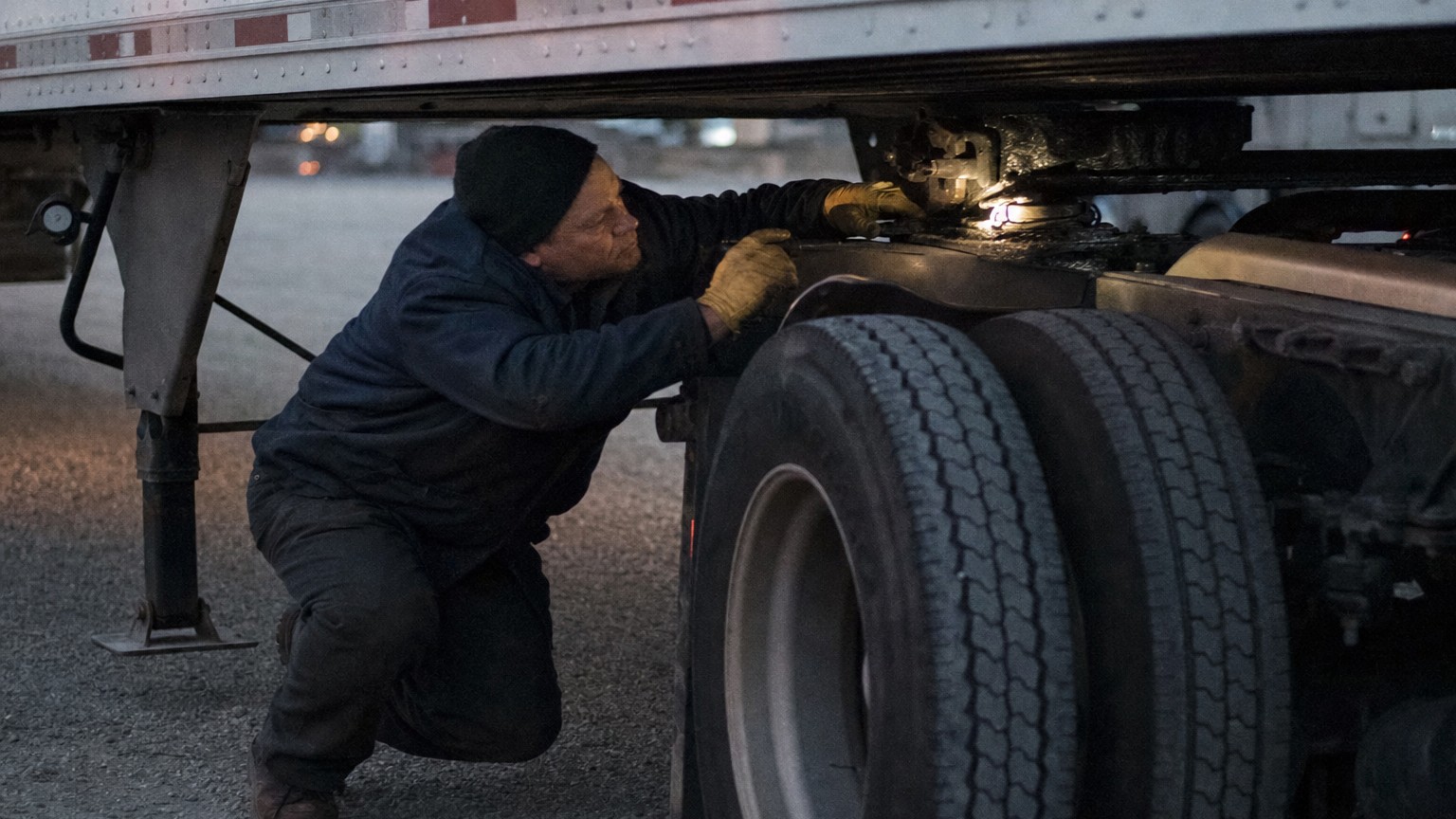
This is the step that catches a high hook, and it is the step people skip when they are tired or late. Put the transmission in neutral, set the parking brakes, shut off the engine and take the key with you, so nobody moves the truck while you are under it.
- Look at the gap between the upper and lower fifth wheel from the side. There must be no space. A gap means the kingpin may be sitting on top of the closed jaws, and the trailer would come loose very easily.
- Get down and look into the back of the fifth wheel with a flashlight. The jaws must be closed around the shank of the kingpin, not around empty air.
- Check that the locking lever is in the lock position.
- Check that the safety latch is over the locking lever. On some fifth wheels you set it by hand.
If anything looks wrong, don't drive the coupled unit. Uncouple and do it again, or call for help. At ASTEL that call goes to dispatch, which answers 24/7, and to the company's own mechanics.
Electrical cord, landing gear, chocks
Plug the electrical cord into the trailer and fasten its safety catch. Check both air lines and the cord for damage, and make sure none of them can hit moving parts when the tractor turns.
Crank the landing gear up in low gear until the legs are free of weight, then switch to high gear and raise them all the way. Partial height is how legs get torn off on a railroad crossing. Stow the crank handle in its bracket. With the full weight of the trailer on the tractor, check the clearance between the rear of the tractor frame and the landing gear, because the frame must not hit the legs in a sharp turn. Check the space between the tops of the tractor tires and the nose of the trailer too.
Remove the wheel chocks and store them. Then do your walk-around as part of the pre-trip. Federal rules 392.7 and 396.13 expect you to be satisfied that the coupling devices are in good working order before you drive, and our pre-trip inspection checklist covers the rest of the trailer. Lights, tires and the reefer belong on that list. Inspectors look closely at coupling devices too, as described in our guide to the DOT roadside inspection.
Dropping a trailer safely
Uncoupling has its own traps, and most of them come from where you drop. The CDL manual's sequence goes like this:
- Make sure the surface can hold the trailer's weight and line the tractor up with the trailer. Pulling out at an angle can damage the landing gear.
- Lock the trailer brakes by pulling the air supply knob. Back up gently to take pressure off the locking jaws, and set the parking brake while the tractor pushes against the kingpin.
- Chock the trailer wheels when the trailer lacks spring brakes, or when you are not sure what it has. Air can leak out of the trailer tank and release its brakes.
- Lower the landing gear until it touches firmly. On a loaded trailer, give the crank a few extra turns in low gear to take some weight off the tractor, without lifting the trailer off the fifth wheel.
- Disconnect the air lines and the cord. Put the glad hands on their dummy couplers and hang the cord plug-down so water doesn't get in.
- Open the fifth wheel by pulling the release handle to the open position, keeping your legs clear of the rear tractor wheels.
- Pull forward until the fifth wheel clears the trailer, then stop with the tractor frame still under the trailer nose. If the legs sink or collapse, the frame catches it.
- Set the parking brake, check that the ground holds the legs and that the gear is not damaged, then pull clear.
Hot asphalt in summer and wet gravel lots after rain are where legs sink. If the lot looks soft, ask for a better spot or put a board under each foot. A reefer has another reason for care at the drop: the unit usually keeps running on a loaded trailer, so tell the receiver the set point, and on a pickup check it again when you hook up. ASTEL drivers check the load temperature and the unit 2–3 times a day anyway.
Where coupling happens in a reefer week
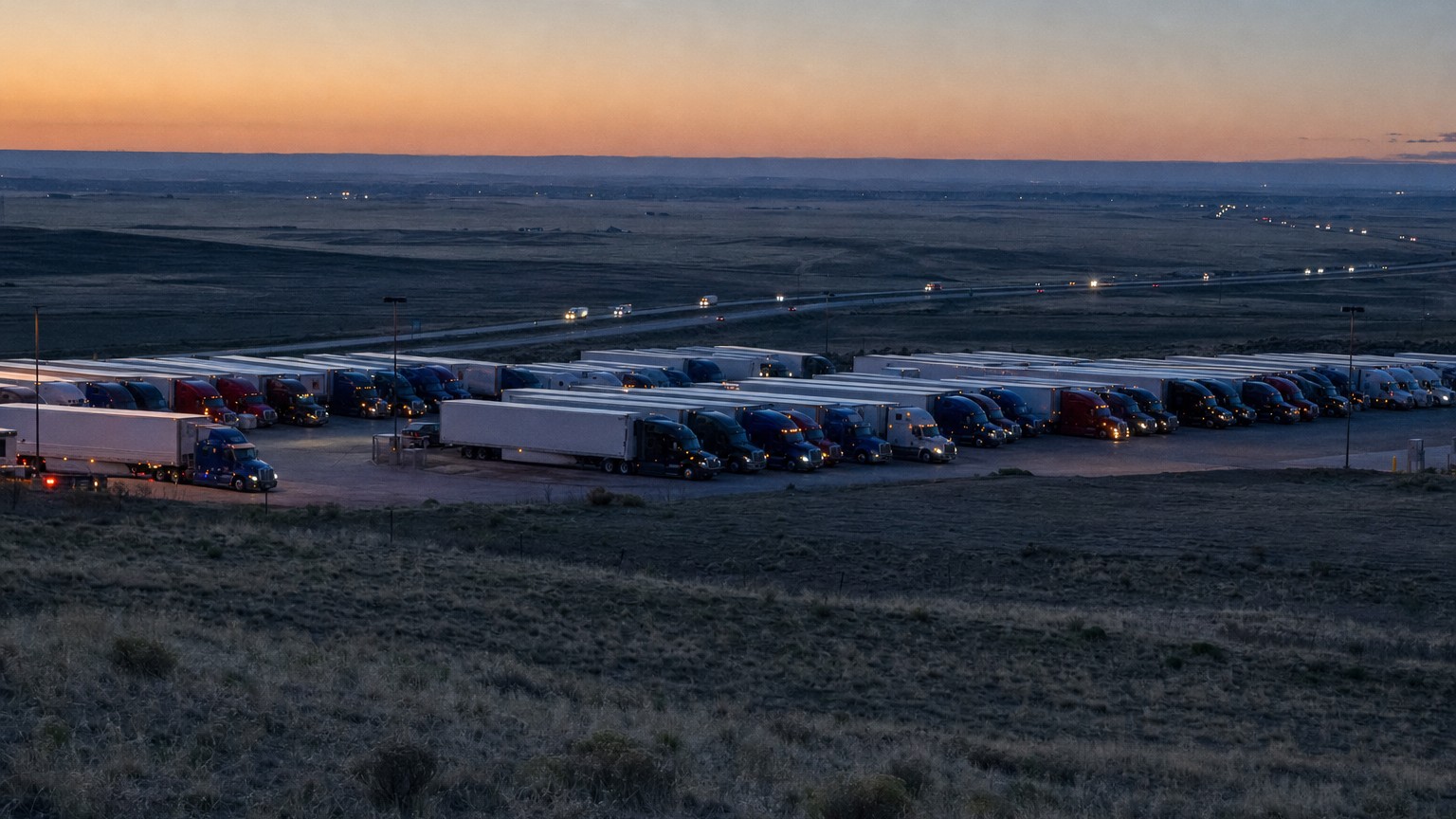
Drop and hook is common in reefer work, and every swap means one more coupling, sometimes at night in a dark yard. ASTEL offers drop trailer service to shippers, so its drivers hook and drop loaded trailers regularly. The trade-offs between waiting at the dock and swapping trailers are covered in our article on live load vs drop and hook.
A coupling done right takes about ten minutes. When something breaks anyway, a bent kingpin or a leg that won't crank, call before you improvise. ASTEL has its own mechanics and a replacement truck when a breakdown takes a tractor off the road. What to do on the road is covered in our truck breakdown plan, and the yard skills that go with it are in our truck backing tips.
Frequently asked questions
What is a high hook?
A high hook happens when the kingpin rides over the fifth wheel jaws instead of entering them. The jaws close underneath, the trailer rests on the plate without being locked and can separate under load. It usually starts with a trailer set too high.
How high should a trailer be when you hook up?
Slightly lower than the fifth wheel, so the tractor lifts the trailer a little as it backs under. If the trailer is too high it may not couple correctly, and if it is too low the tractor can hit the nose.
How do you know the fifth wheel is locked?
Do a tug test against the locked trailer brakes, then get out and look. There must be no gap between the upper and lower fifth wheel, the jaws must close around the shank of the kingpin, and the release lever must be locked with the safety latch in place.
Which air line do you connect first?
The CDL manual lists the emergency line first, then the service line, each after checking the glad hand seals. After charging the trailer, test for crossed lines by applying and releasing the trailer brakes with the engine off.
Why leave the tractor frame under the trailer when uncoupling?
If the landing gear sinks or collapses after you open the jaws, the frame catches the trailer before it falls. Check that the ground holds the legs, then pull clear.
Drop-and-hook freight with mechanics who answer the phone
ASTEL is a family-owned carrier out of Chicago running refrigerated freight year-round on late-model Volvo trucks, with our own repair shop and mechanics, 24/7 dispatch and a direct line to the owner. Drivers earn $90,000–$110,000 a year — $2,400–2,700+ a week gross, a flat $0.80 per mile for drivers with 1+ year of experience, all miles paid ZIP-to-ZIP, weekly pay, plus $50/$200/$500 bonuses for clean DOT inspections.
Apply in 2 minutes →Sources: Pennsylvania Department of Transportation, Commercial Driver's License Manual (Pub 223), section 6.2 (glad hands, tractor protection valve) and section 6.4 (coupling and uncoupling), based on the national model CDL manual used by most states; 49 CFR 392.7, 393.70(b)(2) and 396.13 (eCFR, November 2026). Fifth wheels and landing gear differ between makes, so follow the manufacturer's instructions for your equipment. Current as of November 2026. General information, not training certification.