

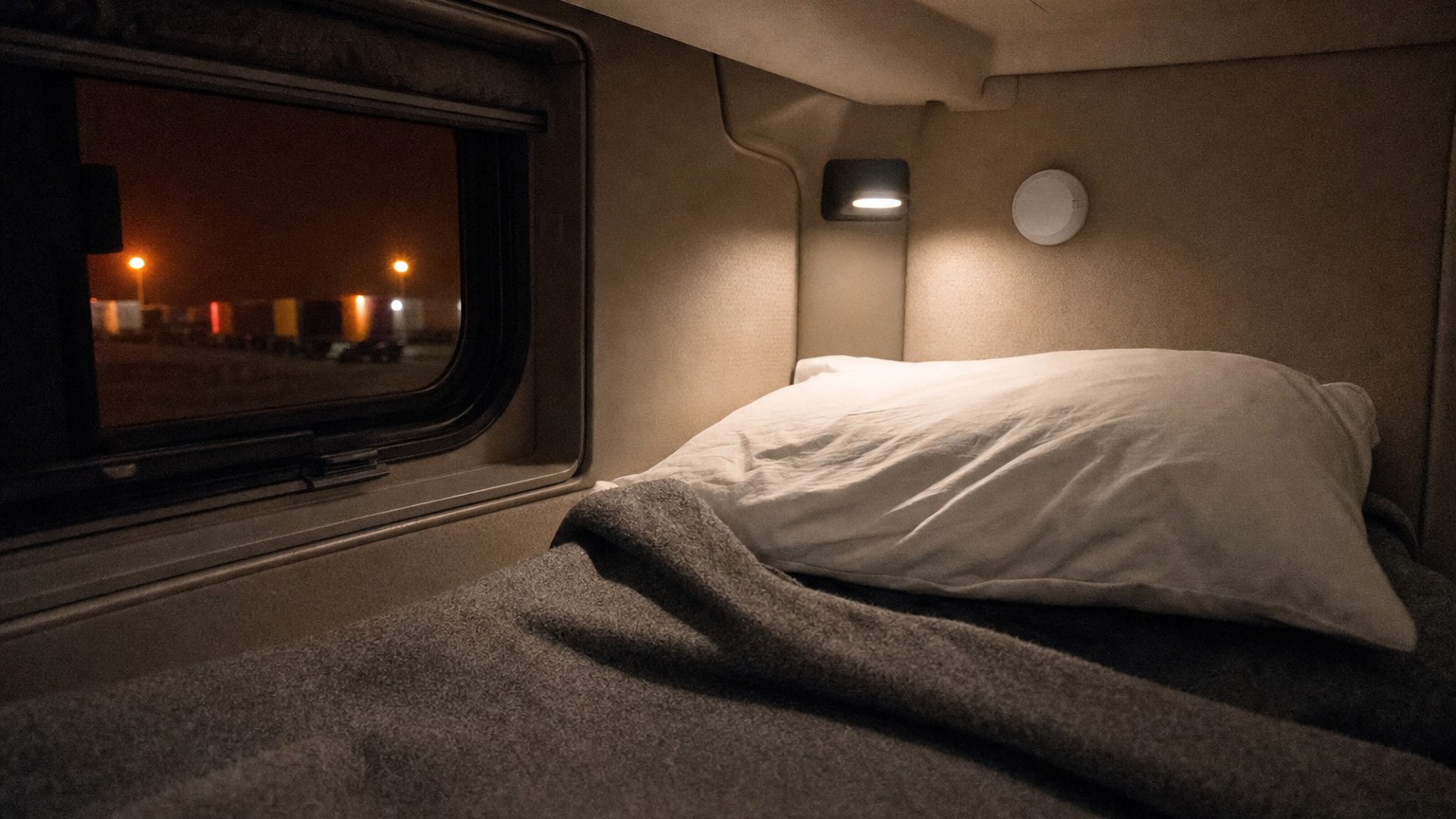
Carbon Monoxide Poisoning in Trucks and the Push for a Sleeper Alarm
On October 13, 2026, a petition asking FMCSA to require carbon monoxide alarms in every truck with a sleeper berth was posted in the agency's petitions docket on regulations.gov. It was filed by Todd Daum of Cincinnati, a CDL-A holder and retired firefighter. His main example is a 61-year-old driver in Washington State who slept overnight in his sleeper in January 2023 and died the next morning. The petition itself calls the frequency of carbon monoxide poisoning in trucks unknown. What's known is enough: CO can kill a driver in his sleep, and no federal rule puts an alarm next to your bunk.
Seven ways CO gets into a cab or sleeper
Every source of CO in a truck burns something. In the Washington case, investigators found no exhaust leak and no significant CO from the diesel bunk heater; the likely source was a single-burner butane stove found in the truck. So start with what you bring into the cab yourself.
| Source | How the gas gets in | What to do |
|---|---|---|
| Butane or propane stove, or a portable heater, in the cab | Its exhaust goes straight into the air you breathe, with the curtain closed and the windows up. | Don't use one in the cab or the sleeper. Portable heaters are already banned in occupied space by 393.77(a)(6), and the petition asks to ban cooking stoves too. |
| Exhaust leak under the cab or sleeper | A cracked pipe or loose joint vents below the floor, and gas works in through seals. 49 CFR 393.83(g) bans leaks forward of or directly below the driver and sleeper compartment. | Get it fixed before you sleep in the truck. Wrap and patches don't count as a repair under 393.83(f). |
| Diesel bunk heater with a damaged exhaust tube | A cracked or loose tube leaks combustion gas under the sleeper. Under 393.77(b)(9) a combustion heater must pipe its exhaust outside the vehicle. | Check the tube and outlet on your walk-around and keep the heater serviced. |
| Snow drifted around the truck while you idle | Exhaust can't clear the truck and seeps in. CDC tied CO poisonings after the January 1996 blizzard to people sitting in idling cars with snow-blocked exhaust pipes. | Dig out the exhaust outlet before you rest with the engine running. |
| Other trucks idling or running APUs next to you | Washington investigators warned that their fumes can enter a truck even with the windows and vents closed. | Park away from a row of idling trucks when you can. Move if the bunk smells like exhaust. |
| A generator running near the truck | Exhaust drifts into vents and door gaps. | CDC says to keep a running generator at least 20 feet from doors, windows and vents. |
| Engine running inside a shop or wash bay | Exhaust fills the building, then the cab. CDC warns never to run a vehicle in an attached garage, even with the door open. | Don't idle indoors. |
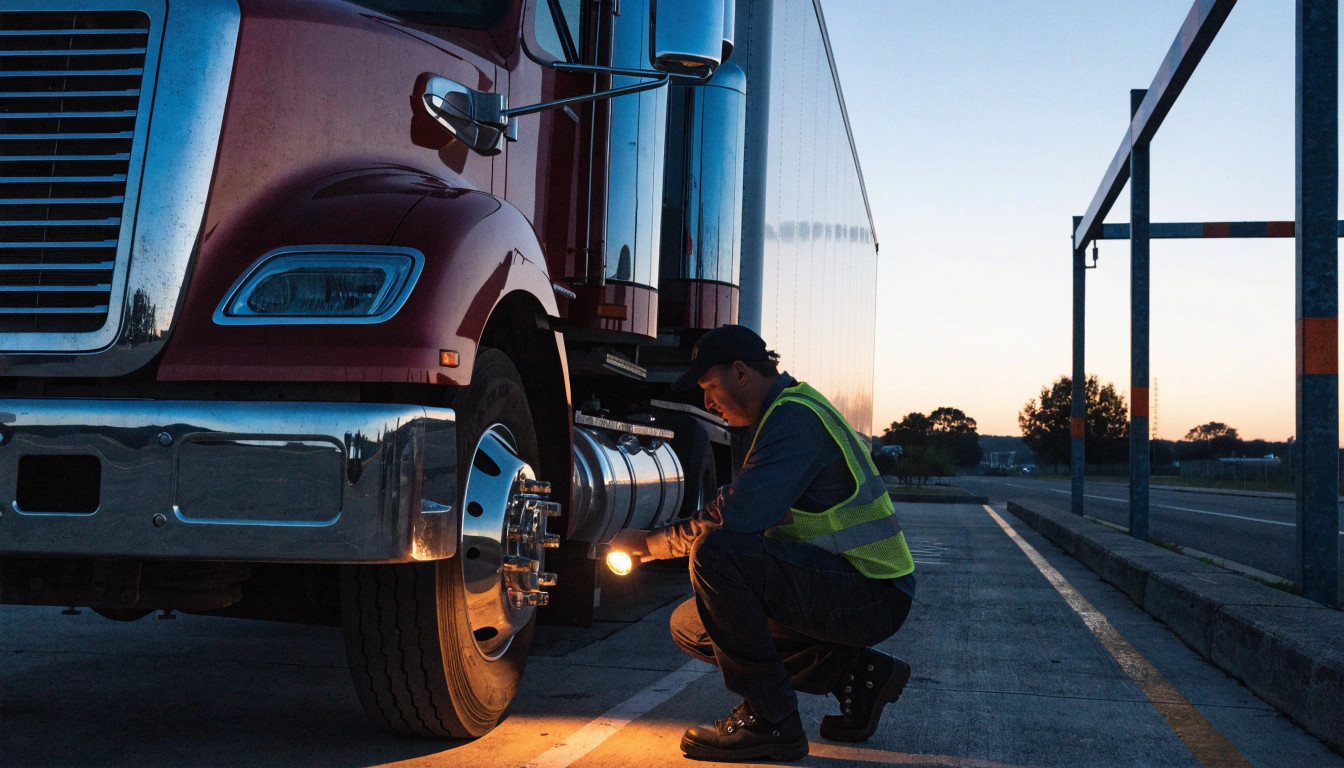
Two of those are your call every night: what you burn inside the cab and where you park. The exhaust problems show up on an inspection if you look. Black soot streaks around a joint or a fresh exhaust smell in the bunk can both mean a leak. Our pre-trip inspection checklist shows where to look under the cab.
What the October 2026 petition asks FMCSA to require
Daum filed on October 11, and the filing was posted on October 13 in docket FMCSA-2021-0054. That docket is the general mailbox FMCSA keeps for petitions under 49 CFR 389.31, where anyone can ask for a new rule or a change to an old one. Besides the CDL-A, he lists hazmat and tanker endorsements, work as a fleet safety professional and a past as an EMT. His request is a new section in Part 393 for every commercial vehicle with a sleeper berth.
- Two battery-powered CO alarms per truck. One goes in the sleeper, on the wall or ceiling within the breathing zone of whoever is in the bunk; the other goes in the cab near the driver. Each must be rated by its maker for vehicle use.
- No alarm where bedding or a curtain can block it, in a dead-air pocket, in the direct stream of the heater or AC, or right above a fuel-burning appliance.
- A test by the driver at least once every 7 days, logged on the inspection report or in a separate log. A unit that fails is replaced before the truck is dispatched again.
- When the alarm sounds, the driver parks and gets to fresh air. Anyone with symptoms calls 911. The truck stays out of service until it's towed to a shop and cleared for CO leaks.
- A ban on fuel-burning stoves and space heaters, butane and propane included, anywhere inside the tractor or the trailer, plus scheduled maintenance on engine and bunk heater exhaust.
The petition prices the hardware too. Daum found vehicle-rated alarms listed to UL 2034 at about $65–80 each at retail, or $130–160 per truck for two before fleet discounts, replaced every five years. He points out that the RV standard, NFPA 1192, already requires CO alarms in recreational vehicles.
The Washington case behind the petition
The death Daum cites is documented in Washington FACE report 71-254-2024, dated June 1, 2024, from the Fatality Assessment and Control Evaluation program at the state Department of Labor & Industries. The driver was 61. He had worked for a general freight carrier for five months. On January 19, 2023, his truck had been parked at his employer's terminal yard for about 24 hours while he waited on his next dispatch and slept overnight in the sleeper.
Around 9:30 a.m. he walked to the terminal building. Another driver found him struggling with the restroom door, disoriented and short of breath, barely able to stand. They called 911. Then the sick driver locked himself in the restroom and refused to come out for a few minutes. He had a headache and back pain, very pale skin with flushed cheeks, and he was sweating. He died shortly after reaching the hospital.
Toxicology confirmed CO. Investigators traced it most likely to a single-burner butane cooking stove found in the truck. Air sampling in the sleeper and at the bunk heater's exhaust, with the heater running, showed no significant CO, and no exhaust leaks turned up at the engine or underneath. The report says it rests on preliminary data, not final findings.
The FACE recommendations read like the petition's first draft. Investigators want vehicle-rated alarms in cabs and sleepers and no fuel-burning stoves or heaters inside them. After an alarm, the driver gets into fresh air, calls 911 if he feels poisoned, and the truck is towed and checked for leaks. The petition also cites a second sleeper-berth death, at a truck stop lot in January 2022, from OSHA's inspection records.
CO poisoning feels like the flu, and confusion is one of the signs
CDC lists confusion among the most common symptoms of CO poisoning, along with headache, dizziness, weakness, upset stomach, vomiting and chest pain. It describes them as flu-like, which makes them easy to blame on a cold.
The sleeper makes it worse. CDC warns that people who are asleep or drunk can die from CO before they have symptoms at all, and a 10-hour break behind a drawn curtain is the longest stretch you spend in one small, closed space.
Nationally, CDC puts the toll at more than 400 deaths a year from unintentional CO poisoning not linked to fires, plus more than 100,000 emergency room visits and more than 14,000 hospital stays. The CDC page gives no year for those figures. A CDC count published in MMWR in January 2014 averaged 430 deaths a year for 1999–2010. Neither breaks out trucks. For the rest of what the road does to your body, see our guide to truck driver health.
Federal rules cover leaks and heaters, but not alarms
The rule after an alarm already exists. Under 49 CFR 392.66 nobody may dispatch or drive a commercial vehicle when an occupant has been affected by CO, when CO has been detected inside it, or when a mechanical problem is found that would likely expose occupants to CO. It stays parked until the problem is fixed.
Part 393 handles the hardware. Section 393.83 sends truck exhaust out behind the cab, or near the rear of the cab if the stack goes above it, and bans any leak forward of or directly below the driver and sleeper compartment. Section 393.76(g) says a sleeper must sit where exhaust leaks can't get into it.
Heaters fall under 393.77. Heaters that route engine exhaust through occupied space are banned. So are heaters with an open flame, except ones that heat the cargo of a tank vehicle. Portable heaters can't be used where people ride or sleep. Section 392.67 is narrower than it sounds: it only bars running an open-flame heater used for loading or unloading cargo while the truck is moving. None of these sections requires a detector, which is the gap the petition points to.
Choosing and mounting a CO alarm in the sleeper
The FACE report's advice is short. Use a battery-powered alarm made for vehicles and follow the manufacturer's instructions to the letter. Look for a listing to UL 2034, the standard for CO alarms, which also covers units for RVs and boats. The petition rules out alarms designed only for homes and wants units rated for a truck's vibration and temperature swings.
Put it where you breathe while you sleep. That means the wall or ceiling near the head of the bunk, on your side of the curtain. Keep it out of the heater's airflow and away from bedding that can cover it.
Know its limits. Under UL 2034, as laid out in a 2014 CPSC test report, a listed alarm must sound within 4–15 minutes at 400 parts per million and within 10–50 minutes at 150 ppm. At 30 ppm it must stay quiet for 30 days, so a truck rolling past doesn't set it off. A quiet alarm only tells you CO hasn't reached alarm level. Even models with a display show nothing below 30 ppm.
Test it weekly, on the same day, as part of the pre-trip. Replace the unit by the end-of-life date printed on it. If you're getting ready for a first run, add it to our list of what to pack for OTR.
When the alarm sounds, get out first
- Get out of the cab into fresh air right away. If you're driving, pull off where it's safe, shut the engine down and step out.
- Call 911 once you're outside, even if nobody feels sick. That's CDC's advice for any CO alarm. The Poison Help line, 1-800-222-1222, can answer questions later, but it doesn't replace 911.
- Don't silence the alarm and go back to sleep in the cab. By the time a listed alarm sounds, CO is already above the level it's built to ignore.
- Call dispatch. Under 392.66 the truck can't be driven or dispatched until the cause is found and fixed, so plan on a tow, as the FACE investigators recommend.
- Get the engine exhaust and the bunk heater checked, along with anything in the cab that burns fuel, and note it on your inspection report.
A detector picking up CO inside the vehicle is one of the three triggers in 392.66, whether or not anyone feels sick.
Winter nights and parking choices raise the risk
Cold weather stacks the odds. You run the bunk heater or idle for heat, keep the windows shut and park tight in a full lot. Some states and cities let you idle for heat in the sleeper below a set temperature; the limits are in our guide to truck idling laws by state.
Picking the spot matters. A row of trucks idling nose to tail on a still, cold night is a bad place for a 10-hour break, and our truck parking guide covers how to find a better one before your clock runs out. After a snowstorm, clear the exhaust first.
The rest of the winter checklist, from chains to fuel, is in winter driving for truck drivers and diesel gelling. If an exhaust leak shows up mid-trip, handle it like any breakdown, with the steps in what to do when your truck breaks down.
Own mechanics and a replacement truck at ASTEL
ASTEL has its own mechanics and a replacement truck for when a breakdown takes yours off the road. An exhaust leak under the cab is that kind of problem. Call dispatch, who is on the line 24/7, and plan the repair together instead of nursing a leak 800 miles home.
Our trucks are recent Volvos with automatic transmissions. Newer doesn't mean immune. The Washington truck had no exhaust leak at all, and investigators pointed to a stove. Between loads, the Chicago yard has a rest area with showers, a sauna and a laundry.
Frequently asked questions
Can you get carbon monoxide poisoning sleeping in a semi truck?
Yes. CO from an exhaust leak, a damaged bunk heater tube, a butane or propane stove, or trucks idling nearby can build up in a closed sleeper. CDC warns that sleeping people can die before they notice symptoms.
Are semi trucks required to have carbon monoxide detectors?
No. As of October 2026 no federal rule requires a CO detector in a truck cab or sleeper. 49 CFR 392.66 bars driving a truck once CO has been detected, and a petition posted on October 13, 2026 asks FMCSA to require two battery-powered alarms in every sleeper truck. As of October 16, 2026, FMCSA has not ruled on it.
Where should a CO detector go in a sleeper berth?
On the wall or ceiling near the head of the bunk, on your side of the curtain, out of the heater's direct airflow. Use a battery-powered unit made for vehicles and listed to UL 2034, and test it weekly.
Is it safe to use a propane heater in a truck cab?
No. Federal rules ban portable heaters in any space occupied by people (49 CFR 393.77(a)(6)), and the flame vents its exhaust into the air you breathe. Washington investigators traced a 2023 driver death to a butane cooking stove.
Can a diesel bunk heater cause carbon monoxide poisoning?
It can if its exhaust tube is cracked or loose and leaks under the sleeper. Federal rules require a combustion heater to pipe its exhaust outside the vehicle. In the Washington case the bunk heater tested clean. Check the tube and outlet on every walk-around.
Fresh Volvos and our own mechanics when something breaks
ASTEL is a family-owned carrier out of Chicago running refrigerated freight year-round on late-model Volvo trucks, with our own repair shop and mechanics, 24/7 dispatch and a direct line to the owner. Drivers earn $90,000–$110,000 a year — $2,400–2,700+ a week gross, a flat $0.80 per mile for drivers with 1+ year of experience, all miles paid ZIP-to-ZIP, weekly pay, plus $50/$200/$500 bonuses for clean DOT inspections.
Apply in 2 minutes →Sources: petition for rulemaking by Todd Daum, regulations.gov FMCSA-2021-0054-0195 (received October 11, posted October 13, 2026), with its case record and cost attachments, and the docket description; CDLLife, October 14, 2026; Washington State Department of Labor & Industries, FACE report 71-254-2024, June 1, 2024; 49 CFR 389.31, 389.33, 392.66, 392.67, 393.76, 393.77 and 393.83 (eCFR); CDC, About Carbon Monoxide Poisoning (updated January 12, 2026), CDC statement of January 5, 2018, MMWR of January 24, 2014, and MMWR report on the January 1996 blizzard; U.S. Consumer Product Safety Commission, Carbon Monoxide Alarm Conformance Testing to UL 2034, March 2014. Current as of October 2026; federal rules and the petition's status may change. General information, not medical or legal advice. If a CO alarm goes off or you suspect CO poisoning, get to fresh air and call 911.